Orangeburg pipe is a sewer pipe made from layers of wood pulp fiber soaked in tar. It is also called bituminous fiber pipe, and it was used for side sewers roughly from the mid-1940s to the 1970s. The Seattle area built a lot of homes in those years, from Burien and White Center to Shoreline and SeaTac, so it still turns up under plenty of yards. If your sewer is Orangeburg, it is living on borrowed time. Here is how to tell, what goes wrong, and what your real options are.
What Orangeburg pipe is
Orangeburg was cheap, light and easy to cut, which made it popular during the postwar building boom. It looks like a black or dark brown tube with smooth walls. Unlike clay pipe, it does not have the heavy bell-shaped joints every few feet.
You usually cannot tell from the yard. The pipe is buried, and the only exposed part, if any, is a short stretch near the foundation or at a cleanout. Many homes also have a mix: Orangeburg for part of the run, then clay or newer plastic where someone made a repair years ago. The only reliable way to know what you have, and where, is to look inside.
Why Orangeburg fails
The material softens and breaks down with age and moisture. Around Puget Sound, a long wet season keeps the soil damp for months, and heavy glacial soils press on the pipe from every side. The failures follow a familiar pattern:
- Deforming. Soil weight squeezes the pipe out of round. It turns oval, then flattens, and the opening for waste gets smaller.
- Blistering. The inside surface bubbles and flakes in layers. Those rough spots catch paper and waste.
- Root damage. Softened walls and joints are easy for roots to push through and split open.
- Collapse. Eventually a section caves in and the line stops flowing.
Warning signs include slow drains through the whole house, clogs that keep coming back, gurgling toilets, a soft or sunken spot over the sewer line, and backups in the basement. One caution: aggressive cleaning tools can tear weak Orangeburg. If you know or suspect you have it, say so before anyone runs a cable or jetter through it.
How a camera inspection identifies it
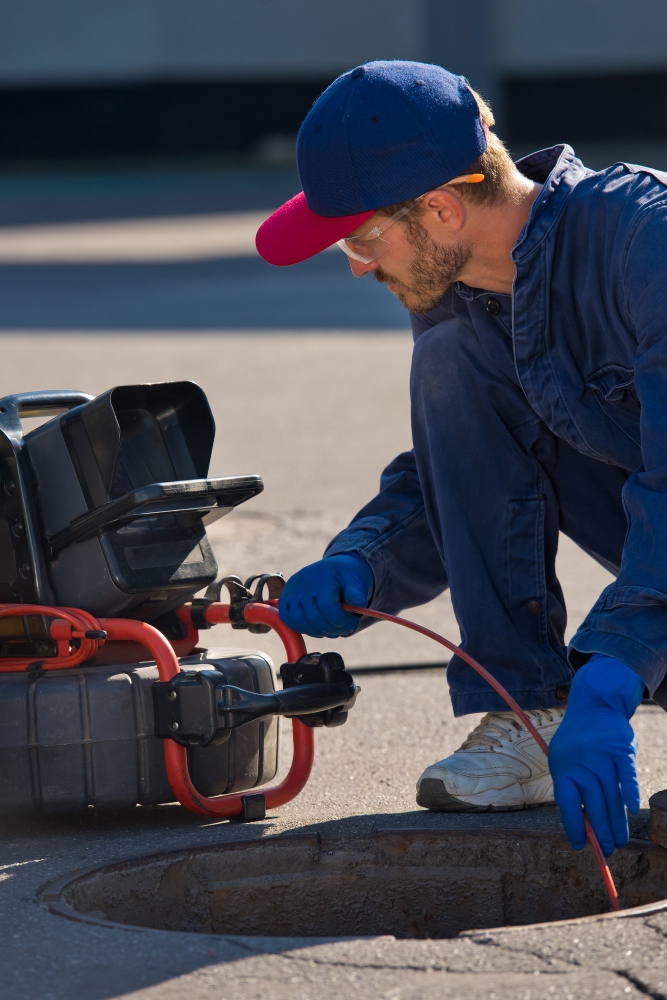
A sewer camera inspection settles the question. On screen, Orangeburg shows smooth dark walls without the regular joint lines of clay. Trouble shows up as an oval or flattened cross-section, raised blisters, peeling layers, and in bad cases a pipe that pinches nearly shut. We also locate the line from above, so you know where the bad sections sit and how deep they are.
That matters for repairs. A pipe that is still round with a few rough spots is a very different job from one that has flattened under the driveway.
Buying a home with Orangeburg pipe
If you are buying a house built in that era, get a sewer scope before you close. A sewer scope is a camera inspection of the side sewer, and Seattle-area realtors and home inspectors call us for them often. Orangeburg on a scope report is not a reason to panic. It is information you can use: you get the footage and a written estimate, and you can negotiate with real numbers in hand. In Seattle, the property owner owns the side sewer all the way to the public main, including under the street, so whatever is in that pipe becomes yours at closing. Read more about sewer scope costs in Seattle or our inspections for real estate agents.
Your options, and the honest part about lining
We are a trenchless-first company. CIPP lining, short for cured-in-place pipe, forms a new pipe inside the old one, so there is no long trench through the yard, and it gives the line 40 or more years of service life. For most failing clay and cast iron lines it is the first thing we recommend.
Orangeburg is different. A liner needs a host pipe that is open and round enough to pass through and cure in the right shape. Badly deformed Orangeburg often is not. So the camera decides, not a sales pitch:
- Line it as is. If the pipe is still mostly round and intact, trenchless lining can work.
- Dig the worst spot, line the rest. If one short section has collapsed, we can replace that piece and line the remaining run. Smaller defects in otherwise sound pipe may take a sewer pipe patch.
- Replace the line. When the pipe has flattened or collapsed in several places, sewer replacement is the honest answer. It is rarely our first choice, but with Orangeburg it sometimes has to be.
In Seattle, side sewer repair generally needs a permit, now issued through Seattle Public Utilities. Outside Seattle, check with your city or sewer district. We tell you in the written estimate whether your job needs a permit. If your camera footage shows clay rather than fiber pipe, our post on clay sewer pipes covers that material.
We see Orangeburg most in mid-century neighborhoods like Burien, White Center and Shoreline.
Orangeburg pipe FAQs
How do I know if my house has Orangeburg pipe?
The age of the house is a clue. Homes built from the mid-1940s through the 1970s are the likeliest. A camera inspection confirms it and shows how much of the line is fiber pipe versus clay or plastic.
Can Orangeburg pipe be lined?
Sometimes. If the pipe is still round and open, yes. If it has deformed or collapsed, those sections usually need to be replaced first. We show you the footage and explain which case you are in.
Should I walk away from a house with Orangeburg pipe?
Not necessarily. Get a sewer scope, get a written estimate, and use both in your negotiation. A known problem with a clear price is easier to plan for than a surprise after you move in.
How long does Orangeburg pipe last?
It was never a long-lived material, and most of what is still in the ground is past the age when problems usually start. If your home has it, plan for repair rather than hoping it holds.
Dealing with Orangeburg pipe in the Seattle area? Call Seattle Select Sewers at 425-531-4847.