A sewer backup is one of those home problems that demands an immediate response and a clear head at the same time. Water or sewage coming up through a floor drain, a toilet that will not flush, a shower that fills when someone runs the kitchen sink — these are not ambiguous signals. Something in the main sewer line is blocked, broken, or overwhelmed, and what you do in the next thirty minutes matters.
In this article, you will learn what to do the moment a backup starts, what the most common causes are in Seattle’s older residential sewer infrastructure, how to approach cleanup and diagnosis correctly, and what separates a one-time blockage from a pipe that is going to keep failing.
Here’s what you need to know.
- When sewage is coming up inside the house, stop using water first
- A backup can come from a clog, a broken pipe, or the city connection
- Cleanup and diagnosis need to happen in the right order
- Recurring backups mean the line is sending the same warning twice
- Prevention starts with knowing what your sewer line is up against
Keep reading to understand what a sewer backup in Seattle actually indicates and what the right sequence of responses looks like from the moment it starts.
Sewer backup in Seattle refers to sewage or wastewater reversing direction and entering the home through low-lying fixtures, typically floor drains, toilets, or shower pans, when the main sewer line is blocked or structurally compromised and cannot carry flow to the public main. It is distinct from a single slow drain caused by a fixture-level clog, and it requires a different response.
When sewage is coming up inside the house, stop using water first
The instinct in a backup situation is often to flush repeatedly, run more water, or try to push the blockage through. That instinct makes things worse. The main sewer line is not moving water to the main. Everything you add to the system from inside the house has nowhere to go but back up through the lowest available opening.
Flushing toilets can push more waste into the lowest drain
Every toilet flush sends approximately 1.28 to 1.6 gallons of water into a line that is already at or beyond capacity. That water does not clear the blockage. It raises the level of sewage in the pipe, which increases pressure on the line and pushes material up through whatever fixture offers the least resistance. In most Seattle homes, that is the basement floor drain or the lowest-level toilet.
Stop flushing. Stop running any water. The situation does not improve with more volume.
Showers, laundry, and dishwashers can make the backup spread
Appliances that discharge large volumes of water quickly are particularly problematic during a backup. A washing machine mid-cycle can discharge fifteen to forty gallons in a short burst. A running shower adds two gallons per minute. A dishwasher running through its fill cycle contributes another three to six gallons.
Any of those loads hitting a blocked main line spreads the backup from a single fixture to multiple fixtures, and can push contaminated water further into finished living spaces. The first step in any backup situation is the same regardless of what is causing it: stop all water use inside the home until the line is cleared and assessed.
The lowest fixture usually shows the main line problem first
In a Seattle home with a basement, the floor drain in that basement is the lowest point in the drainage system. When the main sewer line backs up, that drain is the first place sewage appears, because it is the path of least resistance before pressure builds enough to reach higher fixtures.
A toilet or shower on the lowest finished level is typically the second indicator. When both the floor drain and the basement toilet are backing up simultaneously, the problem is almost certainly in the main sewer line, not in an individual branch. That distinction matters for diagnosing the cause and deciding who to call.
A backup can come from a clog, a broken pipe, or the city connection
Not every sewer backup has the same cause, and the response that resolves one cause may do nothing for another. Knowing what the possible sources are helps you give accurate information to the contractor, who will use it to determine where to start.
Main sewer line clogged Seattle calls often start with multiple slow drains
A blockage in the main sewer lateral typically develops gradually. Days or weeks before a full backup, multiple drains throughout the house slow down at the same time. The kitchen sink takes longer to clear. The shower holds water for a minute after it should have drained. The toilet seems to flush more slowly than usual.
These symptoms point to a restriction building in the main line, downstream of where all the branch drains converge. The restriction is partial at first, then becomes complete when enough material accumulates to block flow entirely. In Seattle’s older residential stock, the most common causes of that accumulation are:
- Root intrusion at one or more clay tile joints, where fine root hairs catch solid waste and build a fibrous mass over months
- Grease and soap scum coating the pipe walls and narrowing the effective diameter, particularly in homes with older cast iron or clay pipe with rough interior surfaces
- A belly in the line where solids have been settling and building up at a low point that was never correcting itself through normal flow
Roots and grease can close off a pipe that looked fine last month
A pipe that passed a camera inspection a year or two ago can back up today. Root growth is continuous in Seattle’s mild, wet climate, and a root mass that was minor at the time of inspection can double in density within a single growing season if conditions are favorable.
Grease accumulation compounds this. A pipe wall with even a moderate grease coating provides purchase for root hairs to anchor, and the combination of grease, root material, and accumulated solid waste can close a pipe that looked manageable on the last inspection faster than either cause alone would have.
This is why a backup that feels sudden rarely is. The warning signs of a sewer line leak are almost always present before the complete failure. The backup is the point at which the accumulation crosses from a partial restriction to a complete one.
A damaged side sewer can keep backing up after temporary cleaning
Some backups are not caused by accumulation at all. A pipe that has collapsed, a joint that has offset severely enough to act as a dam, or a section with a belly that holds standing water will back up regardless of how clean the rest of the line is. Clearing the immediate blockage restores temporary flow, but the structural condition that caused the backup remains.
A homeowner who has had the same line cabled three times in two years, with each cleaning holding for a shorter interval, has a pipe with a structural problem that cleaning is temporarily managing. The backup will continue until the structure is addressed. Sewer root removal and cable cleaning are appropriate for their specific conditions. When those conditions are not the actual cause, they buy time, not a solution.
Cleanup and diagnosis need to happen in the right order
After the water is stopped and the contractor is called, the cleanup and the diagnosis are two separate processes that need to happen in the right sequence. Cleaning up before understanding the cause can obscure the evidence. Diagnosing before addressing the contamination creates a health risk.
Sewage backup in house Seattle situations should be treated as contaminated water
Sewage contains bacteria, pathogens, and in some cases parasites. Any material that has contacted backup water, including flooring, baseboards, drywall, carpet, and personal items, should be treated as contaminated until it has been properly cleaned and dried or removed. Category 3 water, which is what sewage backup produces, is the most serious classification under the IICRC S500 standard for water damage restoration.
Protective equipment during cleanup means at minimum rubber gloves, rubber boots, and eye protection. Porous materials that absorbed sewage, carpet pad, drywall below the water line, wood flooring that swelled, should be removed rather than dried in place. Surfaces that can be saved require disinfection with an appropriate antimicrobial agent, not just drying.
If the backup reached finished living spaces or a significant volume was involved, a professional water damage remediation company should assess the scope before cleanup proceeds. The health risk from inadequately remediated sewage exposure is real and should not be managed as a routine cleaning task.
Clearing the line does not tell you why it blocked
Once the line is cleared and flow is restored, the pipe is open. That is all that has been confirmed. The clearing does not tell you whether the cause was a grease accumulation that will rebuild, a root mass that will regrow, a structural defect that makes the next backup a matter of when rather than if, or a temporary obstruction that is unlikely to recur.
Those distinctions require a camera inspection of the cleaned pipe. Post-clearing footage of a clean pipe interior is the only way to see what actually caused the blockage and whether it has a structural component that will require repair.
Camera inspection after cleaning shows whether repair is next
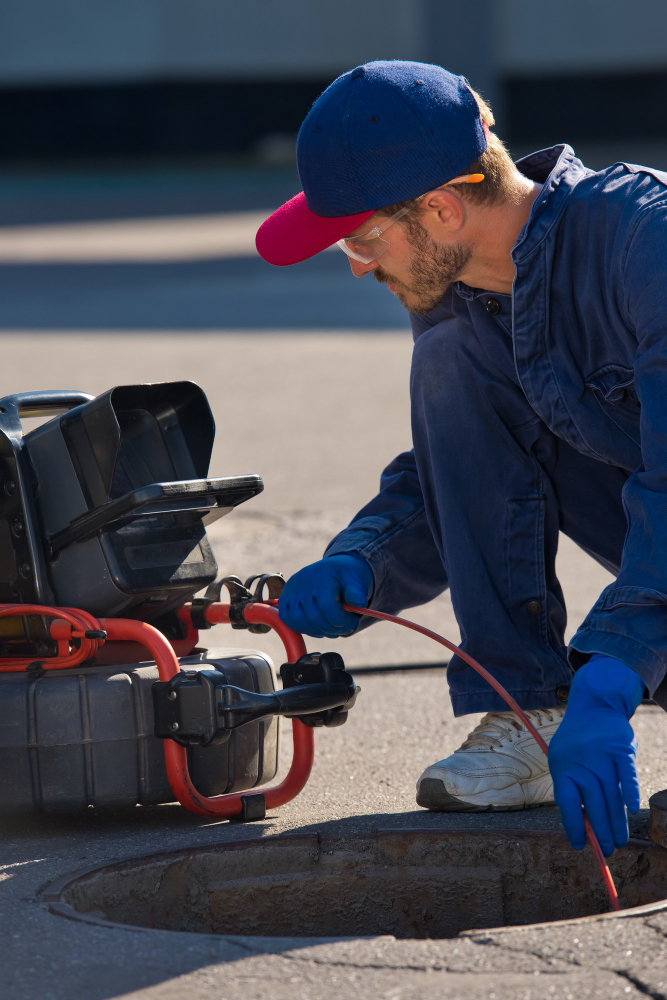
A camera run after the line has been cleared and the pipe walls are clean produces the most accurate diagnostic picture available. Defects that were hidden behind root masses or grease coating are now visible. The extent of root intrusion, the presence or absence of cracks and offsets, and the condition of the pipe wall throughout the full run can all be assessed from post-clearing footage in a way that is not possible from footage taken when the pipe is still partially obstructed.
The sewer inspections and locating process after a clearing event should be treated as a standard step, not an optional add-on. It is what converts a reactive response to a backup into actionable information about whether the pipe needs repair.
Recurring backups mean the line is sending the same warning twice
A sewer line that backs up once, gets cleared, and never backs up again is a different situation from a line that backs up, gets cleared, and backs up again six months later. The second scenario is a pattern, and patterns have causes that repeat until the underlying condition is addressed.
Sewer line backup causes often repeat when the pipe has roots or a belly
Root intrusion and structural bellies are the two most common causes of recurring backups in Seattle side sewers. Both have the same property: they do not resolve through cleaning alone.
Roots regrow through the same entry point after every clearing because the entry point, the crack or separated joint, is still open. A belly reaccumulates solids after every cleaning because the slope is still wrong and solids still settle at the low point. Cleaning removes the accumulated material. It does not change the condition that causes the material to accumulate.
A homeowner who has had the same section of pipe cleared twice in eighteen months should ask, before the third clearing, what the post-clearing camera showed after the second one. If the answer is that no camera was run, that is the missing step. The camera is what distinguishes a pipe that will hold the interval from a pipe that is telling you it needs repair.
A cable may restore flow without removing the buildup on pipe walls
A cable snake opens a channel through the center of a blockage. It does not scour the pipe walls. Grease that coated the walls before the backup remains after the cable pass. Root hairs that were not in the direct path of the auger remain anchored to the pipe wall and continue growing. Scale and mineral deposits that narrowed the pipe diameter are undisturbed.
Hydro jetting addresses the pipe wall, not just the flow path. For a pipe with grease accumulation or an established root presence, jetting after the initial cable clearing produces a cleaner pipe and a longer interval before the next restriction develops. The difference between a cable-cleared pipe and a jetted pipe, viewed on camera, is visible enough that most homeowners who see both understand immediately why the intervals differ.
Waiting for the next backup can make damage reach finished rooms
A pipe that has backed up once and was cleared without camera inspection or repair is a pipe with an unknown condition. The next backup may follow the same pattern, or it may be more severe if the underlying condition has progressed. A backup that stays in the basement is a cleanup problem. A backup that reaches a finished living room or a bedroom is a much larger remediation project.
The cost and disruption of a sewer camera inspection after a clearing event is small relative to the cost of remediating a finished room that was reached by a backup that could have been anticipated. The inspection is the risk management step.
Prevention starts with knowing what your sewer line is up against
Prevention is not complicated in concept. It is a matter of knowing the condition of the pipe before a backup forces the issue, addressing the conditions that make backups likely, and not treating cleaning as a substitute for repair when the pipe has a structural problem.
Older Seattle side sewers should be scoped before problems become urgent
A Seattle home built before 1970 with clay or concrete lateral pipe that has never been camera-inspected is a home with an unknown underground condition. The pipe may be in reasonable shape. It may have root intrusion at several joints, a belly at the low point, or a partially collapsed section near the right-of-way. There is no way to know without looking.
A proactive camera inspection on a pipe that has not been inspected costs a few hundred dollars and produces a documented condition report. It may confirm that the pipe is in adequate condition and does not need attention for several years. It may identify a developing problem that can be addressed as a planned repair rather than an emergency response. Either outcome is better than discovering the pipe condition during a backup. The 5 signs you need to hire a professional to check out your sewers are useful reference points, but the absence of those signs in an uninspected older pipe does not mean the pipe is sound.
Hydro jetting can help when buildup is the real cause
For pipes where the camera shows buildup, scale, and root hair presence without structural defects, periodic hydro jetting as a maintenance measure addresses the actual cause of accumulation rather than its symptom. A pipe that is jetted to a clean condition and re-inspected on a two-to-three-year cycle is being actively maintained. A pipe that is only cabled when it backs up is being reactively managed.
The distinction in outcomes is meaningful over a ten-year period. Proactive maintenance on a pipe in adequate structural condition extends its service life and reduces the frequency and severity of backup events. Reactive cleaning on a deteriorating pipe delays repair at increasing cost.
Repair or lining may be the only way to stop sewage backing up into home drains
When the camera shows structural defects that maintenance cannot address, the right prevention is repair. A pipe with root entry points at multiple joints, installed in clay tile that has been in the ground for eighty years, will continue to produce backups on a shortening cycle until the entry points are sealed by CIPP lining or the affected sections are replaced.
A pipe with a belly that catches solids regardless of how clean the walls are will produce recurring backups until the belly is corrected by excavation and re-grading. Maintenance is the right tool for a pipe in adequate structural condition. Repair is the right tool when maintenance is doing the work that structural correction should be doing.
Conclusion
A sewer backup is an unpleasant event, but it is also information. It tells you that something in the main lateral is no longer handling normal flow, and it gives you the opportunity to find out whether that something is a one-time accumulation or a structural condition that will keep producing the same problem.
The immediate response is straightforward: stop all water use, protect the affected area, and get the line cleared by a contractor who will also run a camera after the clearing. What the camera shows after the pipe is clean is the decision point. A pipe with no structural findings is a pipe you maintain. A pipe with roots, bellies, offsets, or cracks is a pipe you repair before the next backup reaches somewhere you cannot easily clean up.
If your Seattle home has experienced a backup, or if slow drains and recurring clearing cycles are telling you the pattern has already started, contact Seattle Select Sewers for a camera inspection and a straightforward assessment of what your line actually needs.