Seattle’s tree canopy is one of the city’s defining features. It is also the primary reason so many homeowners in older neighborhoods end up with a sewer backup that a cable snake cannot fully resolve. Roots seek moisture, clay and concrete pipe joints are not watertight, and the math is simple: over time, the roots win.
In this article, you will learn how hydro jetting works, when it is the right tool for a root-blocked or buildup-clogged line, when it is not safe to use, and what the results of a jetting job can tell you about the next step for your sewer.
Let’s break down the key points you should consider.
- A sewer line that keeps backing up usually needs more than another cable cleaning
- Hydro jetting clears the pipe wall instead of punching a temporary hole
- Tree roots tell you the pipe has an opening somewhere
- Hydro jet drain cleaning is not safe for every old Seattle sewer line
- Jetting can buy time, reveal the real problem, or prepare the line for repair
Keep reading to understand when hydro jetting is the right call for your Seattle side sewer, and when the camera footage tells a different story.
Hydro jetting in Seattle refers to high-pressure water cleaning of residential and commercial sewer lines, using a motorized pump, a reinforced hose, and a rotating nozzle to scour the full circumference of the pipe interior. Operating pressures typically range from 1,500 to 4,000 psi, depending on pipe material, blockage type, and pipe condition.
A sewer line that keeps backing up usually needs more than another cable cleaning
A cable snake, or mechanical rooter, works by driving a rotating auger through a clog to create an opening. It is fast, inexpensive, and effective for a true single-point obstruction close to a fixture. For a main sewer line with distributed buildup, recurring root growth, or a combination of problems across a longer run, snaking restores temporary flow without addressing what caused the restriction.
Slow drains across the house point to buildup in the main line
When only one fixture drains slowly, the problem is usually local, a partial clog in the branch line serving that sink or tub. When multiple fixtures in different parts of the house drain slowly at the same time, the restriction is almost certainly downstream of where all those branches converge, which means it is in the main sewer line.
Common causes of main line restriction include:
- Accumulated grease and soap scum coating the pipe walls over years
- Mineral scale from hard water narrowing the effective diameter
- Fine root hairs that have spread across a joint and begun catching solid waste
- A partial belly or sag where solids settle faster than flow can carry them away
A cable snake pushed through any of these conditions opens a channel through the center of the restriction. The walls remain coated, the roots remain in place, and the restriction rebuilds. Hydro jetting addresses the full pipe wall, not just the path through the middle.
Roots can reopen after snaking because the pipe walls are still packed
Root intrusion in Seattle side sewers follows a predictable pattern. A fine root hair finds a joint, follows moisture into the pipe, and begins growing laterally across the flow path. Over months, it catches grease, scale, and solid waste. Over years, it builds into a dense mass.
Snaking through that mass creates an opening. It does not remove the root material from the pipe walls or the joint it entered through. Within weeks to months, the root mass fills back in because the entry point is intact and the root system outside the pipe is still alive and growing.
This is why many Seattle homeowners report getting a cleanout every six to twelve months for years before anyone suggests looking at the pipe itself. The cleanout works until it does not. At that point, the root mass is usually large enough to require mechanical cutting before sewer root removal by jetting can fully clear the line.
Grease, scale, and sludge make small root problems worse over time
Root intrusion and buildup compound each other. A pipe wall coated in grease and mineral scale provides purchase for root hairs to anchor. Root masses catch solids more aggressively than a smooth pipe wall would. The result is a restriction that is part organic, part mineral, and part structural, and that a single-pass cable cleaning cannot address in its entirety.
In Seattle’s older neighborhoods, many side sewers are clay tile pipe that has been in service for eighty to one hundred years. Clay tile does not corrode the way cast iron does, but the mortar joints deteriorate, the pipe develops rough interior surfaces over time, and those surfaces accumulate scale. A line with this history is often a candidate for both jetting and CIPP lining, in that order. The warning signs that a Seattle home needs a sewer line inspection frequently include exactly this pattern: recurring slow drains, periodic cleanouts, and a gradual worsening over years.
Hydro jetting clears the pipe wall instead of punching a temporary hole
Where a cable snake is a spike driving through a clog, hydro jetting is a pressure washer working from the inside. The distinction matters because the outcome is different: a jetted line comes out with clean walls, not just a cleared centerline.
High pressure sewer cleaning sends water through the full pipe diameter
A hydro jetting setup consists of a water tank, a high-pressure pump, a reinforced hose rated for the operating pressure, and a nozzle at the working end. The nozzle has forward-facing jets that break up blockages and rearward-facing jets that propel the hose forward and simultaneously scour the pipe wall behind it.
As the nozzle travels the length of the pipe, it cleans a 360-degree path. Grease is emulsified and flushed downstream. Mineral scale is fractured and flushed. Root material, depending on its density, is shredded, dislodged, and flushed. What remains after a full jetting pass is a pipe interior that looks substantially different on camera than it did before: walls visibly clean, flow path fully open, and any remaining structural defects clearly visible now that the debris is gone.
That last point matters as much as the cleaning itself.
Sewer jetting Seattle homes often starts with camera inspection
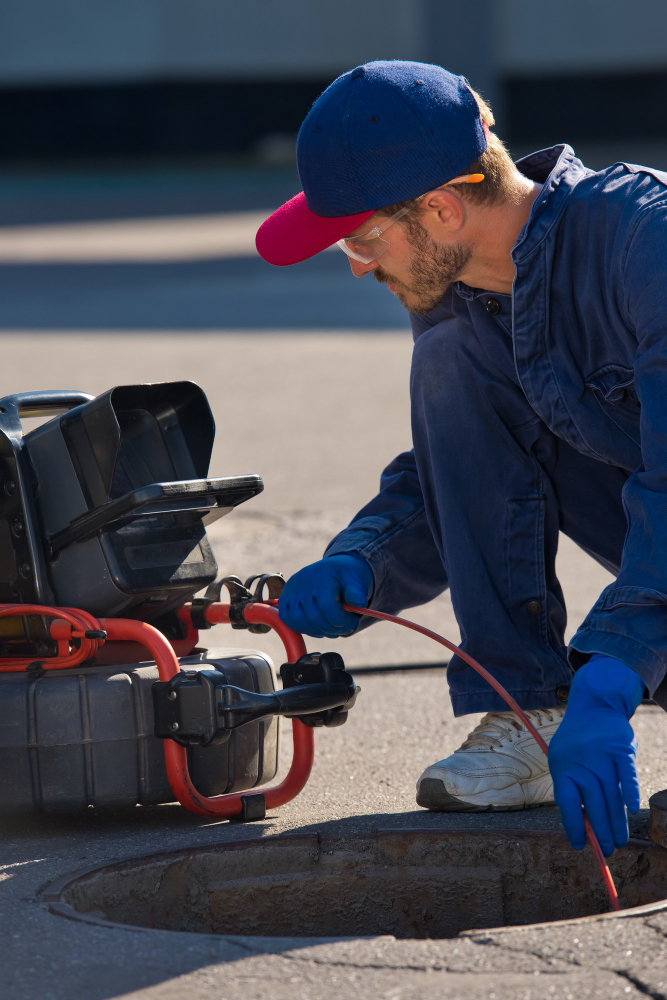
Running a camera before jetting serves two purposes. First, it tells the operator what is in the pipe, which informs the nozzle selection, operating pressure, and approach. A line with heavy root growth needs a different nozzle configuration than a line with grease and scale. A fragile or partially collapsed pipe needs lower pressure than a sound PVC or cast iron line.
Second, pre-jetting camera footage documents the pipe condition before the cleaning, which protects both the contractor and the homeowner. If the camera reveals a condition that makes jetting risky, the work can be paused before it causes additional damage. The sewer inspection and locating step is not an add-on. For older Seattle lines, it is the basis for doing the cleaning safely.
The nozzle choice matters when roots, grease, or mineral scale are involved
Not all hydro jetting nozzles do the same work. The four most common types used in residential sewer cleaning are:
- Penetrating nozzles, which concentrate forward pressure to break through dense clogs and root masses before the wideout pass
- Rotating nozzles, which spin under water pressure and scour the pipe wall in a continuous circular pattern, suited for grease and scale
- Root-cutting nozzles, which carry chain flails or hardened cutters and are used when root masses are too dense for water pressure alone to dislodge
- Flushing nozzles, used on the final pass to ensure debris is fully carried to the main
A contractor who uses one nozzle for every job is not adapting to the pipe condition. Asking what nozzle will be used and why is a reasonable question, and a contractor with field experience will have a specific answer based on what the pre-jetting camera showed.
Tree roots tell you the pipe has an opening somewhere
Hydro jetting is the most effective non-destructive method available for clearing root intrusion from a sewer line. It is not a permanent fix. That distinction matters for how homeowners plan the next step after jetting restores flow.
Tree root removal sewer Seattle service can restore flow but not seal the crack
Sewer root removal by hydro jetting removes the root material that is inside the pipe. It does not affect the root system outside the pipe, and it does not close the joint, crack, or offset through which the roots entered.
The root system outside the pipe is still alive, still seeking moisture, and still knows where the opening is. Under favorable conditions, root hairs begin re-entering the same joint within twelve to eighteen months of being cleared. Under the wet Seattle soil conditions that prevail through most of the year, that timeline can be shorter.
Jetting is the right first step when the goal is to restore flow and get a clean pipe wall for camera inspection. It is not the complete answer when the goal is to stop roots from returning.
Root masses near joints usually come back unless the pipe is repaired
The permanent solution to root intrusion is to eliminate the entry point. For a clay tile pipe with deteriorated mortar joints, the entry points are distributed along the entire run, and the most durable fix is CIPP lining, which creates a smooth, jointless interior surface that roots cannot penetrate.
For a pipe with one or two isolated entry points at damaged joints, a sewer pipe patch at the specific location, installed after jetting clears the line, can seal the entry point without requiring full-run rehabilitation.
The camera footage taken after jetting, when the pipe walls are clean and visible, is what determines which of those approaches is appropriate. That post-jetting inspection is where the real diagnostic happens, not before the cleaning.
Heavy roots can hide breaks that only show after the line is cleaned
A dense root mass inside a sewer pipe acts as a structural plug. When the roots are cleared and the camera runs the clean line, what was holding back also disappears: fractures, offset joints, circumferential cracks, and in some cases the leading edge of a collapse that the roots had been masking.
This is one reason why a jetting job sometimes produces camera footage that looks worse after cleaning than the original inspection suggested. The pipe did not get worse. The cleaning revealed what was already there. The understanding of tree root damage to sewer lines in Seattle is important here: the root mass is the symptom, not the cause. The cause is the opening in the pipe, and jetting makes that opening visible.
Hydro jet drain cleaning is not safe for every old Seattle sewer line
High-pressure water at 3,500 psi is a powerful tool. In the right pipe, it is exactly the right tool. In the wrong pipe, it can cause damage that exceeds the problem it was meant to solve.
Fragile clay, collapsed sections, and severe offsets can make jetting risky
The conditions that make jetting inadvisable fall into three categories:
- Structural fragility: Orangeburg pipe, which was used extensively in Seattle construction from the 1940s through the early 1970s, is made of compressed tar paper and has a limited ability to withstand pressure. High-pressure jetting can accelerate its deterioration or cause sections to separate.
- Existing collapse: A section that has already lost structural integrity cannot absorb the pressure of a full jetting pass. Jetting into a collapsed section risks dislodging debris in a way that worsens the blockage or drives material into the connection at the main.
- Severe joint offsets: Where one pipe section has shifted significantly relative to the next, the edge of the offset acts as a ledge. A nozzle driven into that ledge at high pressure can widen the gap or cause the joint to separate further.
In all three cases, the right step is repair before cleaning, not cleaning before repair.
A camera check protects you from blasting a pipe that needs repair first
The pre-jetting camera inspection is the protection against all three of the above scenarios. It is not possible to know whether a pipe is safe to jet without seeing its interior condition first. A contractor who jets without running a camera is accepting a risk that belongs to the homeowner.
This matters particularly in Seattle, where the age distribution of residential sewer pipe means that Orangeburg, clay tile with severe mortar loss, and partially collapsed sections are all genuinely common. According to Seattle Public Utilities, structural defects including collapses, severe offsets, and major fractures all warrant repair before any mechanical or hydraulic cleaning is attempted.
The right contractor explains when lower pressure or another method is safer
A competent hydro jetting contractor adjusts operating pressure to the pipe condition. A fragile line that still benefits from cleaning can often be serviced at lower pressure with a gentler nozzle, clearing buildup and light root material without subjecting the pipe to the full operating range of the equipment.
When the camera shows conditions that make any jetting inadvisable, the right contractor says so and explains what needs to happen first. That may mean a sewer pipe patch at a specific defect before the cleaning proceeds, or a decision to move directly to lining or replacement rather than attempting to clean a pipe that is not a safe candidate. The common mistakes when hiring a sewer repair company include accepting jetting on a pipe that was never inspected first. Asking about the pre-jetting protocol is one of the most useful questions a homeowner can ask before any work begins.
Jetting can buy time, reveal the real problem, or prepare the line for repair
Hydro jetting is not always the final step. Depending on what the post-jetting camera shows, it may be the beginning of a more complete repair process, the diagnostic that confirmed the pipe needs rehabilitation, or a maintenance interval that extends the life of a line that is not yet ready for lining.
Clean pipe walls make camera footage easier to trust
The single most practical reason to jet before a definitive camera inspection is that a dirty pipe is a harder pipe to read accurately. Grease coating on the pipe wall obscures surface cracks. Root material covering a joint hides the extent of the offset beneath it. Scale buildup makes it difficult to distinguish between deterioration and normal pipe aging.
A post-jetting camera pass on clean pipe walls gives the contractor and the homeowner the clearest possible view of actual pipe condition. Defects that were ambiguous before cleaning become unambiguous after it. Fractures that were hidden under root mass are now visible and measurable. This footage is what a repair recommendation should be based on, not pre-jetting footage where half the pipe interior is obscured.
CIPP lining often needs jetting before the liner can bond
For homeowners who are already planning trenchless sewer repair, hydro jetting is a required step, not an optional one. A CIPP liner bonds to the pipe wall through contact with the resin during cure. If the pipe wall has grease, root debris, mineral scale, or any material that prevents direct liner-to-pipe contact, the liner will cure with voids, unbonded sections, or wrinkles that reduce its service life.
In the sequence of a properly executed lining job, jetting comes first, a post-jetting camera inspection confirms the pipe is ready, and then the liner is introduced. Jetting and lining on the same visit is efficient and represents the standard for quality trenchless rehabilitation work.
Recurring backups after jetting mean the pipe has a structural issue
If a pipe is jetted to a clean, open condition and backs up again within a short period, whether weeks or a few months, the cause is almost certainly structural. The pipe has an entry point that roots are exploiting, a belly where solids accumulate regardless of how clean the walls are, or a defect that is generating debris faster than normal flow can carry it away.
A single backup after jetting can be coincidence. A pattern of short intervals between cleanouts, each one necessary because the previous one only lasted a limited time, is a strong diagnostic signal. The guide to preventative sewer maintenance for homeowners is relevant here: maintenance cleans a functioning system. When maintenance is doing the work that repair should be doing, the system is no longer functional in the way that maintenance is designed to preserve.
Conclusion
Hydro jetting is one of the most effective tools available for clearing the buildup, root intrusion, and accumulated debris that cause sewer backups in Seattle’s older residential sewer lines. It does more than cable cleaning because it works on the full pipe wall rather than a path through the center, and the clean pipe it produces is the best possible surface for post-jetting camera inspection and, where appropriate, CIPP lining.
It is not a universal fix. It is not safe for every pipe. And it does not seal the entry point that let roots into the line in the first place. Used correctly, it restores flow, reveals the actual condition of the pipe, and sets up whatever comes next, whether that is a maintenance interval, a spot repair, or a full rehabilitation.
If your drains are backing up repeatedly or a recent cleanout lasted less time than the one before it, contact Seattle Select Sewers for a camera inspection and an honest assessment of whether jetting is the right next step or whether the pipe is telling you something more.