When a sewer camera comes back showing cracked clay, root intrusion, or a pipe that has been quietly failing for years, the first question most Seattle homeowners ask is whether the yard has to be dug up. Trenchless sewer repair exists precisely to answer that question, but it is not a universal solution, and the word “trenchless” covers more ground than most homeowners realize.
In this article, you will learn how cured-in-place pipe lining actually works, what pipe conditions make it viable or rule it out, and what drives sewer liner cost in the Seattle market.
Here’s what you need to know.
- Your yard might not need to be torn open to fix the sewer line
- CIPP lining works only when the old pipe can still hold its shape
- The liner becomes the new pipe inside the damaged one
- Sewer liner cost in Seattle depends on access, prep, and pipe condition
- Trenchless is the right choice when it solves the real problem, not just the digging problem
Keep reading to understand exactly when trenchless repair is the right call for your Seattle side sewer, and when it is not.
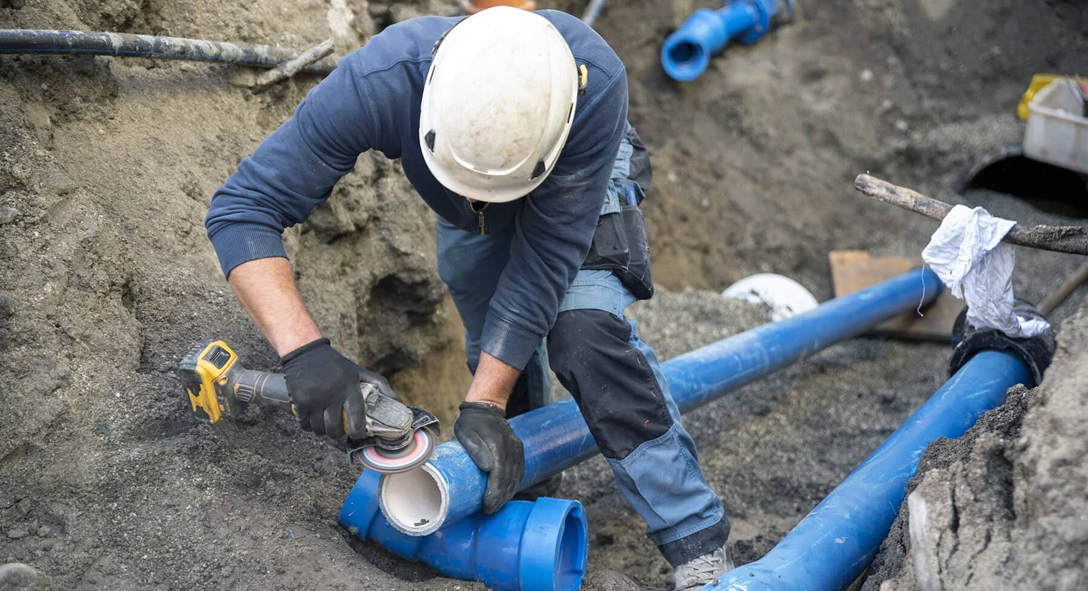
Trenchless sewer repair in Seattle refers to methods that rehabilitate or replace a damaged sewer pipe from the inside, without excavating the full length of the line. The most common method for residential side sewers is cured-in-place pipe lining, or CIPP, in which a resin-saturated felt liner is inserted into the existing pipe and cured in place to form a new, seamless pipe within the old one.
Your yard might not need to be torn open to fix the sewer line
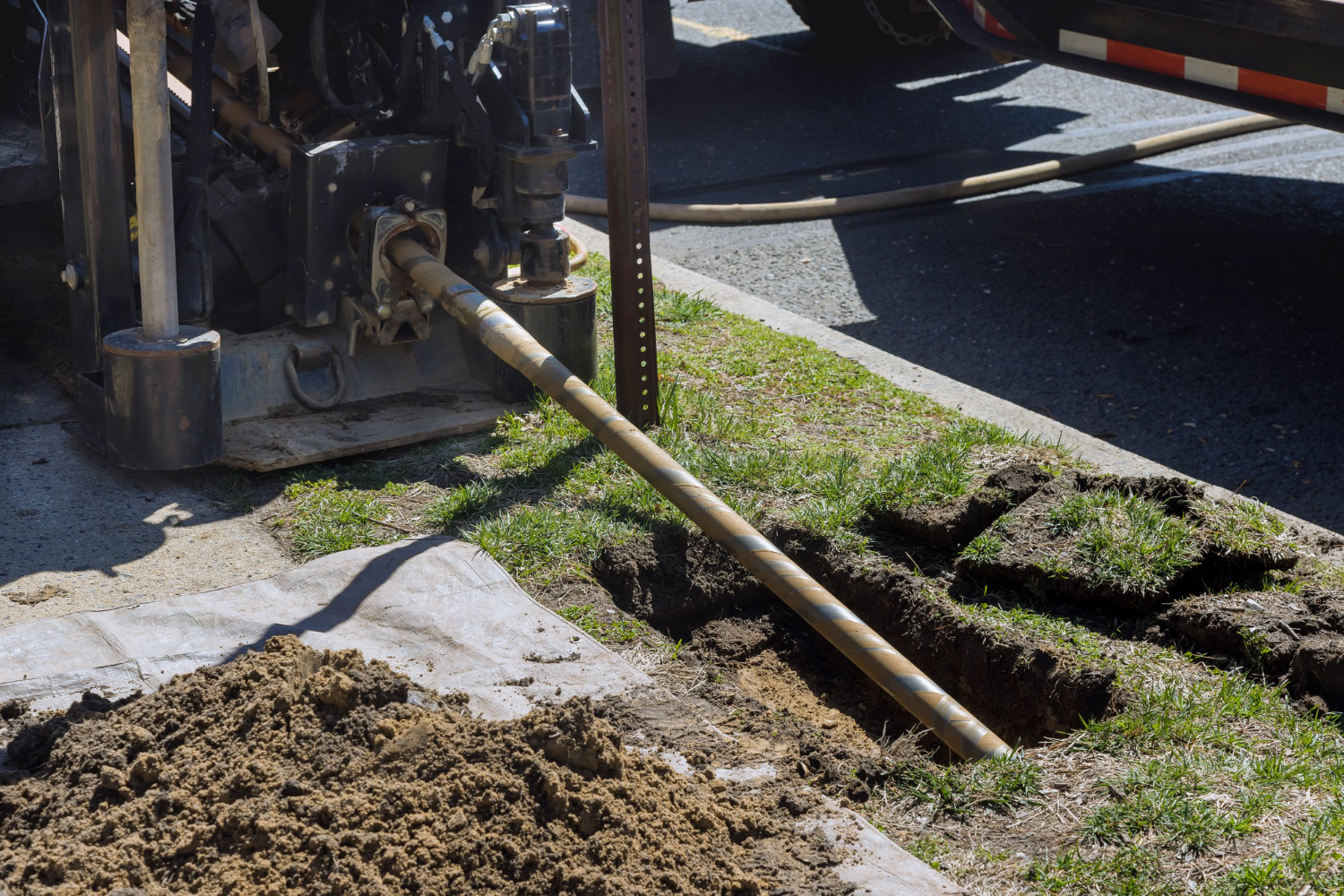
The appeal of trenchless repair is straightforward: a contractor accesses the pipe through an existing cleanout or a small entry pit, runs the liner or equipment through the interior, and completes the repair without cutting a trench across the property. For Seattle homeowners with mature landscaping, concrete hardscape over the sewer run, or lines that pass under driveways or retaining walls, the value of avoiding excavation can be significant.
No-dig sewer repair Seattle still needs at least one access point
Trenchless does not mean access-free. A CIPP liner needs to be fed into the pipe from somewhere, which means the contractor requires at least one entry point, typically an existing sewer cleanout, and in some cases a small pit excavated at one end of the repair section.
If your home does not have an accessible sewer cleanout at a usable diameter, the first step before any lining work can proceed is installing one. That addition is a separate cost and should be itemized in any trenchless quote you receive.
Homes built before the 1960s in Seattle frequently lack cleanouts altogether, or have cleanouts that are buried, undersized, or in locations that prevent liner insertion. A contractor who does not raise this during the inspection phase has not fully scoped the job.
Pipe lining can avoid driveways, retaining walls, and mature landscaping
The economic and practical case for trenchless sewer repair in Seattle is strongest when the pipe runs beneath surfaces or structures that would be costly or disruptive to disturb. A sewer line that passes under a poured concrete driveway, a retaining wall, a garden that took twenty years to establish, or the foundation of an outbuilding is a strong candidate for lining, because the cost of restoring those surfaces after open-cut excavation can exceed the cost of the pipe work itself.
Seattle’s older residential neighborhoods — Ballard, Madrona, Seward Park, and the hillside blocks of West Seattle among them — frequently combine all of these conditions: century-old infrastructure, dense mature plantings, and hardscape that was installed long after the sewer line was laid.
Trenchless does not mean invisible, instant, or mess-free
Lining a residential side sewer requires a hydro jetting setup, a resin mixing station, a curing unit (hot water, steam, or UV light depending on the system), and a post-cure camera inspection. It is a full-day operation for a standard residential line, and the crew, equipment, and access point preparation all leave a visible footprint while the work is underway.
Curing time alone can run several hours, during which wastewater use inside the home must be minimized. Some liner resins produce a noticeable odor during cure, which dissipates once the process is complete. Understanding what the process actually involves prevents the frustration of expecting a quick, invisible fix and receiving a job that looked and felt more substantial than anticipated.
CIPP lining works only when the old pipe can still hold its shape
A CIPP liner is applied to the interior wall of the existing pipe. It does not create structure where none exists. For lining to work correctly, the host pipe must retain enough of its original shape to allow the liner to seat fully against the wall, compress uniformly during curing, and form a continuous bond along the full length of the repair.
Crushed sections and major bellies can rule out a sewer liner
A pipe that has collapsed, a section where the crown has dropped to the invert, or a belly so severe that the pipe holds standing water along a significant run — none of these conditions can be corrected by lining. The liner follows the shape of the pipe it is inserted into. If that shape is wrong, the liner will cure in a shape that is also wrong.
Collapsed sections require open-cut excavation to restore the pipe profile before any liner can be considered. Major bellies, where the sag occupies more than half the pipe diameter, typically require re-grading the line through excavation and re-installation at the correct slope. According to Seattle Public Utilities, a belly of 50 percent or more of pipe diameter is considered high risk for chronic backups and is not a candidate for lining alone.
A contractor who proposes lining without disclosing that a belly exists in the run is either working from incomplete camera data or omitting information the homeowner needs to make a sound decision.
Roots need to be cleared before the liner can bond properly
Root intrusion is the most common reason Seattle homeowners end up needing sewer root removal before lining can proceed. The pipe interior must be clean and smooth for the liner to adhere correctly. Roots, debris, scale buildup, and any projecting material that prevents the liner from pressing uniformly against the pipe wall will create voids, unbonded sections, or wrinkles in the finished liner, all of which reduce its effective lifespan.
In practice, this means that nearly every CIPP lining job in Seattle begins with hydro jetting to clear the pipe interior. For lines with heavy root growth or thick mineral scale, mechanical cutting may be required before jetting. That prep work takes time and has its own cost, which is why a quote that does not specify the extent of cleaning required is not a complete quote.
Camera footage should show the full run before anyone recommends lining
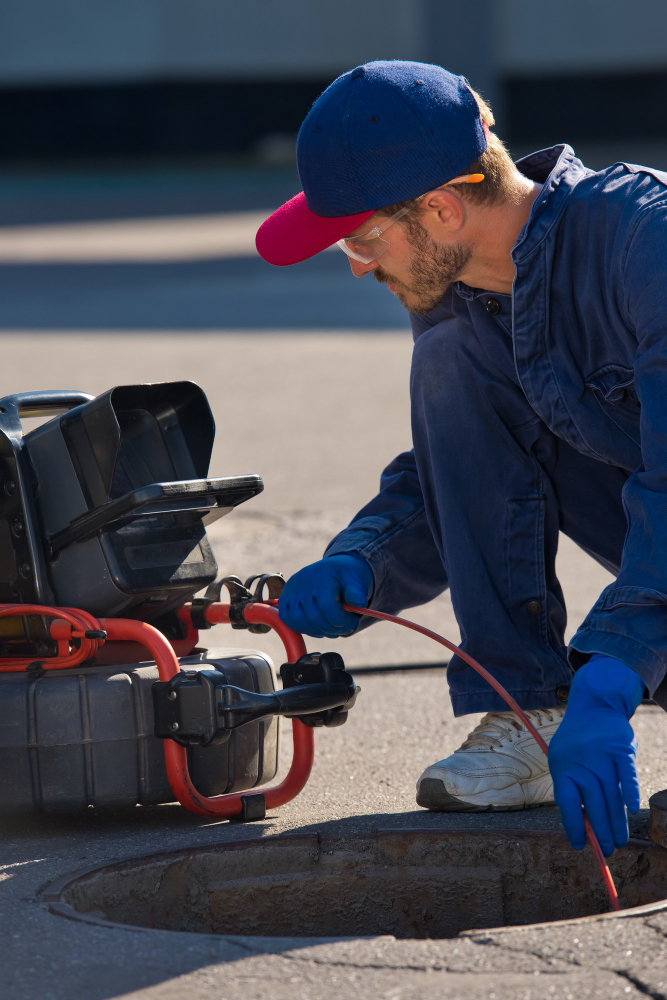
A partial camera inspection, one that stops at a blockage or only covers the accessible section near the house, is not sufficient to recommend lining for the full run. The camera needs to travel the entire length of pipe being considered for rehabilitation so the contractor can confirm that no section is collapsed, that no offsets are too severe for liner insertion, and that the pipe diameter is consistent throughout.
The sewer inspection and locating process should also record pipe depth at multiple points along the run. Depth data matters because it affects both the access point location and whether any section of the line passes through conditions, rock, groundwater, or a right-of-way structure, that could complicate liner insertion.
Ask to see footage of the full run before agreeing to any repair scope. This is standard practice, and a contractor who cannot provide it has not completed the diagnostic.
The liner becomes the new pipe inside the damaged one
Understanding what CIPP lining actually produces helps homeowners evaluate both the process and the warranty they are being offered. A well-installed liner is not a patch. It is a structural, jointless pipe that seals cracks, resists root re-entry, and is designed to last decades inside the original host pipe.
Cleaning and prep matter as much as the liner itself
The long-term performance of a CIPP liner depends more on the preparation of the host pipe than on the liner material itself. A resin that cannot bond to a contaminated or wet pipe wall, or a liner inserted into a pipe with residual root material, will develop voids, delaminate over time, or fail at the points where bonding was incomplete.
Thorough hydro jetting at the correct pressure for the pipe material, followed by a pre-lining camera pass to confirm the interior is ready, is the industry standard before any liner is introduced. General sewer maintenance records can help establish what the pipe has accumulated over time and inform how aggressive the prep cleaning needs to be.
When evaluating a lining contractor, ask specifically what cleaning protocol they follow and what the pre-lining camera inspection will confirm before work proceeds. The answer tells you a great deal about how the contractor manages quality.
CIPP lining Seattle projects use resin that cures inside the pipe
The liner itself is a felt or fiberglass fabric tube saturated with a two-part epoxy resin. It is inserted into the pipe either by inversion, where compressed air turns the liner inside-out as it is pushed into the pipe, or by pulling it through on a winch line. Once positioned to cover the full repair section, the liner is inflated with an internal bladder so it presses firmly against the pipe wall.
Curing is then initiated by circulating hot water, steam, or UV light through the liner, depending on the resin system used. Cure times range from one to several hours. When curing is complete, the bladder is removed and the liner has become a rigid, seamless, root-resistant pipe inside the original host. The internal diameter is reduced by approximately a quarter inch, an amount that does not meaningfully affect flow capacity and is offset by the smoother interior surface. According to Portland.gov’s Bureau of Environmental Services, CIPP lining restores the pipe to near-new condition and is a recognized trenchless sewer construction method used at both municipal and residential scale.
Reinstating branch connections keeps the repair from creating new backups
A side sewer rarely runs as a single uninterrupted pipe from the house to the main. In most Seattle homes, one or more branch connections, lines from additional fixtures, secondary structures, or neighboring properties on a shared lateral, tie into the main run. When a liner is installed over these connections, it covers them.
Reinstatement is the process of re-opening those branch connections from the inside using a robotic cutter, guided by camera, after the liner has cured. Skipping reinstatement on an active connection creates a new blockage point in a newly lined pipe, which is an outcome worse than the problem being fixed.
Any lining proposal for a Seattle side sewer should explicitly address which branch connections exist, which will be reinstated, and who is responsible for confirming that reinstatement is complete before the crew leaves the site.
Sewer liner cost in Seattle depends on access, prep, and pipe condition
Trenchless lining is not a commodity service priced purely by footage. The variables that move the number most significantly have nothing to do with the cost of the liner material.
A simple straight run costs differently than a line under concrete
A forty-foot residential lateral running from a cleanout in an accessible backyard through open soil to the main is the low end of the complexity range. The same footage under a concrete driveway, requiring an access pit at one end and surface restoration on the other, carries meaningfully higher costs even though the liner itself is identical.
In Seattle, where many side sewers connect to mains under alleys or streets, the access point is frequently in or adjacent to the public right-of-way. That location adds a permit, sometimes traffic control, and pavement restoration to the job scope. Getting a free sewer estimate that itemizes access and restoration separately from the lining work itself is the only way to compare bids on an equal basis.
Heavy root cutting or descaling can change the estimate
A line with light root intrusion may need thirty minutes of hydro jetting before lining. A line that has not been serviced in twenty years, with roots at every joint and mineral scale reducing the interior diameter, may require mechanical root cutting, multiple jetting passes, and a second camera review before the contractor can confirm the pipe is ready.
That cleaning work is billed separately from the liner in most contracts, and the full scope of it is not always knowable until the pipe is opened and the camera has run the full length. A competent contractor gives you a range estimate that accounts for the likely cleaning scope based on what the initial inspection shows, and explains clearly under what conditions additional prep charges would apply. The signs that a Seattle home needs trenchless sewer repair often include years of root-driven cleanouts, which is a reliable indicator that prep cleaning will be on the more intensive end.
Cheaper lining can fail early when the pipe was not ready for it
Liner material quality varies, and resin systems differ in cured strength, flexibility, and root resistance. A liner installed in a pipe that was not adequately cleaned, or cured under conditions that did not meet the resin manufacturer’s temperature and time specifications, will underperform regardless of the material grade.
The most common cause of premature lining failure in residential applications is not poor liner material. It is inadequate prep, rushed curing, or insertion into a pipe that was not actually a suitable candidate for lining. A 5-year-old liner that has delaminated or developed voids is a more expensive outcome than a correctly priced lining job done once and done properly.
Ask any contractor for the manufacturer specification sheet on the liner they use, and ask what warranty they offer on the installed product, not just on the resin manufacturer’s material guarantee.
Trenchless is the right choice when it solves the real problem, not just the digging problem
CIPP lining is a genuine long-term repair when it is matched to the right pipe condition. It is a poor investment when it is chosen primarily to avoid the inconvenience of excavation, without confirming that the pipe is actually a suitable candidate.
Pipe lining Seattle homes makes sense when excavation would cause major damage
The strongest case for lining is a pipe that is structurally compromised but not collapsed, with root intrusion and cracking distributed along a run that passes under hardscape, landscaping, or structures that would be costly to excavate and restore. In that scenario, lining delivers a fifty-year service life at a lower total cost than the open-cut alternative when surface restoration is properly included in the comparison.
Seattle’s housing stock makes this scenario common. Homes built before 1950 with clay lateral pipe, located on lots with mature trees and concrete hardscape installed in subsequent decades, represent a large share of the sewer repair work done in the city. The importance of preventative sewer maintenance for older homes often comes down to catching pipe degradation before it reaches the point where lining is no longer viable and excavation becomes the only option.
Spot repairs may still be needed before or instead of lining
Not every line warrants full-run lining. A pipe in generally sound condition with one isolated crack or a short section of offset joint may be better served by a targeted sewer pipe patch at the defect location than by lining the entire run.
Conversely, a pipe that has a collapsed section near the property line may require open-cut excavation to restore that section before the remainder of the run can be lined. In that case, the final repair is a combination of methods, and the quote should reflect the scope of each. A contractor who presents lining as the solution to every problem, regardless of what the camera shows, is not working from the diagnostic. A contractor who explains where lining ends and spot work or excavation begins is.
A good contractor explains why lining beats replacement for your line
The case for lining your specific pipe should be built on three things: the camera footage that documents the defect type and distribution, a comparison of the total cost of lining versus excavation that includes all surface restoration, and a clear explanation of why the pipe condition makes lining the durable choice rather than a workaround.
The trenchless versus traditional sewer repair cost comparison for Seattle homes is not a fixed ratio. It depends on your specific pipe, your property, and what the ground between your foundation and the main actually contains. The right contractor walks you through that comparison for your job, not as a general sales point about trenchless technology.
Conclusion
Trenchless sewer repair is one of the most significant advances in residential sewer rehabilitation of the past thirty years, and for Seattle homeowners with aging clay pipe under driveways, gardens, and retaining walls, CIPP lining is often the most practical and cost-effective path forward. But the method earns that outcome only when the pipe condition supports it, the preparation is done correctly, and the contractor is working from complete camera data rather than from a preference for one repair type over another.
The yard question is secondary. The pipe question comes first. A liner that is properly installed in a correctly prepared host pipe will outlast most of the other systems in the home. A liner that is installed in a pipe that was not ready, or that was chosen because it avoids the inconvenience of digging, is a deferred problem.
If you have received a camera inspection showing root intrusion, cracking, or deterioration along your side sewer and want an honest assessment of whether lining is the right answer for your pipe, contact Seattle Select Sewers for a complete evaluation.