If you have had your drains snaked more than once in the past year and the clogs keep coming back, the problem is not bad luck. It is a sign that something inside the pipe is catching debris faster than a cable snake can clear it, and the only way to break that cycle is to clean the pipe completely rather than punching a temporary hole through whatever is blocking it. Understanding the benefits of hydro jetting for Kent homes starts with understanding why recurring drain problems happen here in the first place, and why the standard approach of snaking and chemical drain cleaners is not solving them.
Kent sits in the Green River Valley, one of the most flood-prone areas in King County. According to the King County Flood Control District, the Lower Green River flows through Kent in an area where the land is flat, the soil is prone to saturation, and commercial, industrial, and residential development has expanded around a system of levees originally built to protect agricultural land. That geography means Kent homes deal with a consistently high water table, saturated soil for months at a time, and groundwater pressure that stresses aging sewer pipes from the outside in.
Hydro jetting is the most effective way to restore a residential sewer line to full capacity without replacing the pipe. It removes the buildup that causes recurring clogs, clears root growth that a snake barely disturbs, and leaves the pipe clean enough for a camera to assess its structural condition. For Kent homeowners stuck in a cycle of repeat service calls, jetting is the step that breaks the pattern.
In this article, you will learn about:
- Why Kent homes deal with more drain problems than homeowners realize
- What hydro jetting actually does that snaking and store-bought solutions cannot
- The specific advantages Kent homeowners gain from hydro jetting
- How the hydro jetting process works from start to finish
- When hydro jetting alone is enough and when it is not
- Keeping your Kent home’s sewer line clean after jetting
Keep reading to find out why one thorough cleaning often accomplishes more than years of repeated snaking.
Why Kent homes deal with more drain problems than homeowners realize
Recurring drain problems are not just an annoyance. They are a symptom of conditions inside the pipe that get worse over time, and Kent’s geography and housing stock create a combination of factors that accelerate that process.
Life in the Green River Valley means a high water table and saturated soil year-round
Kent’s position on the valley floor puts it in an area where the water table sits close to the surface, especially during the wet months that dominate the Pacific Northwest calendar. That sustained moisture keeps the soil around sewer pipes saturated, which creates two problems. First, groundwater infiltrates cracked or aging pipes through joints and fractures, adding volume the system was never designed to handle. Second, the constant soil moisture attracts tree roots toward any pipe that leaks even trace amounts of warmth or nutrients.
Homes on the East and West Hills face different but related challenges. The hillside soil shifts with seasonal moisture, putting mechanical stress on pipe joints. Homes in the valley floor deal with poor drainage and a water table that presses against the pipe from the outside. Either way, the sewer line is under more environmental stress than in a drier, more stable setting.
Older pipe materials that trap grease, roots, and debris faster as they age
Kent’s housing stock ranges from mid-century homes near the downtown core to newer construction in the East Hill and Meridian neighborhoods. Older homes commonly have clay, cast iron, or concrete sewer laterals that have been in the ground for 40 to 60 years. As these materials age, the interior surface roughens. Cast iron corrodes and develops rust scale. Concrete erodes and exposes aggregate. Clay joints loosen and separate.
A rough interior surface catches everything that passes through: grease, soap residue, toilet paper, food particles, and anything else that enters the drain. Over time, those materials build up into a coating that narrows the pipe and slows flow. Snaking punches a channel through the coating, but it does not remove it. The buildup remains on the walls and begins catching new material immediately after the snake is pulled out.
The FOG problem that builds up silently in every kitchen drain
The City of Kent actively advises homeowners to dispose of fats, oils, and grease properly instead of sending them down the drain, specifically to prevent sewer line blockages. But even with good habits, years of normal kitchen use deposit a layer of grease inside the pipe that hardens, thickens, and narrows the line gradually.
Grease does not dissolve on its own once it has cooled and adhered to the pipe wall. Hot water from the dishwasher may soften it temporarily, but it re-solidifies further downstream. Chemical drain cleaners cannot remove a hardened grease layer. Only physical cleaning, either mechanical or hydraulic, restores the pipe to its original diameter. That is where hydro jetting comes in.
What hydro jetting actually does that snaking and store-bought solutions cannot
The reason recurring clogs keep coming back after snaking is that snaking does not actually clean the pipe. It clears a path. Hydro jetting cleans the pipe, and that distinction explains everything about why the results last longer.
Cleaning the full diameter of the pipe instead of poking a hole through the clog
A cable snake pushes or cuts through the obstruction in the center of the pipe, restoring enough flow for wastewater to pass through. But the material clinging to the pipe walls, the grease, the scale, the root fibers, the mineral deposits, stays in place. Flow resumes, but the pipe is still partially narrowed, and new debris starts accumulating on the remaining buildup immediately.
Hydro jetting uses a specialized nozzle that sprays high-pressure water in multiple directions simultaneously, forward to cut through blockages and backward to scour the pipe walls clean. The water strips the interior surface down to the pipe material itself, restoring the full diameter and removing the environment that allows clogs to form in the first place.
Cutting through root masses that a cable snake just pushes past
Root intrusion is one of the most common sewer problems across the greater Seattle area, and a cable snake is a poor tool for dealing with it. The snake may punch through a root mass or push it aside temporarily, but the roots remain attached to the pipe wall and begin regrowing immediately. Within weeks or months, the blockage returns.
A hydro jetting nozzle cuts through root masses with pressurized water, severing the roots and flushing them out of the pipe. The result is a clean interior with the roots removed rather than displaced. Jetting does not prevent roots from re-entering through the same crack or joint, but it removes them far more thoroughly than snaking and extends the interval before they become a problem again.
Removing the grease layer that keeps attracting new blockages
Grease is the most common contributor to residential sewer blockages nationwide, and it is the hardest substance to remove with a cable snake. The snake passes through the center of the grease coating without disturbing the layer on the walls. Hydro jetting strips the grease off the pipe walls entirely, using the combination of pressure and water volume to emulsify and flush it downstream.
After jetting, the pipe interior is smooth and clean. New grease still enters the line with normal kitchen use, but without an existing layer to adhere to, it takes significantly longer to build back up to a point where flow is restricted.
The specific advantages Kent homeowners gain from hydro jetting
Beyond the technical mechanics, hydro jetting delivers practical benefits that directly affect your budget, your schedule, and the long-term health of your sewer line.
Longer intervals between service calls instead of the same clog every few months
This is the advantage most homeowners care about most. If you have been calling for drain service every three to six months, jetting resets the clock. A pipe that is thoroughly cleaned typically goes years before buildup reaches a level that affects flow, compared to weeks or months after snaking. The service may cost more than a single snake visit, but when measured against a year of repeat calls, jetting almost always costs less in total.
A clean pipe that a camera can actually inspect for damage
A pipe caked with grease, scale, and root debris is impossible to inspect with a camera. The buildup obscures the pipe walls, joints, and structural condition beneath it. After jetting, the pipe is clean enough for a camera inspection to see everything: cracks, corrosion, joint separation, sags, and the true condition of the pipe material.
This pairing of jetting and camera inspection is one of the most valuable steps a homeowner can take. The jetting restores flow, and the camera tells you whether the pipe is structurally sound or heading toward a failure that jetting alone cannot prevent.
Better flow that reduces the risk of backups during heavy rain
Kent’s rainfall and high water table mean that sewer systems operate under more stress during the wet season. Groundwater infiltrates cracked pipes, adding volume to the system at the same time that household water use peaks. A pipe that is partially narrowed by buildup has less margin to handle that combined load, and a heavy rain event can push it past the tipping point into a sewer backup.
Jetting restores the pipe to its full capacity, which maximizes the margin between normal flow and a backup. That margin matters most during the months when Kent’s sewer infrastructure is under the greatest strain.
A safer option for older pipes than aggressive mechanical tools
Mechanical snakes and rooter machines use spinning metal blades or cables to cut through blockages. In a newer PVC pipe, that approach is generally safe. In an older clay, concrete, or cast iron pipe that is already weakened by corrosion or erosion, mechanical tools can crack the pipe wall, break off pieces of corroded material, or damage joints that were barely holding together.
Hydro jetting cleans with water, not metal. The pressure is adjustable, and an experienced technician matches it to the pipe material and condition. For older Kent homes with aging laterals, jetting is a less invasive cleaning method that removes more material with less risk of causing additional damage.
How the hydro jetting process works from start to finish
The process is straightforward and typically completed in a few hours, including the diagnostic steps that ensure the jetting is done correctly.
The camera inspection that comes first and why it matters
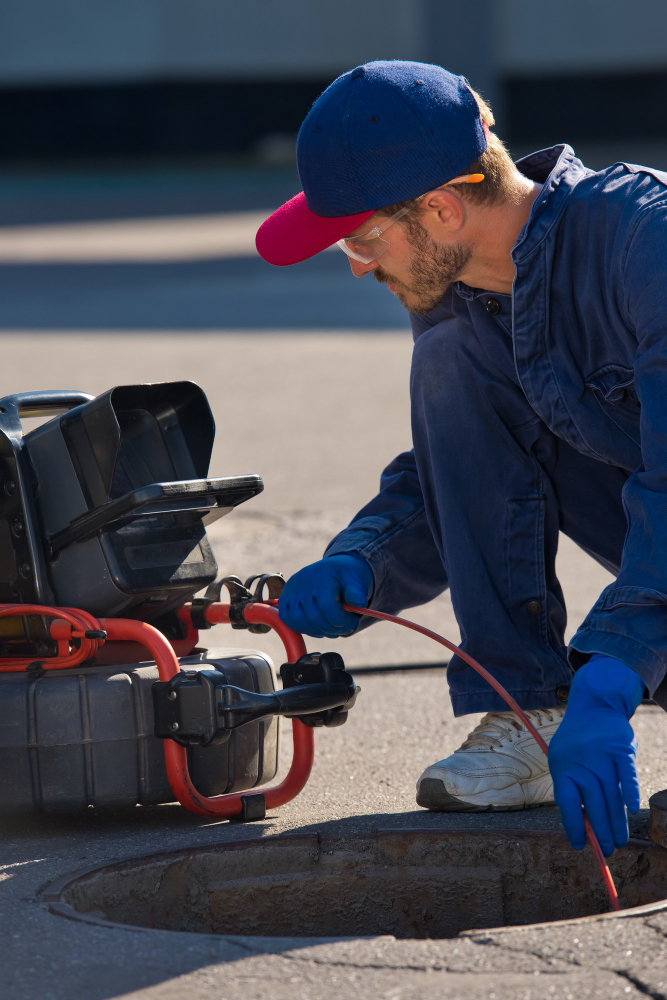
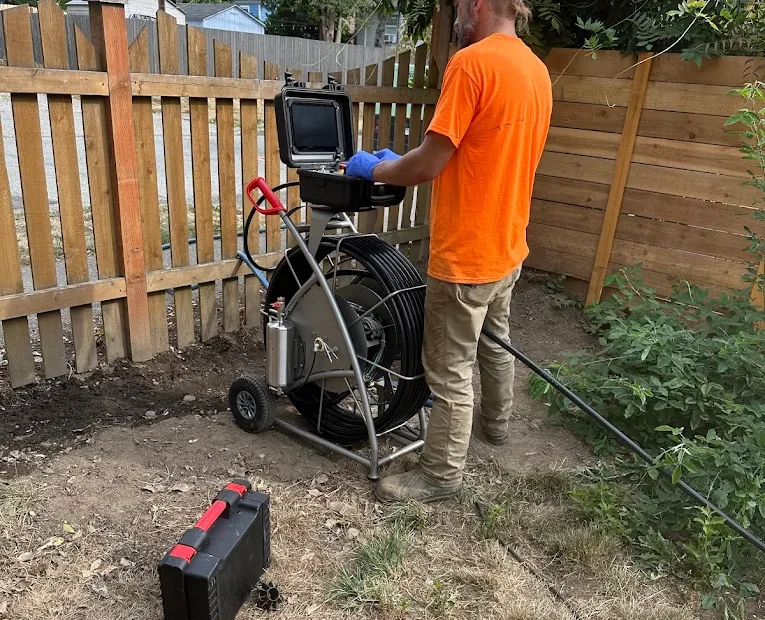
Every professional hydro jetting job should begin with a camera scope. The technician feeds a camera through the line to assess the type and location of the blockage, the material and condition of the pipe, and whether any structural damage exists that jetting could worsen. A collapsed section, a severe belly, or a pipe that has deteriorated to the point of fragility may not be a good candidate for high-pressure cleaning, and the camera identifies those situations before the jetting nozzle is inserted.
Selecting the right pressure and nozzle for your pipe
Residential sewer jetting typically uses pressures between 1,500 and 4,000 PSI, depending on the pipe diameter, material, and the type of blockage. Grease buildup responds to different nozzle configurations than root masses or mineral scale. The technician selects the nozzle and pressure setting based on what the camera revealed, ensuring the cleaning is effective without being excessive for the pipe’s condition.
The nozzle is inserted through the cleanout or an access point and advanced through the line, cleaning as it goes. Water and debris flush downstream and out of the system, leaving the pipe interior scoured clean.
The second camera pass that confirms the job is done
After jetting, a second camera inspection documents the cleaned pipe. This pass serves multiple purposes:
- It confirms that the blockage has been fully removed and flow is restored
- It shows the structural condition of the pipe now that the walls are visible
- It identifies any cracks, root entry points, or joint issues that were hidden under the buildup
- It provides recorded footage the homeowner can keep for their records
This post-jetting inspection is where many homeowners learn the full story of their pipe for the first time. A pipe that seemed like a simple clogging problem may turn out to have structural damage that explains why the clogs kept returning.
When hydro jetting alone is enough and when it is not
Jetting solves the majority of recurring drain problems, but it is a cleaning method, not a structural repair. The camera inspection before and after jetting tells you which category your pipe falls into.
Jetting is the answer when the pipe is sound but the buildup is not
If the camera shows a structurally intact pipe with grease accumulation, moderate root growth, or debris buildup, jetting clears the problem and restores the line to full service. A maintenance jetting schedule keeps it that way going forward, and no further repair is needed.
When the camera reveals damage that jetting cannot fix
If the post-jetting camera pass shows cracks, heavy corrosion, joint separation, or sections where roots have displaced the pipe, jetting addressed the immediate flow problem but the underlying cause remains. Roots will re-enter through the same openings. Groundwater will continue to infiltrate cracked joints. The pipe needs a structural fix to stop the cycle permanently.
Pairing jetting with trenchless repair for the best long-term result
The most effective approach for a pipe with both buildup and structural damage is jetting followed by trenchless pipe lining. Jetting cleans the interior so the liner can bond properly, and the liner seals every crack, joint, and root entry point, creating a smooth, seamless new pipe inside the old one. For pipes with isolated damage, a spot repair after jetting addresses only the damaged section. When the pipe is too far gone for either option, a full sewer line replacement is the permanent solution.
Keeping your Kent home’s sewer line clean after jetting
Jetting gives you a fresh start, but what you do after the cleaning determines how long that clean pipe lasts.
How often to schedule maintenance jetting based on your pipe’s condition
The right interval depends on what the camera showed and what is contributing to the buildup:
- Pipes with a history of root intrusion may benefit from annual or biannual jetting to clear new growth before it reaches a problematic level.
- Pipes with heavy grease buildup from years of kitchen use typically hold well for two to three years after a thorough jetting, longer if household habits improve.
- Pipes in good structural condition with no significant root exposure may go three to five years between maintenance cleanings.
Your technician can recommend a schedule based on the specific findings in your pipe, and periodic camera inspections confirm whether the interval needs adjustment.
Household changes that slow down the buildup between cleanings
The cleaner the pipe starts, the more impact daily habits have on keeping it that way:
- Never pour cooking grease, oil, or fat down any drain. Let it cool, scrape it into the trash.
- Only flush toilet paper. No wipes of any kind, no feminine products, no cotton swabs or dental floss.
- Use drain screens in kitchen and bathroom sinks to catch food debris and hair before it enters the line.
- Run hot water through the kitchen drain after washing dishes to move residual grease further downstream.
- If you have a garbage disposal, use it sparingly and avoid pushing large volumes of food waste through at once.
These habits do not prevent every buildup, but they eliminate the most common contributors and extend the life of a clean pipe significantly.
Conclusion
If your Kent home has been dealing with recurring slow drains, repeat clogs, or backups that keep coming back no matter how many times the line gets snaked, the pipe is telling you that a cable through the center is not enough. The buildup on the walls is the problem, and hydro jetting is the tool that actually removes it.
One thorough jetting, paired with a camera inspection to confirm the pipe is structurally sound, can end a cycle of repeat service calls and give you years of clear, full-flow drainage. And if the camera reveals damage behind the buildup, you catch it early enough to repair it before it becomes an emergency.
Seattle Select Sewers provides hydro jetting and sewer inspection services across the greater Seattle area, including Kent and the surrounding South King County communities. Their team can scope your line, jet it clean, and show you exactly what condition the pipe is in, all in a single visit. Reach out to schedule your service and find out what a truly clean sewer line feels like.