Seattle has more tree canopy per capita than almost any other major U.S. city, and that canopy does not stay above ground. The root systems of the maples, cedars, and big-leaf alders that define older Seattle neighborhoods extend far underground, following moisture wherever the soil provides it. For homeowners with clay or concrete sewer pipe installed before 1970, that means the roots and the pipe have been in close proximity for decades. At some point, most of those pipes lose the fight.
In this article, you will learn why root intrusion is so prevalent in Seattle’s residential sewer infrastructure, how to read the symptoms that indicate roots are already inside your line, and what the range of repair options actually involves depending on how far the damage has progressed.
Here’s what you need to know.
- The first backup is usually not the first time roots entered the pipe
- Seattle trees find the weak spots older sewer pipes already had
- Removing roots restores flow, but it does not repair the opening
- The camera inspection tells you whether this is cleaning or repair
- The right fix depends on whether the pipe can still be saved
Keep reading to understand the full picture of root intrusion in Seattle side sewers, from the first slow drain to the decision between lining and replacement.
Tree roots in a sewer line describes the condition in which root growth from surrounding vegetation has entered the pipe through a joint, crack, or structural defect, partially or fully obstructing flow. In Seattle, where clay tile pipe and older concrete laterals are common, root intrusion is the leading cause of residential sewer backups and one of the primary drivers of sewer repair and rehabilitation work.
The first backup is usually not the first time roots entered the pipe
Root intrusion does not produce an emergency overnight. It builds slowly, over months or years, and the pipe gives signals long before it fails completely. Most homeowners who call about a backup caused by roots have been receiving those signals for some time without recognizing what they indicated.
Slow basement drains can mean roots have been growing for months
A basement floor drain or utility sink that drains more slowly than it used to is easy to dismiss. It does not smell, it does not overflow, and it clears eventually. What it often indicates is a partial restriction in the main lateral, where root material has begun catching solid waste and narrowing the effective flow path.
The pipe is not blocked. It is partially obstructed, and the obstruction is growing. By the time the drain is slow enough to notice consistently, the root mass inside the pipe has typically been present for months and may already be substantial enough to require more than a simple cable cleaning to clear.
Toilets that gurgle after showers point to a main line restriction
When a toilet gurgles after a shower drains, or bubbles when the washing machine empties, the cause is air displacement in the main line. Something downstream is restricting flow enough that the surge from one fixture pushes air back up through the path of least resistance, which is usually the toilet.
This is a main sewer line obstruction symptom, not a fixture problem. A single slow drain can be local. Gurgling across multiple fixtures simultaneously means the restriction is downstream of where those fixtures converge, in the main lateral, and it is significant enough to affect the entire system under normal use conditions.
A line that clears and clogs again is giving you a pattern
A sewer line that was cabled six months ago and is backing up again is not having bad luck. It is demonstrating that the cleaning addressed the symptom and not the cause. The root mass was removed. The entry point was not closed. The root system outside the pipe continued to grow, and the same joint or crack that allowed roots in the first time allowed them back.
A pattern of recurring backups at shortening intervals is one of the clearest indicators that the pipe has a structural issue requiring repair rather than another cleaning. According to Seattle Public Utilities, recurring backups are classified as a high-priority condition warranting prompt inspection and assessment for structural defects.
Seattle trees find the weak spots older sewer pipes already had
Root intrusion is not random. Roots do not force their way through sound, intact pipe. They find openings that already exist, follow the moisture gradient toward those openings, and exploit structural vulnerabilities the pipe developed over decades of use.
Clay pipe joints give roots an easy path toward moisture
The clay tile pipe installed in most Seattle homes built before 1960 was joined using mortar at each connection point. Mortar is not flexible. Over decades of soil movement, ground vibration, and freeze-thaw cycles, mortar joints crack, shrink, or separate slightly. Those gaps, often no wider than a fraction of an inch, allow moisture to seep out into the surrounding soil.
Roots detect that moisture gradient and grow toward it. A fine root hair can penetrate a gap that is nearly invisible on camera. Once inside, it encounters a warm, nutrient-rich environment and grows rapidly. The same gap that let one hair root in will admit dozens more as the root system establishes itself inside the pipe. Seattle’s mild, wet winters mean that root systems remain active through most of the year, unlike colder climates where freezing soil interrupts root growth seasonally.
Small cracks can collect roots long before the pipe collapses
A circumferential crack in a clay tile pipe barrel does not cause immediate structural failure. The pipe section remains roughly in position, flow continues, and from inside the house nothing appears wrong. But a crack in the barrel is an entry point, and a small entry point grows into a larger one as roots exploit it and soil outside the pipe begins to shift into the void.
The understanding of tree root damage to sewer lines in Seattle includes this progression: the crack precedes the root intrusion, the root intrusion accelerates the crack, and the pipe that looked marginal on a camera three years ago may look dramatically worse today because the root system has been mechanically widening the opening from outside.
Side sewer depth and soil movement can make old joints separate
Seattle’s topography is varied and often steep. Side sewers on hillside lots run at angles and depths that change significantly over the length of the lateral. Soil movement on slopes, particularly after wet winters, can shift pipe sections relative to each other, widening joints and creating offsets that would not develop on flat ground.
Deeper pipe sections are also more difficult to inspect and repair, which means problems in those sections tend to go unaddressed longer. A joint that has separated three inches at six feet of depth under a sloped yard in Beacon Hill or Rainier View presents differently than the same defect at two feet of depth in a flat lot in Ballard, both in terms of root access and in terms of what repair requires.
Removing roots restores flow, but it does not repair the opening
This is the central fact that determines whether a cleaning job solves the problem or only delays the next backup. Flow restoration and structural repair are different outcomes, and they require different work.
Root removal sewer line Seattle service can clear the blockage temporarily
Sewer root removal by mechanical cutting or hydro jetting removes root material from inside the pipe. It restores the flow path, reduces the restriction, and in many cases eliminates the backup symptom entirely. For a homeowner whose pipe has one or two entry points, is otherwise in sound structural condition, and has light root growth, that cleaning may provide one to several years of uninterrupted service.
It does not close the joint or crack the roots entered through. The root system outside the pipe is undamaged. It knows exactly where the opening is, and it will send roots back through the same path as soon as conditions allow. In Seattle’s climate, that regrowth begins within the first growing season after the cleaning.
Hydro jetting cleans the pipe walls better than a simple cable
A cable snake drives a rotating auger through the root mass and opens a channel through the center of the restriction. It does not remove root material from the pipe walls, and it does not clean the joint or crack edges where roots anchor themselves. The pipe flow is restored, but the walls remain packed with fine root hairs and debris that forms the base for rapid regrowth.
Hydro jetting uses high-pressure water, typically between 2,000 and 4,000 psi, to scour the full pipe circumference. Root material is shredded, dislodged, and flushed downstream. The pipe walls emerge visibly cleaner, and the post-jetting camera footage is dramatically easier to read than footage taken before cleaning. That cleaner view is where the real diagnostic happens: once the root debris is gone, cracks, offsets, and the actual condition of the joint entry points become visible.
Roots blocking sewer pipe often return when the crack stays open
The interval between cleanings is the practical measure of whether a pipe needs repair. A pipe cleaned by hydro jetting that stays clear for three to five years is functioning adequately and may reasonably be maintained on that cycle. A pipe that requires cleaning every six to twelve months, or less, has root regrowth that is outpacing the maintenance interval. That regrowth rate indicates an entry point significant enough that cleaning alone is not a viable long-term strategy.
At that point the question shifts from “how do we clear the roots” to “how do we close the opening.” The camera inspection after a thorough jetting job is what answers that question.
The camera inspection tells you whether this is cleaning or repair
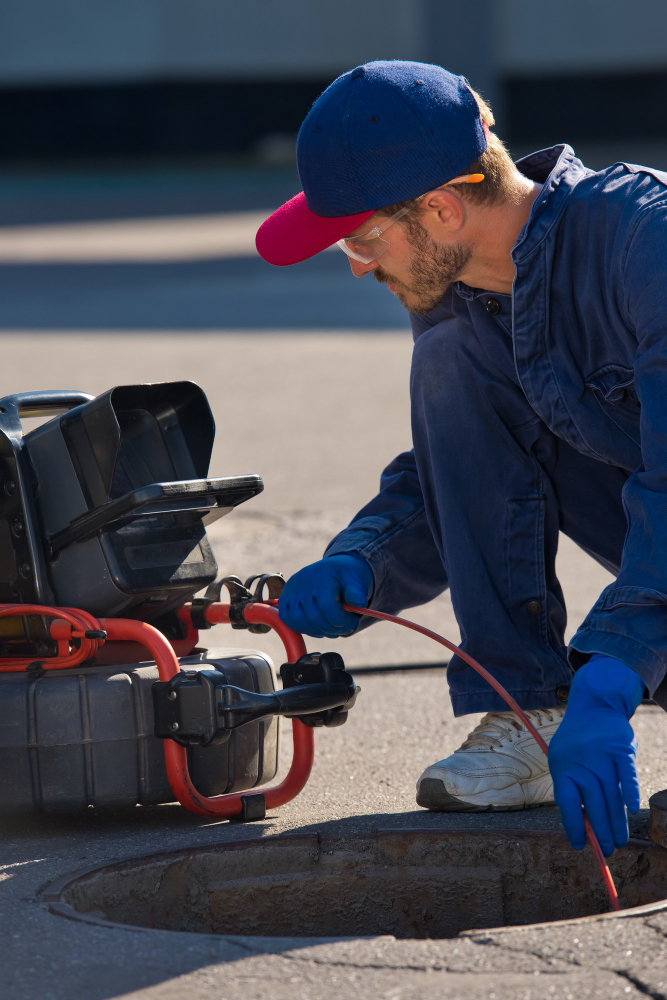
Post-jetting camera footage of a clean pipe is the diagnostic standard for root intrusion in Seattle side sewers. It is where the pipe tells you whether cleaning bought you years of service life or whether it revealed a structural problem that cleaning cannot solve.
Light root intrusion may call for maintenance and monitoring
A camera that shows fine root hairs at one or two mortar joints, with the pipe barrel otherwise intact, sound walls, no visible cracks, and no significant offset, is showing a pipe that is a reasonable candidate for a periodic maintenance and monitoring approach. The entry points are small, the structural condition is adequate, and the risk of rapid deterioration is low.
The practical plan in that scenario is jetting to clean the pipe, a post-jetting camera pass to document current condition, and a scheduled re-inspection in two to three years. If the pipe holds that interval without symptoms, it may remain manageable through maintenance for several more years before lining or other rehabilitation becomes necessary.
Heavy root mats can hide breaks, offsets, or missing pipe sections
A dense root mass inside a sewer pipe acts as a structural plug. It also acts as a visual obstruction on camera. Before a thorough jetting, the camera may show roots and nothing else for a section of pipe, because the root mass is filling the view and preventing the camera from seeing the pipe wall behind it.
After jetting removes that mass, the camera sometimes reveals conditions that were completely invisible before the cleaning: circumferential fractures where the pipe barrel has cracked through, offset joints where one pipe section has shifted significantly relative to the next, or sections where the pipe wall has eroded to the point where the surrounding soil is visible through the opening. This is not the jetting making things worse. It is the jetting revealing what was already there.
This is one reason why a pre-repair jetting pass is standard practice before any lining or excavation decision: you cannot make an accurate recommendation from footage of a root-packed pipe.
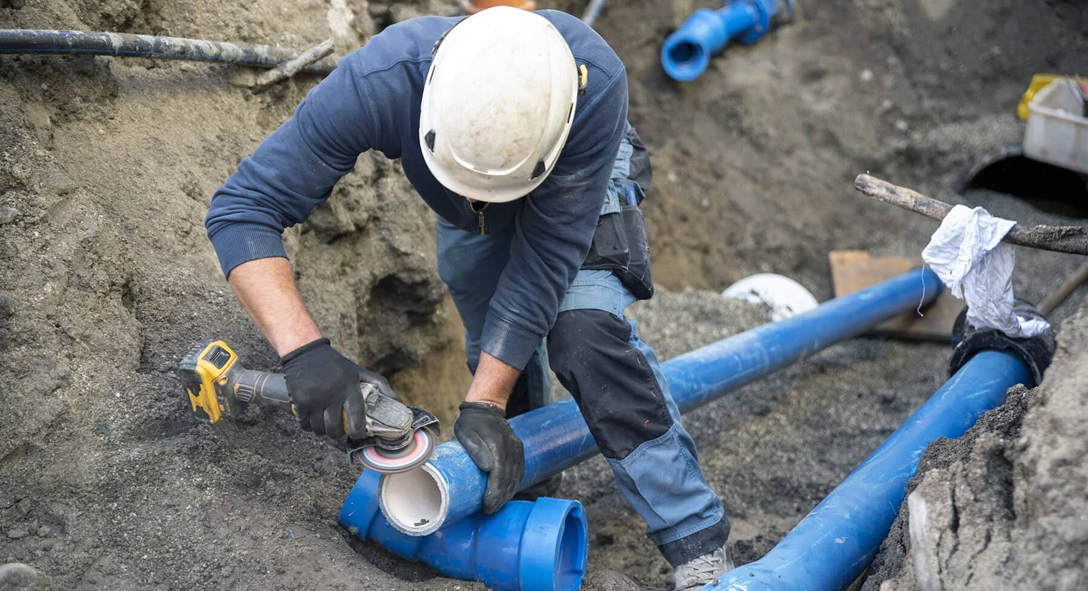
Tree root damage side sewer repairs depend on how much pipe is still sound
The camera footage after jetting answers the repair question by showing how much of the pipe is structurally intact. The repair method follows from that answer directly:
- Pipe that is sound along most of its length with isolated entry points at a few joints: spot patching or sectional lining at the specific defect locations
- Pipe that has distributed joint failure, multiple cracks, and root entry at several points across the full run: full-length CIPP lining if the pipe can hold its shape, or replacement if sections have collapsed
- Pipe that has collapsed sections, severe offsets that prevent liner insertion, or missing sections: open-cut excavation and replacement of those sections before any lining can be considered
The camera does not recommend a repair method. It shows the condition, and the condition determines the method.
The right fix depends on whether the pipe can still be saved
Root damage exists on a spectrum from a single compromised joint to a run of pipe that has lost structural integrity across most of its length. The repair approach should be calibrated to where the pipe sits on that spectrum, not to a preference for one method over another.
Spot repair can work when roots enter through one bad joint
A sewer pipe patch is a short-section CIPP repair applied precisely at an isolated defect. When the camera shows a single joint that has separated or cracked, with root intrusion concentrated at that one location and the surrounding pipe structurally sound, a spot repair at that joint is the appropriate response.
It seals the entry point. It does not require disturbing the rest of the pipe. And it costs significantly less than lining the full run or excavating and replacing the affected section.
The qualifier is important: spot repair is appropriate when the defect is genuinely isolated. A camera showing root intrusion at one clearly visible joint and clean, sound pipe on either side supports a spot repair. A camera showing one conspicuous root mass and several smaller entry points elsewhere in the run does not.
Lining may seal root entry if the pipe has not collapsed
CIPP lining creates a smooth, jointless interior surface inside the existing pipe. Once cured, it eliminates the mortar joints and hairline cracks that roots exploit. For a pipe with distributed joint failure and root entry across multiple points, lining is typically the most durable response that does not require excavation.
The conditions that make lining viable are the same conditions the post-jetting camera confirms: the pipe retains enough structural integrity to hold the liner during insertion and curing, no sections have collapsed to the point where the pipe cannot hold its shape, and no offsets are severe enough to prevent the liner from passing through.
When those conditions are met, a correctly installed liner in a clean, prepared pipe can provide fifty years of root-resistant service life. Seattle’s clay tile side sewers are almost universally good candidates for lining when they are caught before collapse, which is precisely why the camera inspection timing matters.
Replacement becomes the safer call when roots follow a failing run
When the camera shows collapsed sections, severe offsets preventing liner insertion, or pipe that has lost structural integrity across a significant portion of its length, repair by lining is no longer a viable option. The pipe cannot support a liner, and a liner that wrinkles, voids, or bridges a collapsed section will fail prematurely.
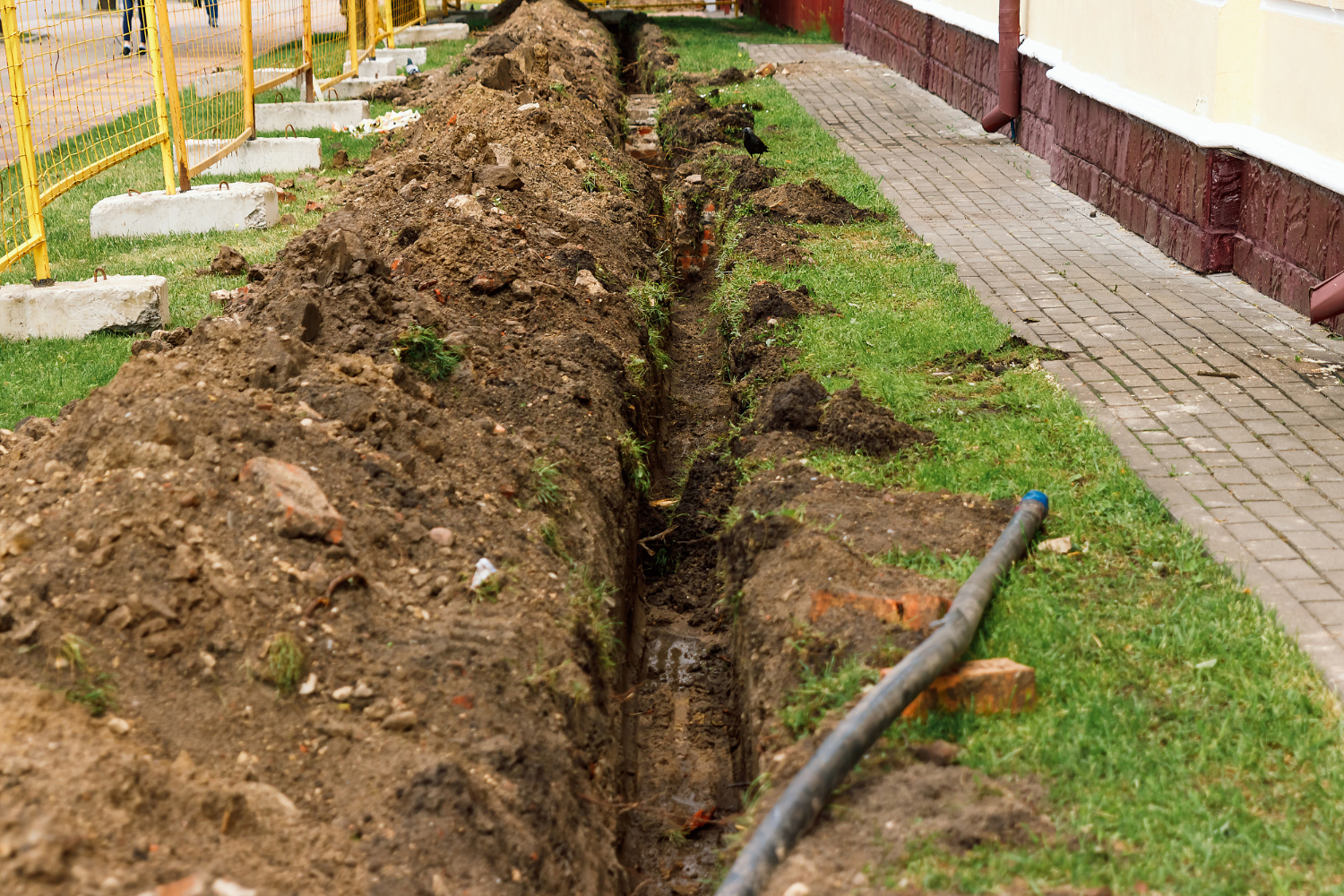
Open-cut excavation and replacement of the affected section is the appropriate response. That does not necessarily mean replacing the entire lateral. A targeted excavation at the collapsed section, followed by CIPP lining of the remaining sound pipe, is a common outcome for Seattle side sewers where one portion has failed while the rest remains rehabilitable. According to Seattle Public Utilities, partial replacement combined with lining is a recognized repair approach for laterals with mixed condition profiles.
Conclusion
Root intrusion in Seattle side sewers is not a freak occurrence or a maintenance failure. It is the predictable result of century-old pipe infrastructure, mortar joints that have been deteriorating since the Eisenhower administration, and one of the densest urban tree canopies in the country. The roots find what the pipe has been developing for decades: openings, gaps, and cracks that were always going to become entry points eventually.
The homeowners who manage this well are the ones who recognize the pattern early, get the camera in after a thorough jetting pass, and make the repair decision from documented pipe condition rather than from the symptom alone. Cleaning buys time and reveals what the pipe actually looks like. The footage tells you whether time is what you have or whether the pipe is telling you something more permanent.
If your sewer line has a history of recurring backups, if the last cleaning did not hold as long as the one before it, or if you have never had a camera run on a Seattle home built before 1970, contact Seattle Select Sewers for an inspection before the next backup makes the decision for you.