Most Seattle homeowners don’t think about their sewer line until something goes wrong — a drain that won’t clear, an odor that follows them into the basement, or a toilet that gurgles every time the washing machine drains. By the time those signs appear, the underlying problem has usually been building for months.
In this article, you’ll learn how to read the early warning signs of a failing side sewer, understand what Seattle’s rules actually mean for your repair bill, and know what questions to ask before a contractor shows up with a camera and a quote.
Below, we’ll walk through each important aspect.
- Your drain problem may already be past the “just snake it” stage
- Seattle side sewer rules can make this your repair, not the city’s
- The camera footage should decide the repair, not the sales pitch
- Sewer pipe repair cost in Seattle depends on access more than pipe length
- A Seattle sewer contractor should be ready for more than digging
Keep reading to understand exactly what drives sewer repair decisions in Seattle and how to avoid paying for the wrong fix.
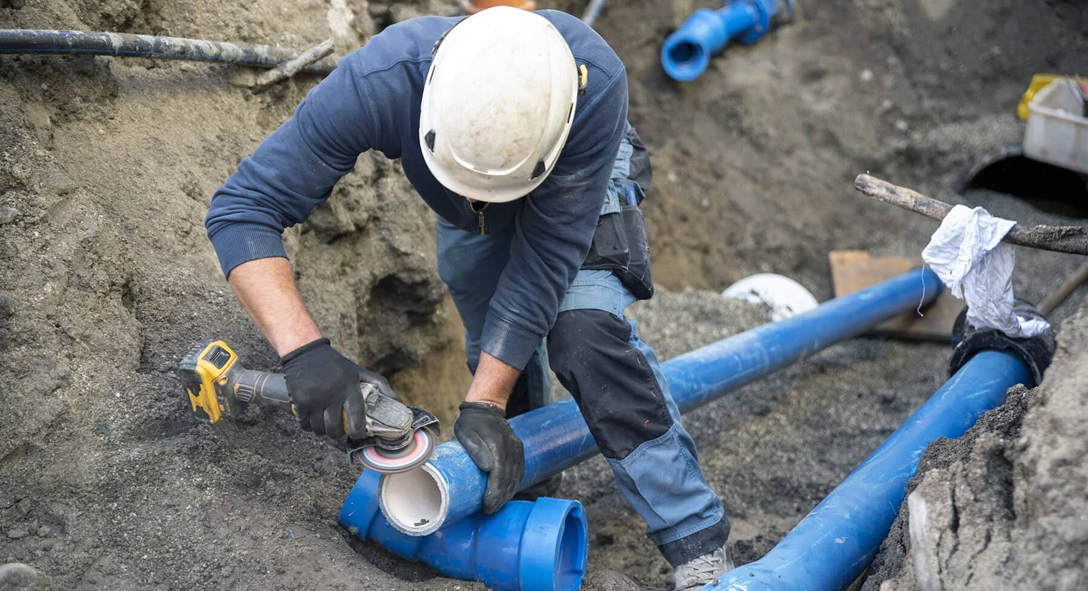
Sewer line repair in Seattle refers to the diagnosis and correction of defects in the private side sewer, the pipe that runs from your home’s foundation to the public main under the street. Depending on pipe condition, the method may range from hydro jetting and spot patching to full CIPP lining or open-cut replacement.
Your drain problem may already be past the “just snake it” stage
A drain snake opens a path through a clog. It does not fix a cracked pipe, a sagging belly, or a joint so far offset that roots have been entering for years. In Seattle, where the majority of residential side sewers are clay or Orangeburg pipe installed before 1970, slow or recurring drain problems deserve more than a quick mechanical clearing.
Gurgling toilets after laundry day point to a deeper blockage
When a washing machine drains, it pushes a high volume of water into the sewer line in a short burst. If that surge causes toilets to gurgle or bubble, air is being displaced somewhere downstream, which means the pipe is partially blocked or the flow is restricted along a significant section of the line.
A single clogged fixture is usually a localized problem. Gurgling across multiple fixtures at the same time is the signature of a main sewer line obstruction or a structural defect that is narrowing the effective diameter of the pipe.
In older Seattle homes, that restriction is most commonly caused by root intrusion, which enters through joints in clay tile and spreads laterally into the flow path over years. Snaking the line will restore flow temporarily. Without a camera inspection to document what the inside of the pipe actually looks like, the same symptom returns, sometimes within weeks.
Sewer smells near the basement drain are not a normal old-house quirk
A persistent sulfur or sewage odor near a floor drain, utility sink, or basement toilet is a specific symptom. It typically means one of three things: a dry P-trap that no longer holds a water seal, a cracked pipe that is venting gas upward through the slab or crawlspace, or a partial blockage that is allowing gases to back up rather than vent correctly through the roof stack.
Dry traps are a two-minute fix. Cracked pipes are not.
If the smell returns after you run water into the drain to recharge the trap, or if it appears in multiple locations simultaneously, the source is structural. A sewer line inspection will locate the breach precisely, saving you from guesswork repairs that don’t address the actual point of failure. Seattle’s high water table and clay-heavy soils accelerate pipe degradation, particularly in homes built before 1960 where joints were mortar-sealed rather than gasketed.
Repeated cleanouts can hide a cracked or sagging pipe
A sewer cleanout that needs to be performed every six to twelve months is not a maintenance routine. It is evidence that something is causing material to accumulate faster than a normal system would allow.
The two most common causes of rapid reaccumulation are root intrusion, where fine root hairs grow back through the same joint or crack within months of being cleared, and a belly in the pipe, a low sag where solids settle and build up because they cannot be carried by gravity to the main.
Neither of those conditions responds to cleaning alone. According to Seattle Public Utilities, a sag that occupies 50 percent or more of the pipe diameter is considered a high-probability backup risk and warrants structural repair, not just routine clearing. A contractor who recommends recurring cleanouts without ever running a camera is managing symptoms, not solving the problem.
Seattle side sewer rules can make this your repair, not the city’s
Seattle has a well-defined division of responsibility between the city and private property owners, and it does not always match what homeowners assume. Understanding it before you call anyone can prevent surprises about who pays and who pulls permits.
Your responsibility may run farther than your property line
Under Seattle Municipal Code Chapter 21.16, the homeowner owns and is responsible for the entire side sewer from the building foundation to the connection point at the public main. That connection is usually located under the street or alley, not at the property line.
This means that if your pipe fails thirty feet into the public right-of-way, the repair bill is still yours. The city is responsible only for the public main itself, not for the lateral that connects to it.
Many homeowners discover this for the first time when a Seattle Public Utilities inspector confirms that the damage is on the private section. The shared sewer lines that exist in many Seattle neighborhoods, where two or more properties connect to the same lateral before it reaches the main, add another layer of responsibility that affects both the cost and the coordination required.
A side sewer repair Seattle permit can change the timeline
Most side sewer repairs in Seattle require a permit from Seattle Public Utilities before work begins. This is not optional, and the requirement applies to repairs in the right-of-way regardless of whether the work is open-cut or trenchless.
Permit processing time varies, but a contractor who works regularly in Seattle can typically process a standard permit within one business day. For projects involving street cuts or complex right-of-way work, the timeline extends further.
The side sewer permitting process also triggers a final inspection by a city inspector, who must sign off before the trench is backfilled or the liner is covered. Work done without a permit carries additional risk: if you sell the home later and records show unpermitted sewer work, you may be required to excavate, re-inspect, and re-permit before closing.
Shared lines and easements make neighbor communication part of the job
In many older Seattle neighborhoods, including Queen Anne, Capitol Hill, Ballard, and the pre-war blocks of the Central District, side sewers run through recorded easements that cross private property, and multiple households connect to the same lateral. According to Seattle Public Utilities, all property owners connected to a shared lateral share responsibility for maintenance and repair from the shared junction point to the main.
This matters in two ways. A repair that addresses only your portion of a shared line may not resolve the backup you are experiencing if the defect sits in the shared section, which requires neighbor agreement before work can proceed. Additionally, the cost of lining or replacing a shared segment can be split among the connected properties, which is often the more economical outcome for everyone involved.
An experienced Seattle sewer contractor will identify shared infrastructure during the camera inspection and advise you on the proper approach before any work is proposed.
The camera footage should decide the repair, not the sales pitch
A sewer camera inspection is not a formality. It is the diagnostic that every repair recommendation should be built on. If a contractor quotes a repair method before running a camera, the quote is a guess.
Roots, bellies, breaks, and offsets need different fixes
The four most common defects found in Seattle side sewers each call for a different response, and misidentifying the problem leads directly to a fix that either fails or costs more than necessary.
- Root intrusion without pipe damage: hydro jetting clears the immediate blockage, and CIPP lining seals the joints permanently to stop re-entry.
- Bellies and sags: cannot be lined because a liner follows the shape of the existing pipe. A belly requires excavation and pipe re-grading, or in severe cases full replacement of the affected section.
- Circumferential cracks or holes: strong candidates for sewer pipe patches if isolated, or full CIPP lining if multiple defects are distributed along the run.
- Offset joints: the repair approach depends on degree. Minor offsets can be lined, but severe offsets that prevent liner insertion require open-cut correction first.
A camera inspection conducted by the contractor who will perform the repair, and shared with you as footage you can review, is the baseline standard. According to Seattle Public Utilities, homeowners should request a copy of the inspection video in a format they can keep for their records.
Spot repair makes sense only when the rest of the line is sound
A spot repair is appropriate when the defect is isolated and the surrounding pipe is structurally sound, with no other cracks, root entry points, or significant sags visible on camera.
If the camera shows a single clean break in otherwise solid pipe, a spot repair is the correct call. If the camera shows clay pipe with root intrusion at multiple joints, mortar deterioration along the barrel, and a belly at the low point, a spot repair at the most visible defect leaves the rest of the line vulnerable.
The honest conversation is whether patching one section buys meaningful service life or whether the whole run needs to be addressed. A contractor who pushes spot repair on a line that clearly warrants full lining is under-serving the homeowner. One who pushes full replacement on a line with a single isolated break is doing the same thing in the other direction.
Trenchless work is not always cheaper, but it can save the yard
Trenchless sewer repair carries a higher per-linear-foot cost than open-cut pipe replacement using basic materials. The economic case for trenchless work is not the pipe itself. It is the elimination of excavation, landscape restoration, concrete or asphalt cutting, and the labor those tasks add.
On a property with a mature garden, a concrete driveway over the sewer run, or a line that passes under a deck or outbuilding, the trenchless premium pays for itself quickly when you factor in restoration costs. On a simple run through an open lawn with easy access, open-cut may genuinely be the more economical choice.
The cost comparison between trenchless and traditional repair in Seattle needs to account for all line items, including pipe, labor, permitting, right-of-way fees, surface restoration, and inspection, before the two methods can be compared honestly.
Sewer pipe repair cost in Seattle depends on access more than pipe length
Two properties with the same linear footage of damaged pipe can receive quotes that differ by thousands of dollars. The variable that drives that gap is almost never the pipe.
Street cuts, depth, and landscaping can move the price fast
A sewer line that runs forty feet through open lawn in accessible soil costs substantially less to excavate than a line of the same length running under a concrete driveway, dropping to eight feet below grade at the street connection, and passing through the root ball of a sixty-year-old maple.
In Seattle, where most older homes sit on lots with mature tree canopy, and where alley or street connections require right-of-way permits, access conditions are often the primary cost driver. A camera inspection that records pipe depth at key points, available through sewer inspections and locating services, gives both the contractor and the homeowner a realistic picture of what excavation would actually involve before any decisions are made.
Main sewer line repair gets more expensive when permits and restoration stack up
When the defect sits in the pipe section running under the street or alley, still your responsibility under Seattle code, the repair involves a right-of-way permit, traffic control, pavement cutting, backfill to SPU compaction standards, and pavement restoration after inspection sign-off.
Each of those line items has a cost, and together they can add several thousand dollars to a job that would be straightforward on private property. Trenchless methods can reduce or eliminate the pavement cut for qualifying pipe conditions, which is one reason CIPP lining is frequently the more practical option when the defect is located in the right-of-way. Referring back to general sewer maintenance records available through SPU can sometimes clarify whether public main issues in your street could complicate your lateral repair.
A low bid without cleanup details can become the costly option
A complete sewer repair quote in Seattle should itemize permit fees, right-of-way or traffic control costs, surface restoration, camera inspection before and after the repair, and the warranty on materials and workmanship. A quote that lists only the liner or pipe cost is incomplete.
The homeowner who selects the lowest number without asking what it excludes sometimes discovers that the job required a separate paving contractor, a second permit for the right-of-way, and weeks of coordination they were not expecting. Reading a bid in full before signing is the same discipline you would apply to any other significant home repair.
A Seattle sewer contractor should be ready for more than digging
Sewer repair in Seattle involves municipal permitting, SPU inspections, and sometimes coordination with the city’s right-of-way office. A contractor who handles only the pipe work and passes everything else to you is not a full-service provider.
Ask who handles permits, inspection, traffic control, and restoration
When you request a quote, ask directly: who pulls the permit, who coordinates the SPU inspection, who handles traffic control if the work reaches the street, and who is responsible for surface restoration when the job is done. The answers should be clear and documented in the contract.
A contractor who is a registered side sewer contractor with the City of Seattle is authorized to pull side sewer permits directly, which simplifies the process considerably. Washington State also requires contractors to carry a current license through the Department of Labor and Industries, verifiable through the L&I contractor lookup before you sign any agreement.
The estimate should explain the repair method in plain English
Before you agree to any repair, you should be able to answer three questions: What is the defect? What method will be used to fix it, and why? And what will the pipe look like after the work is done?
A contractor who cannot explain the difference between a belly and a root intrusion, or who cannot articulate why they are recommending lining over excavation for your specific pipe condition, has not done adequate diagnostic work. The 5 warning signs that precede a failing sewer line are well understood, and a contractor who works with them daily should be able to connect your symptoms to the camera findings without ambiguity.
Plain-language explanation is not a courtesy. It is the standard for informed consent on a repair that may cost several thousand dollars.
The right contractor shows you the problem before selling the fix
The industry standard for sewer repair in Seattle is camera-first, quote-second. A contractor who arrives with a price before running the camera, or who runs the camera and does not show you the footage, is removing your ability to make an informed decision.
You are entitled to see the video, receive a written report identifying the defect type and location, and compare that information against the proposed repair method. The common mistakes homeowners make when hiring a sewer repair company most often come down to skipping this step, accepting a diagnosis and a price without seeing the evidence that supports both.
A post-repair camera inspection confirming that the liner is fully cured, the joints are sealed, and flow has been restored is equally standard. Ask for it in writing before work begins.
Conclusion
Seattle’s side sewer system puts the repair burden squarely on homeowners, for a pipe that runs under your yard, your neighbor’s easement, and sometimes the street itself, in infrastructure that is frequently over a century old and under constant pressure from the region’s tree canopy and wet soils. The homeowners who navigate repairs well understand their symptoms before calling anyone, know where their responsibility begins and ends under Seattle Municipal Code, and insist on seeing camera footage before agreeing to any repair method or price.
The repair method, the cost, and the timeline all flow from one thing: an honest inspection by a contractor who is qualified to do the work in Seattle’s specific regulatory and physical environment.
If your drains are giving you signals you cannot explain, or a recent camera scope raised questions you do not have answers to, contact Seattle Select Sewers for a straightforward assessment — camera first, recommendation second.