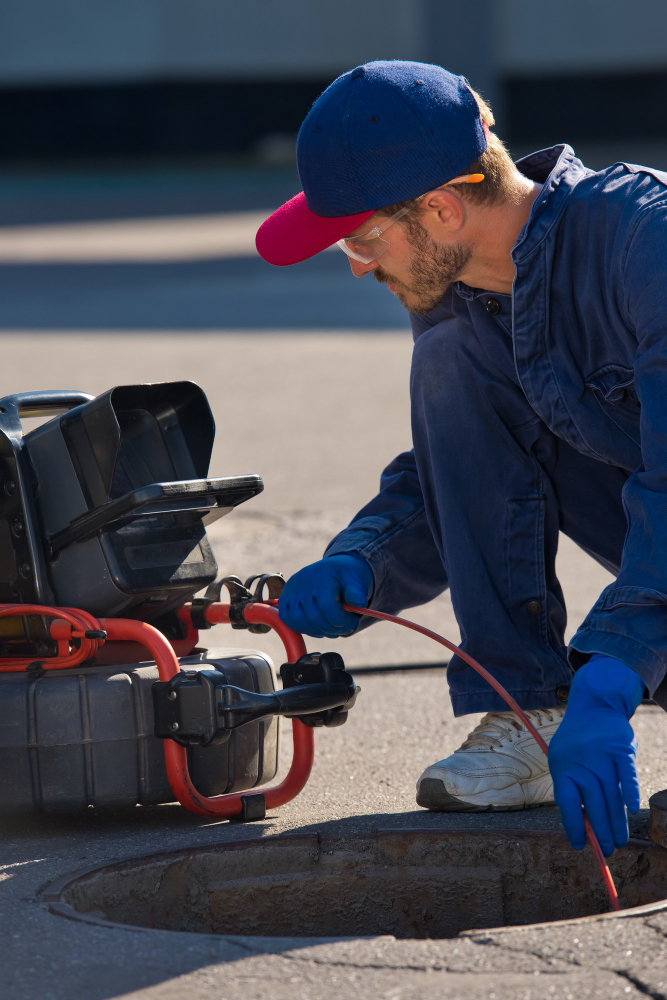
A sewer camera turns up a crack, a separated joint, or a short section of root intrusion, and the conversation immediately jumps to replacement or full-run lining. Sometimes that is the right answer. Often it is not. When the damage is genuinely isolated and the surrounding pipe is structurally sound, a targeted patch at the defect location is a precise, durable repair that costs a fraction of rehabilitating the entire lateral.
In this article, you will learn what makes a pipe patch the right call, what conditions rule it out, how spot repair compares to full lining as a structural decision rather than just a price comparison, and what a complete, honestly scoped patch estimate should include.
Here’s what you need to know.
- Not every damaged sewer line needs to be replaced from end to end
- A pipe patch works only when the surrounding sewer line is worth saving
- Sewer pipe patch vs full repair comes down to risk, not just price
- Sectional pipe lining can seal a problem without digging up the whole run
- Sewer pipe patch cost depends on access, prep, and how confident the diagnosis is
Keep reading to understand when a spot repair is the right decision for your Seattle side sewer and what separates a well-scoped patch from a repair that defers a larger problem.
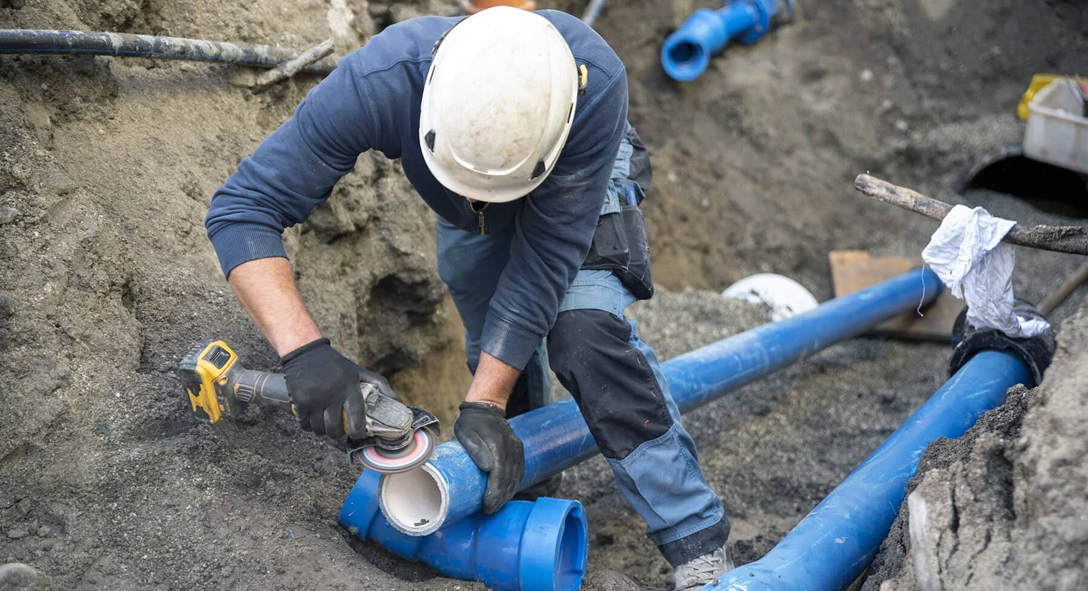
Sewer pipe patches in Seattle refer to short-section repairs applied precisely at an isolated defect in a residential side sewer, using either a sectional CIPP liner, a mechanical sleeve, or a small open-cut excavation at the defect location. The defining characteristic of a patch is that it addresses a specific, bounded failure point in an otherwise sound pipe, rather than rehabilitating the full lateral.
Not every damaged sewer line needs to be replaced from end to end
A camera report that identifies damage is the beginning of a diagnostic conversation, not the end of it. The presence of a defect tells you something needs to be done. It does not automatically tell you how much pipe is involved, whether the surrounding sections are viable, or whether the repair needs to extend beyond the defect location.
One bad joint can cause a problem the rest of the pipe does not share
Clay tile pipe installed before 1960 uses mortar-sealed joints at every connection point. Mortar is not uniformly durable. Soil conditions, ground movement, and root pressure do not act equally along the full length of a lateral. A joint at a point where soil has shifted, where a large root passed close, or where original installation was inconsistent can fail while the joints on either side remain sound.
That failed joint may allow root intrusion, permit groundwater infiltration, or produce a minor offset that catches debris and causes slow accumulation. The damage is real. It warrants repair. But it does not require addressing every joint in the pipe, and a well-documented camera inspection will show clearly that the neighboring sections do not share the same condition.
Localized root intrusion may point to a repairable opening
Root intrusion at a single joint, with fine to moderate root density and no associated cracking of the pipe barrel, is one of the clearest candidates for a patch repair. The roots entered through one specific opening. That opening can be sealed. The rest of the pipe did not let roots in because the rest of the pipe does not have the same opening.
The camera footage that supports this conclusion shows:
- Root presence concentrated at one location, with a visible joint gap or mortar failure at that point
- Clean or near-clean pipe wall on either side of the root entry, with no additional root hairs or debris accumulation between joints
- No structural cracking of the pipe barrel in the sections immediately upstream and downstream
That picture is a patch candidate. A picture showing root hairs at every third joint across the full run is not.
A single crack should not automatically become a full replacement quote
A circumferential crack in an otherwise intact pipe barrel is a structural defect that warrants repair. It is not automatically a full-run replacement. A crack that is limited to one section, with no associated collapse, no severe offset at the joint, and no root intrusion through the crack face, can be addressed with a short-section liner or a mechanical repair sleeve installed at the crack location.
The difference between a patch and a replacement, in terms of disruption and cost, is substantial. A contractor who jumps from “there is a crack” to “the whole line needs to be replaced” without explaining why the surrounding pipe condition justifies that scope is not working from the camera evidence.
A pipe patch works only when the surrounding sewer line is worth saving
The qualifier that makes a patch the right answer is not just that the visible defect is small. It is that the pipe on either side of the defect is in adequate structural condition to make a targeted repair durable. A patch installed in a pipe that is failing at multiple other points simply adds one more temporary measure to a line that will keep producing problems.
Spot sewer repair Seattle projects depend on stable pipe on both sides
A sectional liner or mechanical sleeve anchors to the pipe wall at both ends of the repair section. For that anchor to hold, the pipe at each end must have adequate structural integrity, meaning no collapse, no severe offset preventing liner seating, and enough remaining pipe wall to accept the repair material and hold the bond.
This is why the camera run for a patch evaluation should not stop at the defect. It should document the full length of pipe in both directions from the damage, confirming that what looks like a single isolated problem is not part of a broader deterioration pattern that was less obvious at other points in the run.
A belly or collapse can make patching the wrong fix
Two conditions make a patch inappropriate regardless of how isolated the visible defect appears:
A belly at or near the defect location means the pipe is no longer running at the correct slope. A patch applied over a crack in a bellied section seals the crack. It does not correct the slope. Solids will continue to settle at the belly and accumulate, producing recurring backups that have nothing to do with the patched defect. Correcting a belly requires excavation and re-grading, not patching.
A collapse, even a partial one, means the pipe has lost structural continuity at that point. A liner cannot bridge a collapse and produce a sound repair. The collapsed section needs to be excavated and replaced with new pipe before any lining of the surrounding sections can be considered.
Camera footage should prove the damage is truly isolated
The standard for a patch recommendation is not the contractor’s judgment that the damage looks isolated. It is camera documentation of the full run that confirms it. The footage should show:
- The defect location, type, and measured distance from the cleanout
- The pipe condition for the full length in both directions from the defect
- No additional defects that would require attention within a reasonable service horizon
- Adequate pipe integrity at the anchor points on either side of the planned repair section
A patch recommended without that documentation is a guess. A patch recommended from that documentation is a diagnosis.
Sewer pipe patch vs full repair comes down to risk, not just price
The comparison between a spot repair and a full lining or replacement is not purely financial. It is a risk assessment: how confident is the diagnosis that the defect is isolated, and what is the probability that adjacent sections will require attention soon?
A patch can save money when the failure has clear boundaries
When the camera shows a single defect in a pipe with documented sound condition on either side, the patch is not a compromise. It is the precise response to the actual problem. It costs less than full-run lining because it addresses a smaller section of pipe. It is not less durable than full-run lining for the section it covers, because a correctly installed sectional liner provides the same resin-cured, root-resistant interior surface as a full liner, just over a shorter span.
The savings are real. A targeted sewer pipe patch at one defect location costs substantially less than lining the full lateral. For a pipe that genuinely has one problem, paying for a full-run lining is paying to solve problems that have not been found and may not develop.
Full repair makes more sense when defects repeat down the line
The patch calculus changes when the camera shows a primary defect and secondary findings. A major root mass at one joint and moderate scale buildup with hairline cracking at two others is not a single-defect picture. It is a picture of a pipe that is failing at multiple points on a similar timeline.
Patching the primary defect in that scenario leaves two other defect locations active. The pipe may hold for a year or two before one of those secondary locations advances to the point of producing a backup. At that point, the homeowner has paid for a patch and will now pay for a more extensive repair that could have been addressed in one scope. CIPP lining of the full run, or replacement of the affected sections, is the more economical decision when multiple defects are identified in a deteriorating pipe.
The cheaper option is not cheaper if the next section fails soon after
Price comparison between a patch and a full repair has to account for the probability that the surrounding pipe will need attention within the next five years. A patch that costs a third of a full lining today is not cheaper if the adjacent section fails in eighteen months and requires a separate mobilization, a separate permit, and a second repair scope.
A contractor who presents a patch recommendation should be willing to state clearly what the camera showed about the surrounding pipe condition and what the expected service life of the repair is based on that evidence. That conversation is what a homeowner needs to make an informed cost comparison, not just the two line-item prices.
Sectional pipe lining can seal a problem without digging up the whole run
The most common method for a trenchless pipe patch in Seattle is a short-section CIPP liner, which uses the same resin-saturated felt or fiberglass tube as a full-run liner but applied only over the defect location and a short overlap on either side.
The damaged area must be cleaned and measured before lining
A sectional liner bonds to the pipe wall through contact with the resin during cure. The pipe interior at the repair location must be clean, dry enough for the resin to set, and free of debris that would prevent the liner from pressing uniformly against the wall. For a pipe with root intrusion at the defect, that means hydro jetting the section before the liner is introduced.
The defect also needs to be measured precisely. A sectional liner is cut to a specific length that covers the defect with adequate overlap on each end. Too short, and the liner does not seal the defect fully. Too long, and it may cover a branch connection that needs to remain open. The measurement comes from the camera footage, using the distance counter to establish the defect’s location, length, and the available clear pipe on either side.
Branch connections and pipe diameter can affect the patch plan
A side sewer lateral in a Seattle home may have one or more branch connections where secondary drain lines join the main run. If a branch connection falls within or close to the sectional liner’s planned coverage area, the liner will cover it. That connection must be reinstated after curing by a robotic cutter guided by camera, or the liner creates a new blockage at the branch point.
Pipe diameter also matters. Sectional liners are manufactured to specific diameter ranges. A pipe with inconsistent diameter, common in older laterals that mix clay tile sections with later PVC repairs, may require a custom liner length or a different repair approach at the transition point.
A sectional liner needs enough healthy pipe to anchor properly
The liner seats against the pipe wall for a short overlap distance on each side of the defect. That seating surface needs to be structurally sound. If the pipe wall at the anchor points is severely deteriorated, cracked, or has offset joints that prevent full liner contact, the liner will not form a complete bond and may delaminate over time.
This is the structural condition check that makes the full camera run, including both directions from the defect, essential before a patch is proposed. The anchor zones are as important as the defect zone, and their condition determines whether the sectional liner will hold for its intended service life.
Sewer pipe patch cost depends on access, prep, and how confident the diagnosis is
A spot repair is generally less expensive than full-run lining or replacement. How much less depends on the same factors that affect any sewer work in Seattle: how accessible the pipe is, how much preparation the defect location requires, and how clearly the camera footage defines the scope before work begins.
Hard-to-reach cleanouts can make a small repair more complicated
A patch is accessed through the cleanout, the same as any other trenchless sewer work. A cleanout that is well-positioned, at grade, and sized for the liner equipment makes the job straightforward. A cleanout that is buried, located in a tight crawl space, or oriented in a direction that prevents liner insertion in the required direction adds time and cost to what would otherwise be a simple repair.
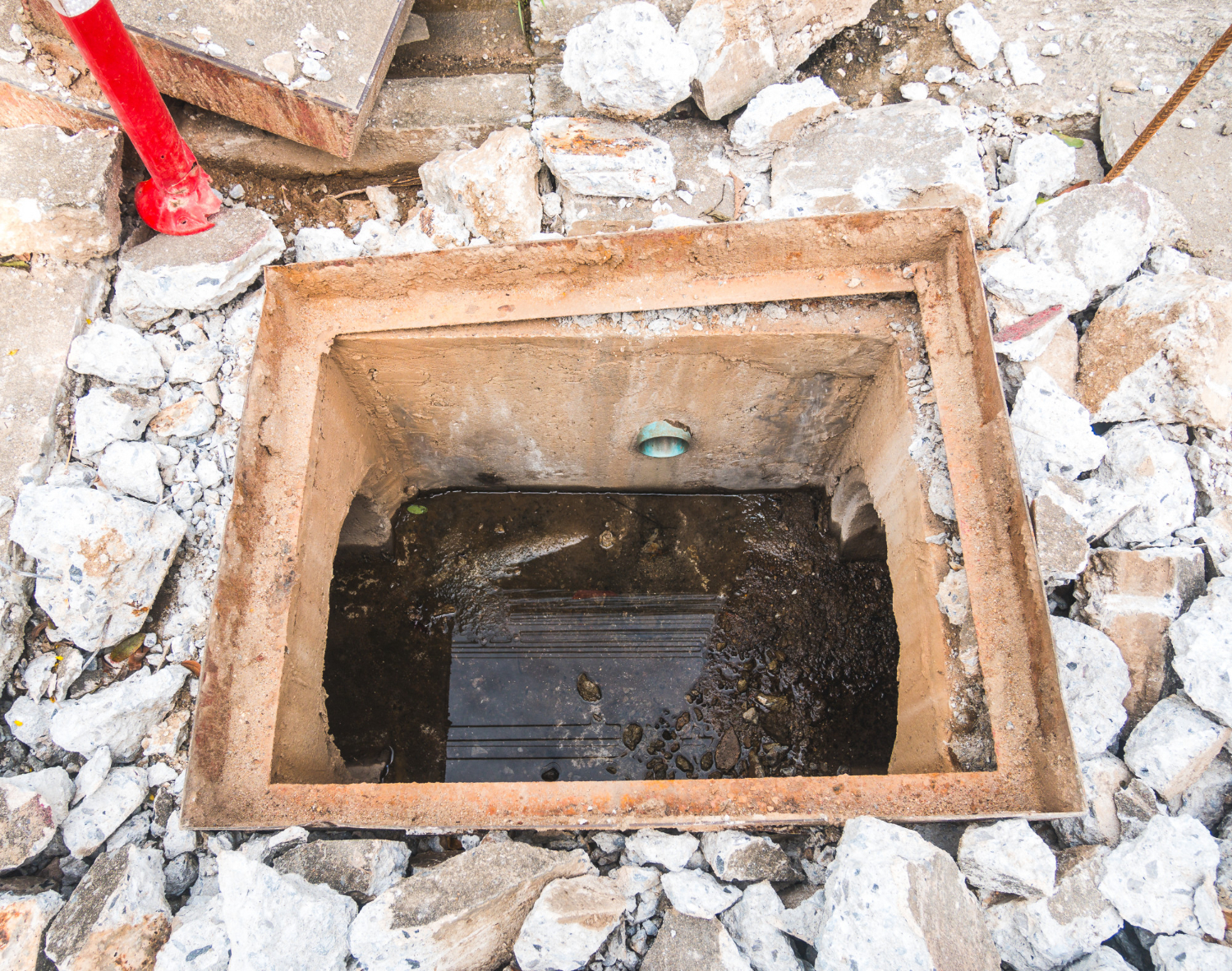
In some cases the cleanout location makes the patch approach impractical and a small open-cut access pit at the defect location is the more efficient method. That changes the repair from trenchless to a limited excavation, which has different cost and restoration implications but may still be substantially less disruptive than a full-run open-cut replacement.
Roots, scale, and debris may need removal before the patch goes in
Pipe preparation before a sectional liner is not always a quick process. A defect that has been admitting roots for several years may have a well-established root mass that requires mechanical cutting before hydro jetting can clean the pipe wall adequately for liner bonding. Scale buildup in an older clay pipe may require a descaling pass before the wall surface is receptive to the resin.
That prep work is billed as part of the job scope, and its extent is not always fully knowable until the pipe is opened and the camera has run the defect location at close range. A complete estimate should state what cleaning is anticipated based on the pre-work camera footage, and explain the conditions under which additional prep charges would apply.
A useful estimate explains what happens if the camera finds more damage
Sewer pipe condition is not always fully known from an initial inspection, particularly if the first camera run was performed under suboptimal conditions, with a partially obstructed pipe or a camera that could not pass the full length. A pre-work camera pass, conducted as the first step of the repair day after any clearing that is needed, sometimes reveals additional findings that were not visible in the initial inspection.
A well-scoped estimate addresses this directly. It states what the planned repair covers, what the trigger would be for expanding the scope, and how the homeowner would be informed and asked to approve any scope change before additional work proceeds. An estimate that presents a fixed price for a patch without acknowledging this possibility is either working from very high confidence in the initial diagnosis or is not accounting for a scenario that is not unusual in Seattle’s older pipe stock.
Conclusion
A spot repair is not a compromise or a temporary measure. When the camera shows a genuinely isolated defect in a pipe with documented sound condition on either side, a patch is the precise answer to the actual problem. It seals the defect, closes the root entry point, and restores the pipe to reliable service without treating the entire lateral as if it shares the same failure.
The condition that makes a patch the right answer is the same condition that makes full-run lining unnecessary: a single bounded defect in a pipe that is otherwise viable. When the camera confirms that, the patch is not the cheaper option. It is the correct option.
When the camera shows something more, the conversation changes. The right contractor makes that distinction clear, shows you the footage that supports it, and proposes a scope that matches what the pipe actually needs rather than what simplifies the job or maximizes the ticket.
If a recent camera inspection found localized damage in your Seattle side sewer, or if you want to know whether a problem your line has been having is isolated or part of a broader condition, contact Seattle Select Sewers for an evaluation.