Most homeowners do not think about their sewer lateral until something goes wrong. That is understandable. It is buried underground, invisible, and silent right up until the moment it is not. But the sewer lateral is also one of the most expensive single components of a residential property, and unlike a roof or a water heater, its condition is almost entirely hidden from view.
For Tukwila homeowners, where a significant portion of the housing stock dates to the 1950s through 1970s, that hidden component is often operating on borrowed time.
The good news is that regular sewer cleaning is one of the most effective tools for extending the functional life of an aging lateral. It does not just clear clogs. It removes the accumulated material that accelerates corrosion, root expansion, and structural degradation in pipe materials that are already past their midpoint of expected service life.
According to ARS/Rescue Rooter, a residential sewer lateral can last anywhere from 50 to 100 years or more depending on material and conditions, but that upper range requires maintenance. A pipe that is never cleaned runs a fundamentally different trajectory than one that receives scheduled service.
This article explains how regular cleaning extends pipe life in Tukwila specifically, why the different pipe materials in the area respond differently to maintenance, and what a practical cleaning schedule looks like for homes across the city.
In this article, you will learn about:
- Why accumulated buildup accelerates pipe degradation beyond just causing clogs
- How each common pipe material in Tukwila responds to regular cleaning
- What hydro jetting does that mechanical snaking cannot
- How cleaning intervals and camera inspections work together
- The cost comparison between regular maintenance and deferred replacement
Keep reading to understand why a scheduled sewer cleaning is one of the highest-return maintenance decisions a Tukwila homeowner can make.
Why buildup does more damage than just blocking flow
The common mental model of a sewer clog is something that blocks water. That is accurate but incomplete. Grease deposits, scale buildup, and organic matter accumulating on the interior pipe wall do more than narrow the bore. They change the environment inside the pipe in ways that actively accelerate material degradation, regardless of whether flow restriction has become noticeable yet.
Understanding the degradation mechanisms helps explain why regular cleaning extends pipe life rather than just clearing a symptom.
Grease deposits create the conditions for corrosion
Grease that enters the lateral from kitchen drains does not travel through cleanly. It cools quickly and adheres to the pipe wall, forming a progressively thicker layer that catches everything else passing through the system. Inside that grease layer, anaerobic bacteria break down the fat and produce hydrogen sulfide gas. That gas, when it contacts moisture on the pipe wall, converts to sulfuric acid.
In a cast iron lateral, sulfuric acid produced by this process attacks the pipe wall from the inside. The corrosion that results weakens the pipe structurally, starting small and widening over time.
A cast iron lateral that has been carrying a grease layer for 20 years looks considerably different on camera than one that has been cleaned on a regular schedule. Regular sewer cleaning removes the organic layer before the bacterial process has time to compound, directly reducing the acid exposure the pipe wall experiences over its lifetime.
In clay tile pipe, the same grease layer catches root tendrils more effectively than a clean interior would. A grease-coated clay pipe joint is a more hospitable environment for root establishment than a clear one, which is why root intrusion tends to advance faster in pipes with heavy grease accumulation.
Scale buildup in cast iron narrows the pipe and stresses the joints
Scale deposits in cast iron pipe accumulate from mineral precipitation over years of wastewater exposure. Unlike grease, scale is hard and irregular. It builds unevenly across the interior surface, creating rough patches that catch debris and further accelerate accumulation. A cast iron lateral operating with significant scale buildup is carrying flow through a smaller effective bore than its nominal diameter suggests, which means the system is working under higher pressure to move the same volume of wastewater.
That elevated pressure does not just slow drainage. It stresses the joints between pipe sections, accelerating the separation and offset that allows root entry and leads to eventual structural failure. Removing scale through periodic hydro jetting restores the effective bore of the pipe and reduces the pressure differential that was stressing its joints.
Root intrusion that is cleared early does less structural damage
Root intrusion in clay or cast iron pipe is one of the most common causes of lateral failure in Tukwila’s older neighborhoods. Fine root hairs enter through a loose joint or hairline crack, grow toward moisture inside the pipe, and over successive growing seasons expand into a mass that catches debris and widens the entry crack. Left unaddressed, that root mass eventually displaces pipe segments and forces a structural repair or replacement.
The critical variable is timing. Root intrusion cleared in its early stage, before the root mass has had time to expand and stress the surrounding pipe wall, produces a very different outcome than root intrusion discovered after years of unchecked growth.
Mechanical snaking pushes through the root mass but leaves root structure attached to the pipe wall. Pressure-washing the full interior circumference of the pipe removes root mass back to the wall and reduces the re-establishment rate, which is why hydro jetting after a confirmed backup produces better outcomes than snaking after the same event.
How the common pipe materials in Tukwila respond to regular cleaning
Tukwila’s housing stock includes a significant concentration of homes from the 1950s through the 1970s, which means the majority of older laterals in the city are made from clay tile, Orangeburg, or cast iron.
Each material has a different failure profile and a different relationship to maintenance. Understanding which material is in your lateral tells you how aggressive your cleaning schedule should be and what outcomes you can realistically expect from it.
Clay tile pipe: the material that benefits most from maintenance
Clay tile laterals were the standard for residential construction in the Pacific Northwest from the post-war era through the early 1970s. The pipe material itself is actually quite durable, as clay does not corrode and does not react to the chemical environment of wastewater. What fails in clay pipe is the joints, and that failure is driven by root intrusion, grease accumulation at joint entry points, and the physical expansion of material that establishes inside the pipe.
Regular cleaning directly addresses all three of those mechanisms. A sewer camera inspection on a clay lateral that has been cleaned on a regular schedule consistently shows better joint integrity than one that has not been maintained.
The cleaning prevents the organic layer that makes joint entry hospitable for roots, removes early-stage root intrusion before it widens the joint gap, and reduces the accumulation that puts pressure on already-loose connections.
A well-maintained clay lateral can function well past its nominal 50 to 60-year service life. A neglected one may fail at 40. The difference between those outcomes is almost entirely determined by maintenance history.
Cast iron pipe: cleaning prevents the corrosion cascade
Cast iron laterals are durable under mechanical stress but vulnerable to the acid environment that grease decomposition produces. A cast iron pipe that is regularly cleaned to remove grease deposits is not exposed to the same level of acid attack as one that carries a persistent organic layer. That reduced exposure translates directly into a longer structural life for the pipe wall.
Beyond corrosion protection, regular cleaning removes the scale buildup that narrows the bore and stresses joints. The ASCE notes that the nation’s 16,000 wastewater treatment plants currently operate at an average of 81% of design capacity, a system-level consequence of infrastructure that has been under-maintained for decades.
The same principle applies at the residential lateral level: a pipe consistently operating near its functional limit because of narrowed bore and stressed joints deteriorates faster than one maintained at or near its designed capacity.
For cast iron laterals in Tukwila homes, biennial hydro jetting with a camera inspection every three to four years is a maintenance schedule that directly extends functional life.
Orangeburg pipe: where maintenance reaches its limits
Orangeburg pipe, manufactured from compressed wood fiber and tar and installed widely from the 1940s through the late 1950s, presents a different maintenance picture than clay or cast iron. Its failure mode is internal deformation: the material absorbs moisture over decades and loses its circular bore, collapsing from the inside regardless of what cleaning is performed on it.
Regular cleaning cannot reverse or prevent Orangeburg deformation. What cleaning can do is extend the period during which a deforming Orangeburg pipe remains functional by preventing grease and debris accumulation that would otherwise cause a flow restriction on top of the structural deformation. A deforming Orangeburg pipe that is clean fails later than one that is also carrying a grease layer.
The honest maintenance conversation for Orangeburg pipe in a Tukwila home built between 1947 and 1958 is not whether to clean it, but how to use regular inspections to track the rate of deformation and plan a replacement or trenchless relining before a failure forces the decision. A sewer scope every two years gives that picture with enough lead time to act on it.
What hydro jetting does that mechanical snaking cannot
Hydro jetting and mechanical snaking are frequently treated as interchangeable options for the same problem. They are not. Understanding the difference matters for Tukwila homeowners who want to use cleaning as a pipe-life extension tool rather than just a reactive clog-clearing service.
A snake pushes through a blockage, creating a path for water to flow again. It does not remove material from the pipe wall. A root mass that a snake has penetrated is still attached to the wall, still growing, and will re-establish the same restriction in a shorter timeframe than before. Grease deposits that a snake passes through remain on the interior surface.
How high-pressure water scours the full pipe circumference
A hydro jetter forces water at high pressure through a specialized nozzle that directs jets forward and backward simultaneously. The forward jets break up blockages. The backward-directed jets scour the full interior circumference of the pipe as the head moves through it, cutting material away from the wall surface rather than passing through the center of it.
The result after jetting is a pipe interior that is substantially cleaner than after snaking:
- Root masses are cut back to the pipe wall rather than merely penetrated
- Grease deposits are dissolved and flushed from the interior surface
- Scale and mineral deposits are dislodged from cast iron walls
- The full bore of the pipe is restored rather than just a channel through the blockage
That thorough clean is what produces the pipe-life extension benefit. A pipe that has had the grease layer, root intrusion, and scale removed is operating with less stress on its joints, less acid exposure on its walls, and more effective flow capacity than before the service. Homes in Burien and Bothell face the same pipe age and root pressure conditions as Tukwila, and hydro jetting plays the same maintenance role across the South King County region.
When snaking is still the right tool
Snaking is not without value. For a simple organic clog in a branch line near the fixture, snaking clears the restriction quickly and cost-effectively. For a mainline with established root intrusion or grease buildup, snaking is a temporary fix that leaves the underlying condition unaddressed.
The practical decision tree:
- Single slow fixture with no cross-fixture symptoms: snaking is appropriate for the branch line
- Multiple slow fixtures or cross-fixture gurgling: main lateral issue, camera inspection before any clearing
- Confirmed root intrusion on camera: hydro jetting, not snaking, as the clearing method
- Grease accumulation on camera: hydro jetting removes the deposit; snaking does not
- Post-clearing confirmation that the wall is clean: follow-up camera after jetting
For Tukwila homes with laterals older than 30 years, hydro jetting is the right default for any mainline service, not because snaking is harmful, but because it does not address the conditions that shorten pipe life.
Cleaning intervals, camera schedules, and the cost math that makes it worthwhile
Knowing that regular cleaning extends pipe life is useful. Knowing how frequently to clean, when to add camera inspections, and what the financial comparison looks like against deferred maintenance or emergency replacement makes it actionable.
The right schedule depends on the pipe material, tree proximity, and household factors. A single answer does not fit every Tukwila home, but the ranges below cover the most common situations.
Recommended intervals by pipe material and risk profile
Work through these intervals as a starting point:
- Clay tile with no known root intrusion, low tree proximity: camera inspection every three years, hydro jetting when inspection finds buildup
- Clay tile with known root intrusion or trees within 20 feet: hydro jetting every one to two years, camera inspection every two years
- Cast iron, home older than 40 years: camera inspection every three years, hydro jetting every two years to manage scale and grease
- Orangeburg pipe confirmed on camera: camera inspection every 18 to 24 months to track deformation rate, cleaning as needed to maintain flow
- PVC pipe in good condition: camera inspection every five years, cleaning only if symptoms develop
These intervals assume a home with normal household water use. A household with heavy kitchen cooking activity, more occupants than average, or a history of drain problems benefits from a slightly compressed schedule.
What camera inspections add to the cleaning program
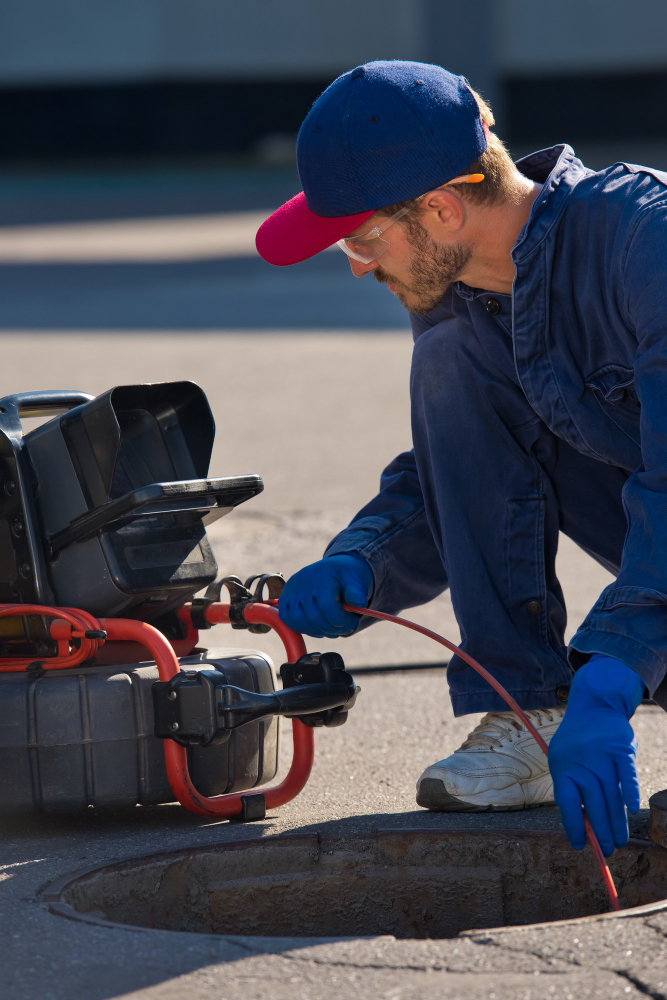
Hydro jetting without periodic camera inspection is maintenance performed without a feedback loop. The camera tells you whether the cleaning is working, whether root intrusion is progressing despite regular clearing, and whether structural conditions have changed since the last inspection. That information is what allows a homeowner to make timed decisions about repair before failure.
A camera pass following a jetting service confirms the cleaning was complete, particularly important when a root mass or heavy grease deposit was found on the pre-jetting pass.
Homes throughout Seattle and South King County that combine scheduled jetting with periodic camera inspection consistently identify developing structural issues while they are still candidates for spot repair or targeted relining rather than full lateral replacement.
The cost comparison that makes regular cleaning the obvious choice
Consider the realistic cost comparison for a Tukwila home with a 1960s clay lateral and moderate root pressure:
Regular maintenance path: biennial hydro jetting plus camera inspection every three years, running consistently for 10 years. Total maintenance cost over that period is a fraction of a single emergency repair. The lateral arrives at year 10 in better structural condition than it started, with documented service history and no emergency calls.
Deferred maintenance path: no scheduled cleaning. Root intrusion advances unchecked over the same 10 years.
At some point, a backup occurs. The backup requires emergency service, which carries premium pricing. If the inspection following the emergency reveals structural damage from root expansion, a sewer line replacement is now on the table at several thousand to over ten thousand dollars, plus restoration costs.
The EPA’s Clean Watersheds Needs Survey estimated $630 billion in clean-water infrastructure investment will be required over the next two decades, a figure that reflects what decades of deferred maintenance produces at scale. The household version of that dynamic plays out in the same way: maintenance deferred is not cost avoided. It is cost multiplied.
Conclusion
Regular sewer cleaning is not a reactive service. For Tukwila homeowners with laterals from the 1950s through 1970s, it is the most direct, highest-return tool for extending pipe life, reducing emergency risk, and keeping the cost of eventual repairs as manageable as possible.
The mechanisms are straightforward: cleaning removes the grease layer that produces acid attack on cast iron walls, removes the root intrusion that widens joint gaps in clay tile, and restores the full bore of the pipe that scale buildup has been narrowing. Each of those outcomes represents fewer years of degradation, which translates directly into more functional life remaining in the pipe.
A lateral that has been cleaned on a schedule is a different physical object than one that has not. The difference shows on camera, and it shows in the repair bill when the pipe eventually needs structural attention.
When you are ready to schedule a cleaning or inspection for your Tukwila lateral, Seattle Select Sewers is ready to help.