Sewer backups are one of the most disruptive and expensive problems a homeowner can face, and summer in Lynnwood is when conditions align to make them most likely. Increased household water use, dry soil that drives root systems deeper toward lateral lines, and the natural buildup of grease and debris from months of cooking and everyday drainage all converge during the warmest months of the year.
For homeowners in neighborhoods with older housing stock and mature tree canopy, that combination puts real pressure on sewer laterals that may already be showing their age.
The EPA estimates that there are at least 23,000 to 75,000 sanitary sewer overflows in the United States each year, with blockages from roots, grease, sediment, and structural failures among the primary contributing causes.
The majority of those events affect residential properties, and most of them were preceded by warning signs that homeowners either missed or dismissed. Prevention is not complicated once you know what to watch for and when to act.
This article walks through why summer specifically elevates sewer backup risk in Lynnwood, what the most common causes are in this area, how to recognize the warning signs early, and what preventative steps actually work. Getting ahead of a backup before it happens is almost always cheaper than dealing with one after.
In this article, you will learn about:
- Why summer creates specific sewer backup risk in Lynnwood
- The most common causes of backups in this area
- Warning signs that a backup is developing
- Practical prevention steps homeowners can take
- When professional service is the right call
Keep reading to understand what your sewer lateral is dealing with this season and how to make sure it handles it without a failure.
Why summer elevates sewer backup risk in Lynnwood
Sewer backups are not distributed evenly across the calendar. They spike in summer and spike again after major rain events, and the reasons for both are well understood. In Lynnwood, a city with a mix of homes from the 1950s through the 1990s and significant mature tree cover throughout established neighborhoods, the summer risk profile is particularly elevated.
Understanding why summer creates more failures helps homeowners approach prevention as a timely, season-specific task rather than a vague year-round concern. There are two primary mechanisms at work, and they often compound each other.
Dry soil drives root systems toward sewer lines
During the dry Pacific Northwest summer, soil moisture drops significantly across the Lynnwood area. Root systems from Douglas firs, big-leaf maples, ornamental cherries, and other established trees follow moisture gradients underground with no regard for property lines or pipe locations. When the soil around them dries, roots extend deeper and farther in search of water, and the warm, moisture-rich environment inside a sewer lateral becomes an active target.
Roots that have been slowly approaching a clay tile joint or a hairline crack in an older pipe can advance rapidly during summer drought conditions.
A lateral that drained normally in April may show its first symptoms by August, not because anything changed in the pipe, but because root pressure accelerated during the dry season. This is why root intrusion sewer cleaning is a common summer service call throughout the Eastside and Snohomish County.
Increased household water use strains aging laterals
Summer household water use is higher than any other season. More frequent showers, more laundry, more outdoor entertaining, and more frequent kitchen activity all increase the volume of wastewater moving through the lateral.
For a pipe in good structural condition, that increased volume is unremarkable. For a lateral with a partial root mass, a developing belly, or a joint offset that has been narrowing flow for months, the added volume is often the trigger that pushes a slow drain into a full backup.
The combination of accelerated root growth and increased water volume during summer is what makes the season the highest-risk period on the calendar. Either factor alone is manageable. Together, they create a window where deferred maintenance catches up with homeowners faster than expected. A sewer backup that happens on a summer Saturday afternoon, with the house full and the washing machine running, is rarely a surprise to the pipe even if it is a surprise to the homeowner.
Grease and debris accumulation peaks in summer
Summer cooking produces more grease than any other season. Barbecue drippings, cooking oils, and fats that go down the kitchen drain cool and solidify inside the lateral, coating the pipe walls and narrowing the effective diameter over time.
According to the American Society of Civil Engineers, aging and inadequate capacity in sewer systems results in the discharge of 900 billion gallons of untreated sewage annually across the U.S., a figure that reflects, in part, the cumulative effect of grease, root intrusion, and deferred maintenance across millions of residential laterals.
A grease-coated pipe interior catches debris more readily, slows flow, and creates conditions where a root mass or minor structural issue produces a full blockage rather than just a slow drain. Grease alone rarely causes catastrophic failures, but it reliably worsens the effect of every other problem in the system. Managing what goes down the drain is one of the few prevention steps entirely within a homeowner’s control.
The most common causes of sewer backups in Lynnwood homes
Sewer backups have identifiable causes, and the most common ones in Lynnwood trace back to a combination of pipe age, local tree cover, and household disposal habits. Knowing which cause is most likely in a given home helps prioritize prevention steps and shapes the professional conversation when a service call is needed.
None of these causes is unique to Lynnwood, but the city’s development history and landscape create a specific combination of risk factors that homeowners in newer areas do not face to the same degree.
Tree root intrusion in older laterals
Root intrusion is the leading structural cause of sewer backups in Lynnwood’s established neighborhoods. Homes built before 1980 frequently still have their original clay tile or cast iron laterals, and those pipe materials develop the joint separations and surface cracks that make root entry easy. Once inside, root systems grow rapidly in the warm, nutrient-rich environment of the lateral, catching debris and narrowing flow until a backup occurs.
The progression is gradual enough that homeowners often do not notice it until a trigger event, typically an increase in water use or a large volume flush, pushes a partially blocked line over the edge. A hydro jetting service clears root masses more thoroughly than mechanical snaking because it scours the full interior circumference of the pipe rather than just pushing through the blockage. For recurring root problems, jetting plus a follow-up camera inspection is the most reliable way to assess whether the pipe wall is still structurally sound at the entry points.
Grease buildup and non-flushable materials
Grease-related blockages are largely preventable, which makes them one of the more frustrating causes of summer backups. Cooking fats poured down the kitchen drain cool quickly inside the pipe and adhere to the interior wall.
Over weeks and months, that layer thickens and catches food particles, paper, and other debris passing through. By the time the layer is thick enough to restrict flow noticeably, it has been building for a long time.
Non-flushable materials, including wipes marketed as flushable, feminine hygiene products, paper towels, and cotton items, compound the problem. These materials do not break down in the lateral the way toilet paper does. They catch on grease deposits and root masses, accelerating blockage formation. Disposal habits that seem low-stakes at the individual flush level accumulate into real blockage material over the course of a season.
The practical prevention steps are straightforward:
- Let cooking grease cool and solidify in the pan, then scrape it into the trash
- Run hot water down the kitchen drain after cooking to push residual grease further into the system before it solidifies near the trap
- Never flush wipes of any kind, regardless of labeling
- Keep a small wastebasket in every bathroom for non-flushable hygiene items
None of these habits require significant effort, but collectively they reduce the grease and debris load on the lateral substantially over the course of a summer.
Pipe age and structural deterioration
Lynnwood’s housing stock includes a significant number of homes built from the late 1950s through the 1970s, and many of those properties still have their original lateral pipe. Clay tile installed in that era has a documented failure timeline: joint separations from soil movement, softening from root pressure, and increasing porosity from decades of moisture exposure.
Orangeburg pipe, used through the late 1950s, deforms from the inside as it absorbs moisture, gradually losing its round shape until it can no longer move wastewater effectively.
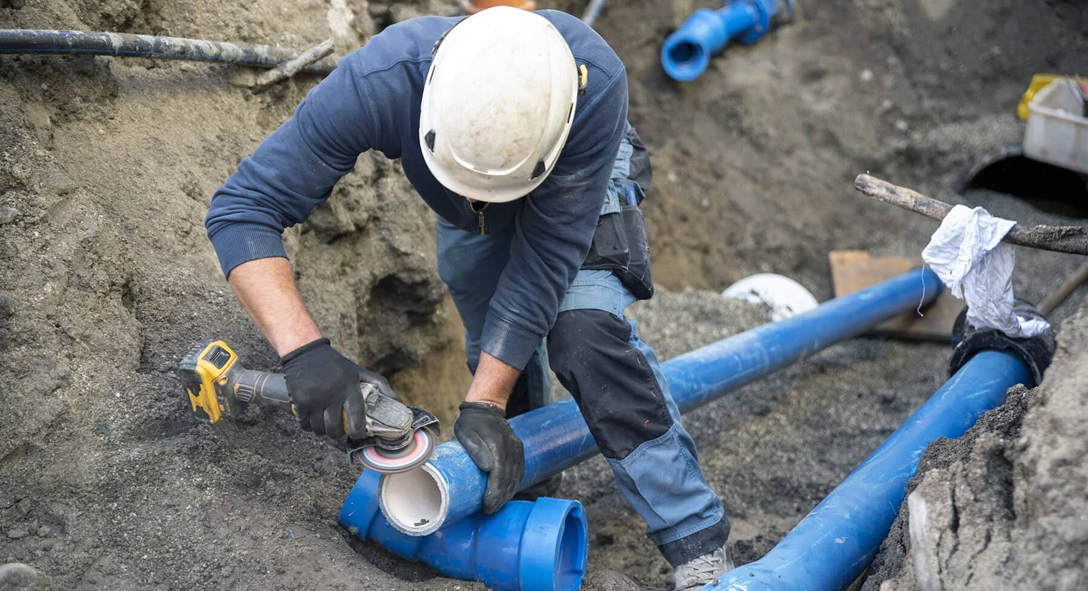
Unlike root intrusion or grease buildup, structural deterioration does not have a behavioral fix. A pipe that has reached the end of its functional life needs to be assessed and, if necessary, repaired or replaced. What homeowners can control is how early that assessment happens. A sewer line inspection on a home older than 40 years gives a clear picture of the pipe’s current condition and identifies whether structural repair is already necessary or whether the line still has years of functional life ahead of it.
Warning signs that a backup is developing
Sewer backups rarely arrive without warning. The lateral gives signals for weeks or months before a full failure occurs, and homeowners who recognize those signals and act on them avoid the most expensive version of the problem. The challenge is that the early signals are easy to rationalize as unrelated minor issues rather than as indicators of a single developing problem.
Treating these signs in isolation, rather than as a pattern, is one of the most common reasons backups catch homeowners off guard. When two or more of these conditions appear in the same period, the right response is a professional inspection, not a wait-and-see approach.
Slow drains in multiple fixtures simultaneously
A single slow drain is usually a localized issue: hair in a bathroom trap, grease near the kitchen drain, a partial clog in a branch line. Multiple slow drains running at the same time point to a restriction in the main lateral rather than in any individual branch. This distinction matters because it defines the location of the problem.
When the kitchen sink, the downstairs shower, and the washing machine drain all move slowly within the same week, the common factor is the main line. That is a sewer line repair conversation, not a trap-cleaning appointment. Acting at the slow-drain stage costs significantly less than acting after the backup that follows.
Gurgling sounds and pressure events
Gurgling from a toilet or a floor drain when another fixture runs is one of the clearest signals that airflow in the drain system is compromised. It typically means the main lateral has a restriction significant enough to disrupt pressure equalization across the system. Water draining through the washing machine creates a vacuum that pulls air through the nearest open drain, producing the gurgling sound that homeowners often attribute to plumbing quirks rather than to a developing blockage.
Other pressure events worth noting:
- Water rising briefly in the toilet bowl when the washing machine drains
- A floor drain in the basement that gurgles or releases a small amount of water during heavy water use upstairs
- The toilet that takes an unusually long time to refill after flushing
Each of these is the same problem at different severity levels. The floor drain event is closest to a full backup; the gurgling toilet bowl is the earliest visible stage.
Odors and yard conditions
Sewer odors from floor drains or cleanouts that persist without a clear interior source often indicate that the lateral is cracking or leaking underground, releasing gas into surrounding soil that migrates back into the home through foundation gaps.
This is a different signal from a dry trap or a wax ring, and it should prompt a camera inspection rather than a drain cleaning.
Yard conditions also carry useful information. A patch of lawn along the lateral path that is unusually green or lush compared to surrounding grass often marks a point where the pipe is leaking and fertilizing the soil with nutrient-rich wastewater. Soft or wet ground along the same path, without a weather explanation, points to the same condition at a more advanced stage.
Acting on these yard signals before they produce interior symptoms is the ideal window for a sewer pipe repair.
Practical prevention steps that actually work
Prevention for sewer backups falls into two categories: behavioral changes that reduce the load on the system, and maintenance services that address the physical condition of the pipe. Both matter, and neither alone is sufficient for a home with an older lateral in a tree-heavy neighborhood.
The homeowners who avoid emergency summer backups are not always the ones with the newest pipes. They are often the ones who scheduled a maintenance service in May rather than waiting to see what happened in August.
Schedule a pre-summer inspection and cleaning
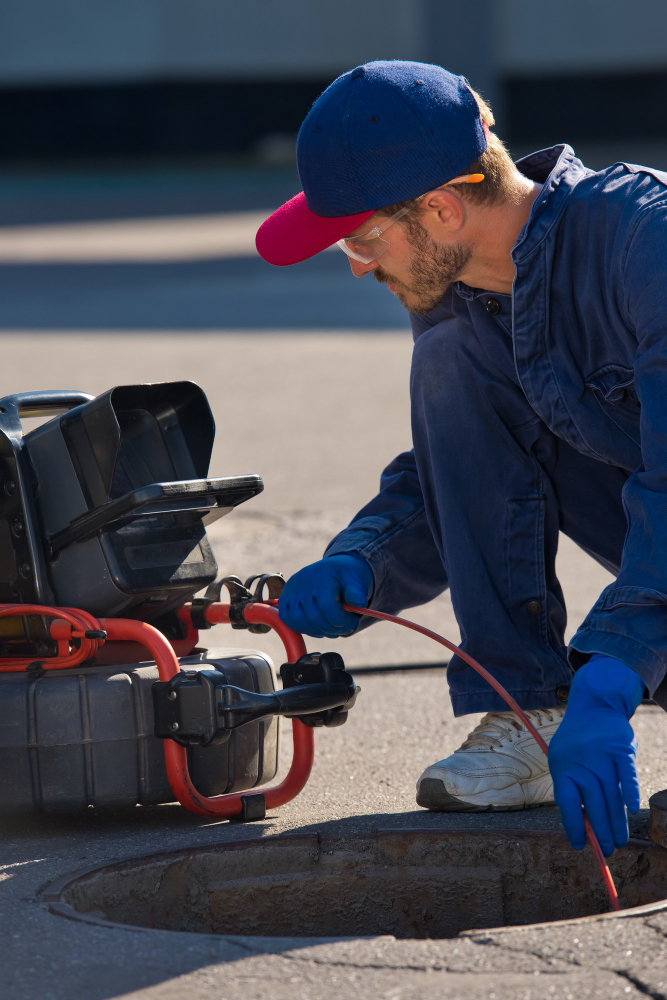
The most effective single step a Lynnwood homeowner can take before summer is scheduling a camera inspection and hydro jetting service in late spring. An inspection identifies the current condition of the lateral and any developing root intrusion, grease buildup, or structural concerns. Hydro jetting clears accumulated material from the pipe interior more thoroughly than mechanical snaking, removing root masses, grease layers, and debris in one pass.
This combination typically runs a few hundred dollars for a standard residential lateral. The preventative maintenance window before summer activity peaks is the best time to address anything the camera finds, because the repair options are wider when the pipe is still functional than when it has failed.
Homeowners who discover a developing root intrusion in May can schedule a clearing service. Homeowners who discover it in August after a backup may be looking at an emergency excavation.
Know what can and cannot go down the drain
Behavioral prevention is not about perfection. It is about eliminating the highest-impact disposal habits that accelerate blockage formation. A few consistent practices across the household make a meaningful difference over the course of a summer:
- Scrape plates and pans into the trash before rinsing; do not use the drain as a disposal for food solids
- Never pour cooking fats, oils, or grease down the kitchen drain under any conditions
- Keep wipes, cotton balls, dental floss, and paper towels out of the toilet regardless of product labeling
- Run the garbage disposal with cold water rather than hot, which keeps grease solid and flushable rather than liquid and pipe-coating
These habits are most effective when they apply to the whole household, not just one person. Summer entertaining brings guests who may not know the rules, which is worth a brief mention when people are in and out of the kitchen.
Address tree proximity proactively
If you have large trees within 20 to 30 feet of your sewer lateral and your home is older than 30 years, root intrusion should be treated as a when question rather than an if question. Waiting for symptoms to appear before scheduling service means letting root mass develop to the point where it is causing drainage problems, which is a more expensive condition to address than early intrusion caught on a routine inspection.
Annual or biennial jetting for homes with known root pressure keeps the pipe clear before accumulation reaches blockage levels. For properties with severe tree proximity, physical root barriers installed during a targeted excavation can redirect root growth away from the lateral path, reducing the frequency of clearing service needed over time. Homeowners in Shoreline and Bothell with the same tree-and-lateral age profile benefit from the same proactive approach.
Keep a sewer cleanout accessible
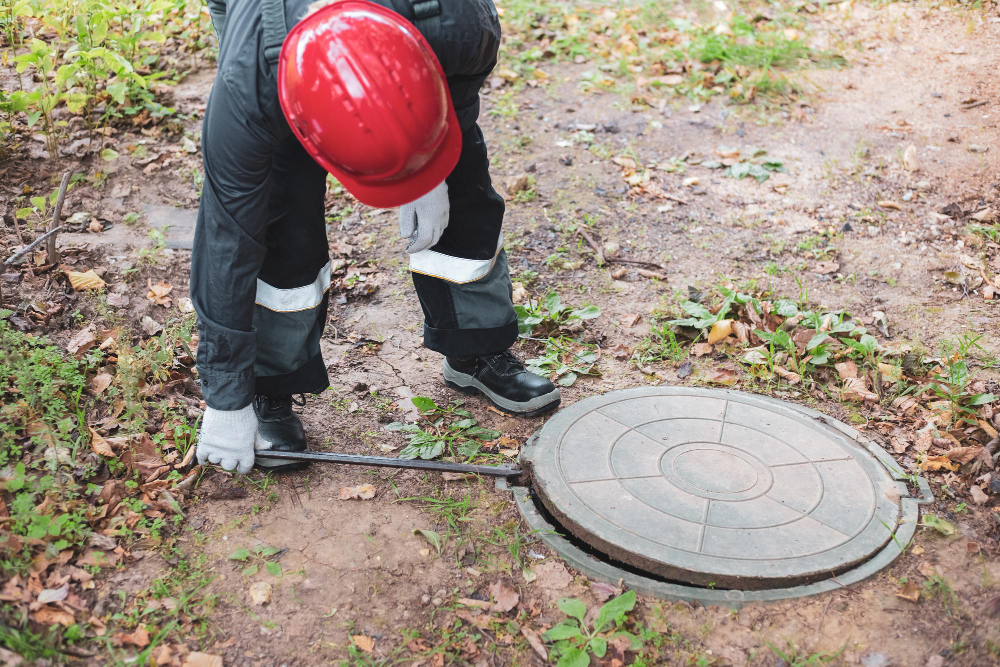
A sewer cleanout is the access point that gives a camera or jetting equipment entry to the lateral without removing a toilet or digging.
Many older Lynnwood homes have a cleanout, but it is buried under landscaping, covered by a deck addition, or simply unknown to the current owner. Locating the cleanout, marking it, and keeping it accessible takes an hour of work and saves significant time and cost if a service call becomes necessary.
If your home does not have a cleanout, having one installed during a routine service visit is a modest investment that pays off the first time a backup or inspection is needed. A sewer cleanout installation reduces future service costs by eliminating the access labor that otherwise has to happen before diagnostic or clearing work can begin.
Conclusion
Summer sewer backups in Lynnwood are predictable, and that predictability is exactly what makes them preventable. Root systems are more aggressive in dry conditions, household water use is at its highest, and grease accumulation from months of cooking reaches levels that tighten the margin between a functional pipe and a blocked one. Addressing those factors before summer peaks is the most straightforward way to avoid the emergency that follows when they converge.
The behavioral side of prevention is mostly about consistent habits: keeping grease and non-flushables out of the drain system and treating early warning signs as the early warnings they actually are rather than as background noise. The maintenance side is about scheduling an inspection and clearing service before the season rather than after it.
The homeowners who go through summer without a backup are not lucky. They are the ones who made a phone call in May. When you are ready to schedule a pre-summer inspection for your Lynnwood home, Seattle Select Sewers is ready to help.