A sewer backup is one of the worst things a homeowner can deal with. Wastewater rising through a floor drain or a basement toilet is not just disgusting and disruptive. It is a health hazard, a property damage event, and an urgent signal that something underground has gone seriously wrong. If you live in Shoreline, understanding why sewer backups happen in Shoreline homes is especially important, because this city has a combination of conditions that make backups more likely than many homeowners realize.
Much of Shoreline was developed in the mid-twentieth century, and the underground infrastructure reflects that era. According to the City of Shoreline, the city owns approximately 140 miles of stormwater pipe, and most of those pipes are over 50 years old, exceeding their expected lifespan. The sanitary sewer system that carries wastewater from homes faces similar age-related challenges. Add in the Pacific Northwest’s persistent rainfall, dense glacial till soil, and mature tree canopy, and you have an environment where aging pipes are under constant stress.
The good news is that sewer backups rarely strike without warning. There are signs that a problem is developing, and there are concrete steps you can take to prevent a backup from ever reaching your home. This article explains what causes backups in Shoreline specifically, how to spot the warning signs, what to do if one occurs, and how to keep it from happening again.
In this article, you will learn about:
- What makes Shoreline homes vulnerable to sewer backups
- How a sewer backup actually happens
- Warning signs that a backup is developing
- What to do immediately during a sewer backup
- How professionals diagnose and fix the problem
- How to prevent sewer backups in your Shoreline home
Keep reading to learn what is working against your sewer line and what you can do to stay ahead of it.
What makes Shoreline homes vulnerable to sewer backups
Sewer backups are not random events. They are the result of specific conditions acting on a specific pipe over time. Shoreline has several of those conditions working in combination, which is why backups remain a persistent issue across the city’s neighborhoods.
Aging pipe materials across Shoreline neighborhoods
Most of Shoreline’s residential development occurred between the 1940s and 1970s, and the sewer lines installed during that period were typically made from concrete, clay, or cast iron. These materials were standard for the era but were never intended to last indefinitely.
Each material deteriorates in its own way:
- Concrete pipes erode on the interior surface as the cement wears down, eventually roughening the walls and weakening the pipe structurally.
- Clay pipes were installed in short segments joined at unsealed or poorly sealed joints. Those joints open over time, allowing roots and soil to enter.
- Cast iron pipes corrode from the inside out, narrowing the diameter and creating rough surfaces that catch debris.
The City of Shoreline is actively replacing aging sewer pipes throughout the city, with nearly a mile of sewer pipe slated for replacement in 2025 and 2026 alone. That investment reflects the scale of the aging infrastructure problem and the urgency of addressing it before more failures occur.
Heavy seasonal rainfall and groundwater infiltration
The greater Seattle area receives roughly 37 to 39 inches of precipitation in a typical year, according to National Weather Service records measured at Sea-Tac Airport. The vast majority of that rain falls between October and March, meaning Shoreline’s underground pipes spend half the year in saturated soil conditions.
That sustained moisture creates two problems for sewer lines. First, groundwater seeps into cracked pipes and open joints through a process called infiltration, adding volume to the sanitary sewer that it was never designed to carry. Second, the wet soil around the pipe shifts and settles, putting mechanical stress on joints and connections. Both of these factors contribute to backups, particularly during prolonged wet-weather periods when the system is already running near capacity.
Tree roots and glacial till soil
Shoreline’s established neighborhoods feature mature trees, many of them decades old, with root systems that extend well beyond the visible canopy. Those roots seek out moisture, and a sewer pipe with even a minor crack or loose joint provides exactly the kind of consistent water source that roots exploit.
Glacial till, the dense, compacted soil that underlies much of Shoreline, compounds the problem. It does not drain well, so rainwater stays near the surface and keeps the soil around sewer pipes saturated for months at a time. That moisture attracts roots toward the pipe, and the poor drainage means any leak from the line has nowhere to go except to pool around the pipe and accelerate the damage.
How a sewer backup actually happens
A backup is the end result of a process that usually develops over weeks, months, or even years. Understanding the mechanics helps explain why backups often seem sudden even though the underlying cause has been building for a long time.
Partial blockages that build over time
Most backups begin with a partial obstruction in the main sewer line. A root tendril enters through a joint and begins catching toilet paper and grease. A layer of grease gradually narrows the pipe. Debris accumulates behind a sag or an offset joint where flow has slowed.
At first the restriction is minor and the pipe handles normal daily flow without any visible problem. But the obstruction grows. Over time, the margin between normal flow and a backup shrinks until a peak-use moment, such as running the dishwasher, the washing machine, and a shower at the same time, pushes the system past its reduced capacity. Wastewater has nowhere to go but back toward the house.
Stormwater infiltration and system overload
In a city with Shoreline’s rainfall, stormwater infiltration is a significant contributor to sewer backups. When groundwater enters the sanitary sewer through cracks, joint gaps, or damaged manholes, it adds volume that competes with the wastewater coming from your home. During heavy rain events, the combined flow can exceed what the pipe can carry.
The Washington Department of Ecology notes that state regulations require combined sewer systems to reduce overflows to no more than an average of one per year per outfall. That standard exists because overloaded systems are a documented, ongoing problem in the Puget Sound region. For individual homeowners, the practical impact is that a pipe already weakened by age or partially blocked by roots is far more likely to back up during a wet-weather event than during dry conditions.
Pipe failures from age and corrosion
Not every backup is caused by a blockage. Sometimes the pipe itself has failed. A collapsed section, a severe offset where two pipe segments have shifted apart, or a section of cast iron that has corroded through can all prevent wastewater from flowing to the city main.
These failures are more common in pipes that have not been inspected or maintained. A pipe that has been quietly deteriorating for decades can reach a point where it collapses under the weight of saturated soil or the pressure of a heavy vehicle parked above it. When that happens, the backup is immediate and often severe.
Warning signs that a backup is developing
Sewer backups almost always give advance warning. Recognizing these signs and acting on them is the difference between a scheduled repair and an emergency cleanup.
Slow drains and gurgling fixtures
When multiple drains in the house are slow at the same time, the restriction is almost certainly in the main sewer line, not in a single fixture’s branch. Gurgling sounds from toilets, bubbling in a bathtub drain when the washing machine runs, and sluggish floor drains are all indicators that airflow and water flow in the line are compromised.
Key patterns to watch for:
- Two or more fixtures draining slowly at the same time, especially on different floors
- A toilet that bubbles or gurgles without being flushed
- A floor drain that backs up slightly when a large volume of water enters the system, such as during a load of laundry
Sewer odors inside the home
A sewer line in good condition is sealed. When you detect a sulfur or sewage smell from a drain, near the foundation, or in the basement, it typically means gas is escaping through a crack, a loose joint, or a blockage that is forcing gas backward through the system. Sewer odors that appear during wet weather and disappear when it dries out often point to infiltration at a compromised section of the line.
Water appearing in the wrong places
This is the most urgent warning sign. If you flush a toilet upstairs and see water rise in a ground-floor shower drain or floor drain, the main sewer line is blocked and wastewater is finding the lowest exit point back into the house. Dark water or visible waste material coming up through a floor drain means the blockage is at or near complete, and a full backup is either happening or imminent.
What to do immediately during a sewer backup
If wastewater is coming into your home, the first few steps matter. Acting quickly limits the damage and protects your household.
Stop using water in the home
Every toilet flush, every sink, and every appliance that sends water into the drain system adds to the problem. As soon as you notice a backup, stop all water use in the house. Turn off the washing machine if it is running. Do not flush toilets. Do not run sinks. This reduces the volume of wastewater trying to exit through a blocked line and buys you time.
Avoid contact with the wastewater
Raw sewage carries bacteria, viruses, and parasites. Keep household members and pets away from the affected area. Do not attempt to clean up standing sewage without protective equipment. Open windows for ventilation if the backup is in an enclosed space like a basement, but do not use the HVAC system, which can spread contaminated air through the house.
Call a sewer professional, not a general plumber
A sewer backup requires someone with the equipment to diagnose and address the main line, not just clear a household drain. A sewer specialist will scope the line with a camera, identify the cause and location of the blockage or failure, and recommend the appropriate repair. Calling a general plumber who only snakes the line may temporarily restore flow, but if the underlying issue is structural, the backup will return.
How professionals diagnose and fix the problem
The right repair depends entirely on what caused the backup. A professional diagnosis starts with seeing what is happening inside the pipe, and the repair is matched to the actual findings.
Camera inspection to find the cause
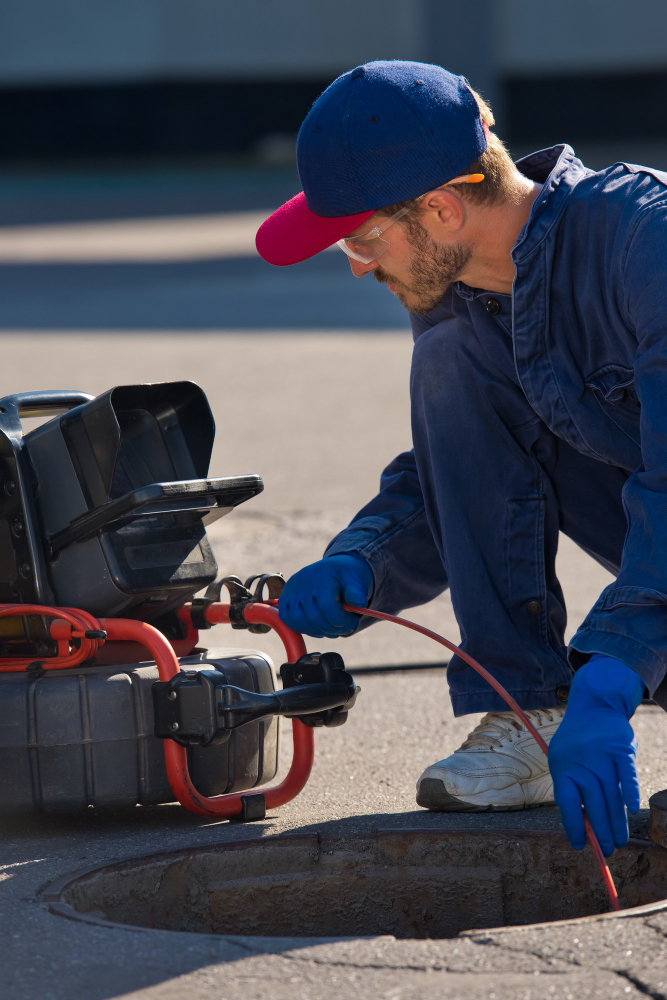
A sewer camera inspection feeds a high-definition camera through the line to produce a live video of the pipe’s interior. The camera identifies the exact cause of the backup, whether it is a root mass, grease buildup, collapsed section, offset joint, sag, or corrosion, and pinpoints its location along the line.
This step is essential because different causes require different solutions. Jetting a root blockage in an otherwise sound pipe is a very different job than replacing a collapsed section of cast iron. The camera takes the guesswork out of the diagnosis and ensures you are not paying for the wrong fix.
Hydro jetting for blockage-related backups
When the camera shows that the backup was caused by a blockage in a structurally sound pipe, hydro jetting is typically the best approach. High-pressure water scours the full interior of the pipe, cutting through roots, grease, scale, and debris and restoring full flow.
Jetting clears what a snake cannot:
- Dense root masses that fill the pipe at multiple joints
- Hardened grease layers that have narrowed the line over years
- Mineral scale and sediment buildup on the pipe walls
- Debris packed behind a partial obstruction
A follow-up camera pass after jetting confirms that the pipe itself is intact and that no structural issues remain.
Trenchless repair or replacement for pipe damage
If the camera reveals structural damage, clearing the blockage alone will not prevent future backups. A cracked pipe, a collapsed section, or offset joints that allow roots and soil to re-enter need a permanent fix.
Trenchless sewer repair uses cure-in-place pipe lining to create a seamless new pipe inside the old one, sealing every crack and joint without excavating the yard. For localized damage, a spot repair addresses only the damaged section. When the pipe is too far gone for lining, a full sewer line replacement with modern materials eliminates the problem permanently.
How to prevent sewer backups in your Shoreline home
A sewer backup is preventable in most cases. The combination of regular monitoring, smart household habits, and the right protective measures keeps the vast majority of homeowners ahead of the problem.
Regular sewer line inspections
A camera inspection every few years is the single most effective way to prevent a backup. It catches root growth, developing cracks, grease buildup, and early-stage sags while they are still minor and inexpensive to address. If your home was built before the 1980s and the sewer line has never been scoped, an inspection should be a priority.
Regular inspections are especially valuable if:
- Your home has mature trees near the sewer line path
- You have experienced slow drains or minor backups in the past
- The previous owners did not have records of sewer work or inspections
- You are on a shared side sewer with a neighboring property
Household habits that protect your sewer line
What goes down the drain has a direct impact on how quickly blockages develop. A few consistent habits make a meaningful difference:
- Never pour cooking grease, oil, or fat down any drain. Let it cool and scrape it into the trash.
- Only flush toilet paper. No wipes of any kind, no feminine products, no cotton swabs, no paper towels.
- Use drain screens in sinks and showers to catch hair and debris before it enters the line.
- Run hot water through the kitchen drain after doing dishes to help move residual grease.
These habits do not eliminate every risk, but they remove the most common household contributors to sewer blockages and give your pipe the best chance of performing the way it should between professional maintenance visits.
Backwater valves and when they make sense
A backwater valve is a one-way device installed on your sewer line that allows wastewater to flow out but prevents it from flowing back into the house. For Shoreline homes in low-lying areas or neighborhoods that experience wet-weather surcharging, a backwater valve can be the last line of defense between a system overload and sewage in your basement.
Not every home needs one, and installation should be evaluated by a professional based on your home’s elevation, the slope of the line, and the history of backups in your area. But for homeowners who have already experienced a backup or who live in a neighborhood where infiltration is a known issue, the investment is small compared to the cost of a single cleanup.
Conclusion
Sewer backups are not inevitable, but in a city like Shoreline, with aging pipes, heavy rainfall, and dense root systems working against your sewer line year-round, they require attention. The homeowners who avoid backups are the ones who take the warning signs seriously, invest in regular inspections, and address developing problems before they reach the point of failure.
If you have noticed slow drains, recurring odors, or any of the other signs discussed here, do not wait for a full backup to confirm the problem. And if your home has never had its sewer line scoped, now is the best time to find out what is happening underground, while you still have options and time on your side.
Seattle Select Sewers specializes in sewer work across the greater Seattle area, including Shoreline and surrounding communities. Their team can inspect your line, identify the issue, and walk you through the right solution with no pressure and no unnecessary work. Reach out to schedule a sewer inspection and make sure your home is protected.