Tree roots are the most common cause of sewer line problems in the Pacific Northwest, and Bothell is no exception. If you have ever dealt with a drain that clogs repeatedly, a toilet that backs up without an obvious reason, or a sewer line that needs snaking every few months, there is a good chance roots are already inside your pipe. Understanding how tree roots invade sewer pipes in Bothell is the first step toward stopping the damage before it turns into an emergency replacement.
Bothell is one of the most heavily treed cities in King County. According to the City of Bothell, the city recently adopted an Urban Forest Management Plan aimed at increasing canopy coverage over the next 20 years, building on an existing canopy estimated at roughly 41 percent.
That canopy is a defining part of what makes the city attractive, but it also means that mature root systems sit in close proximity to underground sewer lines across virtually every neighborhood, from older areas near downtown to established developments along the Sammamish River corridor.
The problem is not the trees themselves. It is the combination of aging pipe materials, natural root behavior, and the fact that most homeowners have no idea what is happening inside their sewer line until something goes wrong. This article explains the mechanics of root intrusion, the warning signs it produces, and the options for removing roots and protecting the pipe going forward.
In this article, you will learn about:
- Why Bothell’s landscape puts sewer pipes at risk
- How tree roots actually get inside a sewer pipe
- Warning signs of root intrusion in your sewer line
- How a camera inspection confirms root intrusion
- How professionals remove roots and restore your sewer line
- How to reduce the risk of root intrusion in the future
Keep reading to learn what is really happening beneath your yard and how to deal with it before roots turn a functioning sewer line into an expensive problem.
Why Bothell’s landscape puts sewer pipes at risk
Root intrusion does not happen at random. It is driven by specific conditions, and Bothell checks every box: dense tree coverage, older pipe materials, and a wet climate that keeps root systems active nearly year-round.
Tree canopy coverage and what it means for pipes
Bothell’s roughly 41 percent tree canopy means that more than four out of every ten square feet of the city sit under tree foliage. That coverage translates directly to extensive root networks beneath the surface. The city’s mix of Douglas firs, western red cedars, big-leaf maples, alders, and ornamental street trees all produce root systems that spread well beyond the visible drip line of the canopy.
A tree’s roots typically extend one to three times the spread of its branches, and the vast majority of those roots grow in the top 12 to 18 inches of soil, right in the zone where residential sewer lines are buried. In a city where mature trees line nearly every block, the odds of a root system reaching a sewer pipe are high, especially when the nearest tree may be 10 or 15 feet from the line and the roots extend 30 feet or more.
Common tree species that cause root intrusion
Not every tree poses the same risk, but several species common throughout Bothell are known for aggressive root growth:
- Big-leaf maples produce wide, shallow root systems that actively seek moisture and are among the most common culprits in Pacific Northwest sewer intrusion.
- Willows and poplars grow fast and send roots far from the trunk in search of water. Even a small willow near a sewer line can produce heavy intrusion within a few years.
- Alders grow rapidly and are common in Bothell’s riparian areas and disturbed lots. Their roots spread aggressively and fix nitrogen in the soil, making them vigorous colonizers of underground space.
- Douglas firs and western red cedars have broad root networks. While they are less often the primary offender than deciduous species, their roots will exploit a cracked pipe joint when one is within reach.
The species matters, but so does the distance. Any tree planted close to a sewer line, regardless of type, can become a problem if the pipe develops a crack or loose joint that lets moisture escape into the soil.
Pipe materials that roots exploit
The material your sewer pipe is made from determines how vulnerable it is to root entry. Older homes in Bothell, particularly those built before the 1980s, commonly have sewer lines made from:
- Clay pipe, installed in short segments with joints that were never fully sealed. These joints are the most common entry point for roots in the region.
- Concrete pipe, which erodes from the inside over time and develops cracks as the interior surface breaks down.
- Cast iron, which corrodes and develops pinholes, cracks, and joint gaps as it ages.
Research published in Arboriculture and Urban Forestry, the journal of the International Society of Arboriculture, found that properly installed PVC pipes are essentially impenetrable to roots, but that the width and number of openings in a pipe directly influence root penetration and subsequent growth. In other words, roots do not break into healthy pipes. They enter through existing weaknesses, and older pipe materials have plenty of them.
How tree roots actually get inside a sewer pipe
Root intrusion follows a predictable pattern, from the first fine tendril finding its way through a joint to a full root mass that chokes the line. Understanding that progression helps explain why the problem is so persistent and why it gets worse if left alone.
Roots seek moisture through joints and cracks
Tree roots grow toward moisture. A sewer pipe carrying wastewater produces a consistent source of warmth, moisture, and nutrients that roots can detect through the soil. When a pipe joint has even a small gap, or when a crack develops in the wall, trace amounts of moisture seep into the surrounding earth. Roots in the area sense that gradient and grow toward it.
Once a fine root reaches the opening, it enters the pipe. The interior environment, warm, wet, and nutrient-rich, is ideal for rapid growth. What began as a hair-thin tendril thickens and branches out, filling more of the pipe’s interior with each passing month.
The growth cycle from fine tendril to full blockage
Root intrusion progresses through stages that are invisible from the surface:
- A fine root enters through a joint or crack and begins growing inside the pipe.
- The root branches and thickens, creating a net-like structure that catches toilet paper, grease, and other debris flowing through the line.
- Debris accumulates around the root mass, further restricting flow. Drains slow down, but the homeowner may not notice right away.
- The root mass expands until it fills most or all of the pipe’s diameter, causing frequent clogs, backups, and eventually a complete blockage.
This cycle can play out over months or years depending on the tree species, the size of the opening, and how much wastewater flows through the line. Fast-growing species like willows and poplars can fill a pipe section in a single growing season. Slower species may take several years to reach the same point.
Why root intrusion gets worse over time, not better
Roots inside a sewer pipe do not die back on their own. As long as the pipe provides moisture and nutrients, the roots continue to grow. Worse, the physical pressure of expanding roots widens the original crack or joint gap, creating a larger opening that allows even more root growth and lets soil and groundwater infiltrate the line.
According to the U.S. Forest Service, roots are reported to cause more than 50 percent of all sewer blockages, and the interference between trees and sewer systems is most likely to occur in older systems with jointed pipes. The research also notes that in smaller pipes, root removal every year or two is common once intrusion has started, highlighting how persistent the problem is without a permanent fix.
Warning signs of root intrusion in your sewer line
Root intrusion produces a specific set of symptoms that tend to repeat and escalate. Knowing the pattern helps you distinguish a root problem from a simple household clog.
Recurring slow drains and clogs
A one-time slow drain is often just hair, soap, or food debris in a branch line. But when multiple drains in the house slow down repeatedly, especially after clearing, the obstruction is likely in the main sewer line. Roots create a partial blockage that catches passing debris, so the line clogs, gets snaked, clears temporarily, and then clogs again as the root mass traps new material. If you find yourself calling for drain cleaning on a regular cycle, roots are a strong possibility.
Gurgling sounds and sewer odors
A partial root blockage restricts airflow through the sewer line, forcing air to escape backward through fixture traps. You may hear gurgling from a toilet when you run the bathtub, or notice bubbling sounds from a floor drain when the washing machine empties. Sewer odors from drains are another indicator, since a root mass that partially blocks the line can trap waste and gas behind it.
Both symptoms tend to be intermittent at first and gradually become more frequent as the root mass grows. If you notice either one alongside slow drains, the combination points strongly toward root intrusion.
Backups that keep coming back after snaking
This is the signature pattern of root intrusion. A plumber snakes the line, punches through the root mass, and flow is restored. But the roots are still attached to the pipe wall, and they begin regrowing immediately. Within weeks or months the line slows again, and the cycle repeats.
Snaking treats the symptom. It does not treat the cause. If your sewer line needs clearing more than once a year, the problem is structural, not behavioral, and a permanent solution requires addressing the pipe itself.
How a camera inspection confirms root intrusion
Suspecting root intrusion and confirming it are two different things. A camera inspection gives you the proof and the details you need to make the right repair decision.
What root intrusion looks like on camera
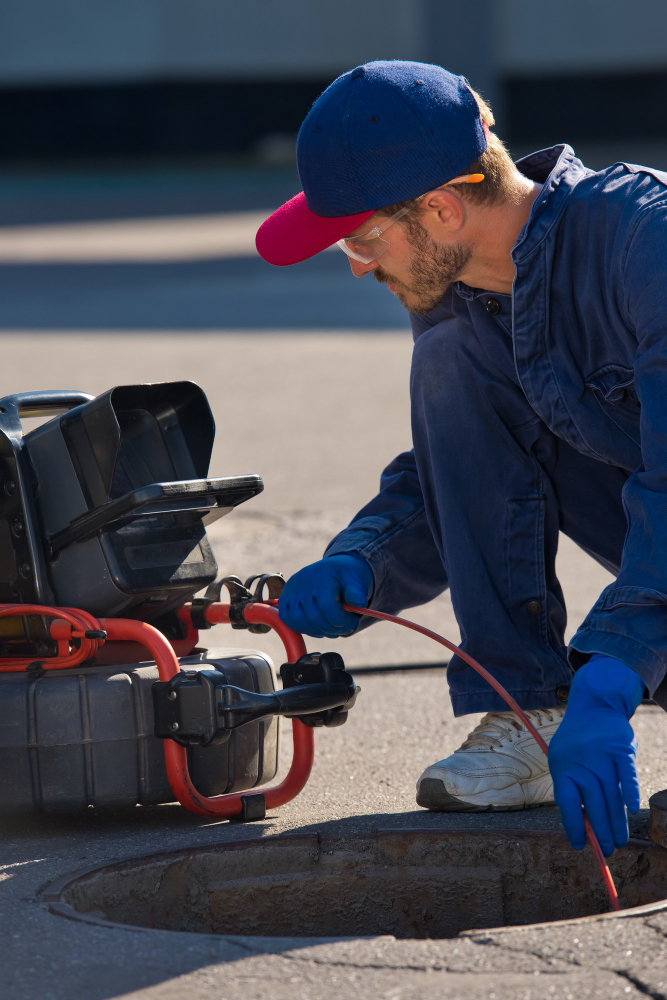
During a sewer camera inspection, the technician feeds a high-definition camera through the line and records the interior condition of the pipe in real time. Root intrusion is immediately visible on camera. Fine roots appear as hair-like tendrils growing through a joint or crack. More advanced intrusion shows a dense, tangled mass filling part or all of the pipe diameter, often wrapped around trapped debris.
The camera also reveals:
- Which joints or cracks the roots entered through
- Whether the roots have displaced or broken the pipe
- How far the intrusion extends along the line
- Whether additional defects like sags, offset joints, or erosion are present alongside the roots
Assessing the damage to the pipe itself
Roots entering a pipe are a problem, but roots that have displaced, cracked, or collapsed the pipe wall represent a different level of damage. The camera inspection distinguishes between a pipe that can be cleaned and sealed versus one that needs structural repair or full replacement.
This distinction matters for cost and approach. A pipe with root entry at one or two joints but otherwise sound structure may need only targeted treatment. A pipe where roots have widened every joint and fractured multiple sections may call for a full sewer line replacement. The camera gives you that answer before any digging or spending begins.
How professionals remove roots and restore your sewer line
Once the camera confirms root intrusion and documents the condition of the pipe, the repair approach is matched to what the footage actually showed. There are three common paths depending on severity.
Hydro jetting to cut and clear root masses
Hydro jetting uses a high-pressure water stream to cut through root masses and scour the interior of the pipe clean. Unlike a mechanical snake, which punches a narrow hole through the roots, jetting removes the root material and clears the full diameter of the pipe.
Jetting is the right first step when the pipe itself is structurally sound and the roots have entered through a limited number of joints. It restores full flow, and a follow-up camera pass confirms that the pipe walls, joints, and slope are intact. In cases where the pipe is in good condition, periodic jetting on a maintenance schedule can keep roots from rebuilding to a problematic level.
Trenchless pipe lining to seal the entry points
If the camera shows that roots have entered through multiple joints or that the pipe has cracks that will continue to invite new growth, clearing the roots alone is a temporary fix. Trenchless sewer repair addresses the pipe itself.
Cure-in-place pipe lining inserts a resin-saturated liner into the existing pipe and cures it in place, creating a seamless, jointless new pipe inside the old one. The liner seals every crack, joint, and entry point, eliminating the access roots need to get back inside. For Bothell homeowners dealing with recurring root problems in an otherwise intact pipe, lining is often the most cost-effective permanent solution because it avoids the expense and disruption of digging up the yard.
When the pipe is too damaged to save
In severe cases, root intrusion has gone on long enough that the pipe is cracked, collapsed, or displaced beyond what a liner can repair. Multiple sections may be broken, the slope may be compromised, or the root damage may have created voids in the surrounding soil. When the camera shows this level of deterioration, a full line replacement is the appropriate path.
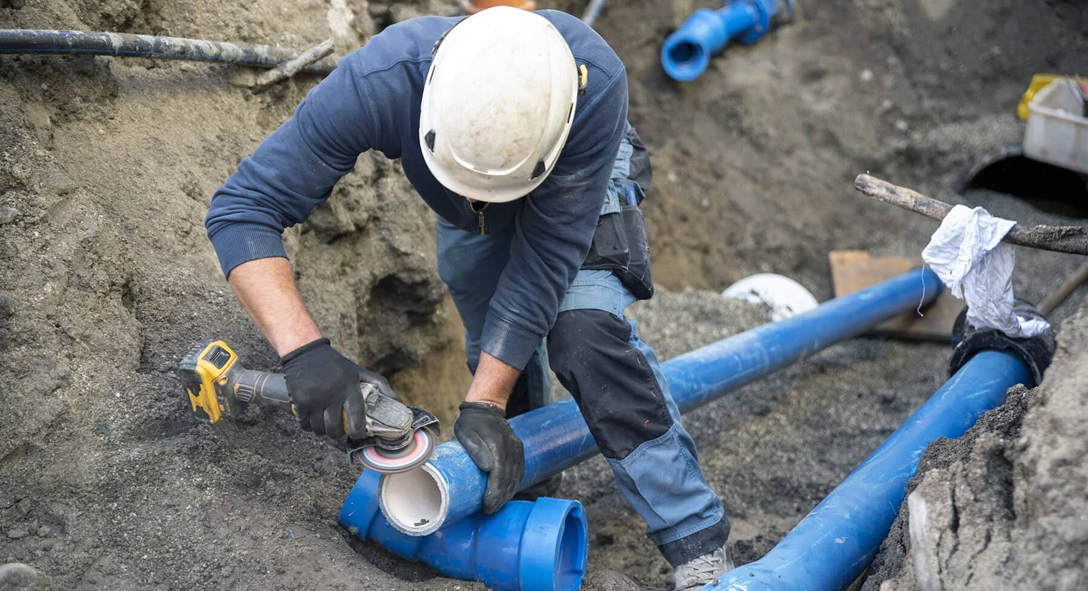
Modern replacement materials like HDPE and PVC are fused or sealed at every joint, making them highly resistant to future root intrusion. A full replacement is the most involved option, but for a pipe that has reached the end of its useful life, it is the repair that lasts. A spot repair may also be an option if the damage is confined to one section while the rest of the line remains sound.
How to reduce the risk of root intrusion in the future
You cannot eliminate the risk entirely in a city as heavily treed as Bothell, but you can reduce it significantly with a combination of regular monitoring, smart landscaping, and awareness of your sewer line’s layout.
Camera inspections on a regular schedule
The single most effective step is knowing the condition of your pipe. A camera inspection every few years establishes a baseline and catches new root growth while it is still minor and inexpensive to clear. If your line has a history of root problems, annual or biannual inspections are a worthwhile investment compared to the cost of emergency repairs. Preventive sewer maintenance is always cheaper than reactive work.
Landscaping choices that protect your sewer line
If you are planting new trees or replacing existing ones, consider the location of your sewer line before choosing a species or a spot. General guidelines that help:
- Know exactly where your sewer line runs from the house to the street. A sewer contractor can locate it for you if you are unsure.
- Avoid planting large, fast-growing species like willows, poplars, or big-leaf maples within 20 to 30 feet of the sewer line.
- Choose smaller ornamental species or slow-growing trees for areas near the pipe. These produce less aggressive root systems and pose a lower risk.
- If you have existing mature trees near the line, do not remove them on speculation. Removing a large tree can destabilize the surrounding soil. Instead, monitor the line with periodic inspections and address root entry if and when it occurs.
What to do if you share a side sewer
Many Bothell properties share a side sewer with a neighboring home. When that is the case, root problems on one side of the shared line can affect both properties. If you suspect root intrusion or are experiencing recurring backups, coordinate with your neighbor to have the full shared line inspected. Addressing the problem together is almost always more efficient and less expensive than dealing with repeated backups on your own.
Conclusion
Root intrusion is not a one-time event. Once roots find their way into a pipe, they keep growing until someone removes them and seals the entry point. The homeowners who avoid the worst outcomes are the ones who recognize the warning signs early, confirm the problem with a camera inspection, and choose a repair that addresses the pipe, not just the symptoms.
Bothell’s dense tree canopy is one of the best things about living here, but it means your sewer line needs more attention than it would in a newer, less established area. If you are dealing with recurring clogs, slow drains that keep coming back, or backups that seem to happen on a cycle, roots are the most likely explanation, and the sooner you confirm it, the more options you have.
Seattle Select Sewers focuses exclusively on sewer work across the greater Seattle area, including Bothell and the surrounding Eastside communities. Their team can scope your line, show you exactly what the roots have done, and recommend the right solution to stop the damage permanently. Reach out to schedule an inspection and find out where your sewer line stands.