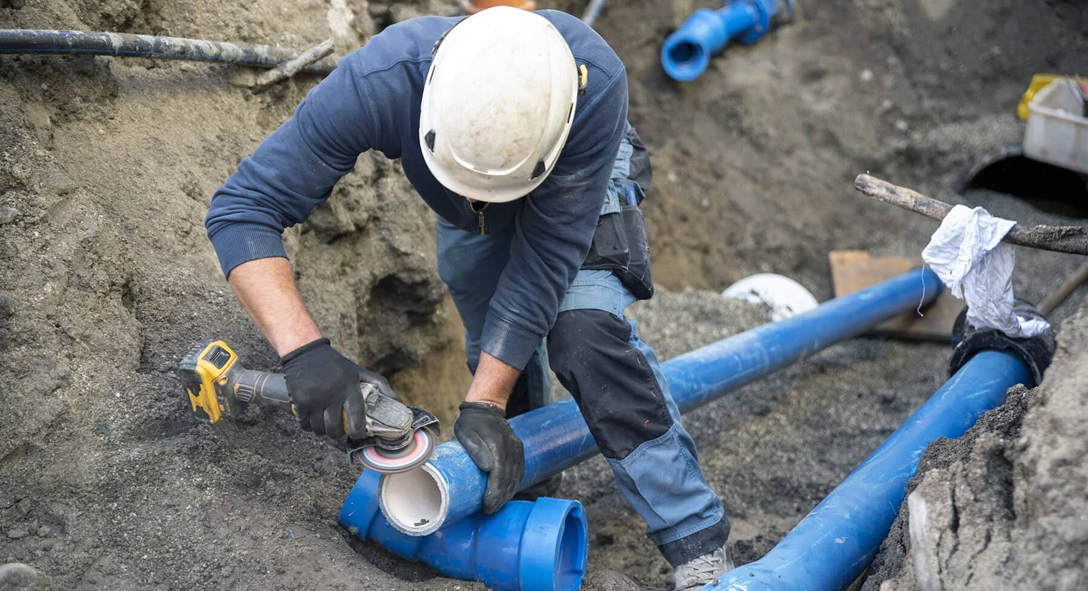

Your sewer line is buried underground, running from your home to the city main, and unless you have had it inspected, you have no idea what condition it is in. That is the reality for the majority of homeowners in Everett. The pipe could be performing well, or it could be cracked, corroded, filled with roots, and months away from a full backup. A sewer camera inspection is the only way to know the difference, and knowing when homeowners need sewer camera inspections in Everett can mean the difference between a planned repair and an emergency that costs several times more.
Everett is a city of layers. There are Craftsman-era homes in the Riverside and North Everett neighborhoods, mid-century ranches along the Paine Field corridor and near Mariner, and newer construction out toward Silver Lake. Each era used different pipe materials, and the older sections of the city are now sitting on sewer laterals that have been in the ground for 50, 60, or even 75 years.
According to the City of Everett, critical utility infrastructure is past its useful life, and the city is actively investing in replacements and upgrades to meet regulatory requirements. The public mains are getting attention, but the private side sewer from your home to the city main is your responsibility, and it may be in the same condition as the pipes the city is replacing.
A camera inspection takes the guesswork out of that situation. It shows you the actual interior condition of your pipe, identifies problems while they are still manageable, and gives you the information you need to make smart decisions about your home’s most overlooked system.
In this article, you will learn about:
- The aging infrastructure problem under Everett homes
- Six situations that call for a camera inspection
- What the camera actually shows inside your pipe
- From cleanout to report: how the process works
- Matching the findings to the right next step
- Setting the right inspection schedule going forward
Keep reading to find out when your home needs a scope and what the results can tell you about the pipe you cannot see.
The aging infrastructure problem under Everett homes
A sewer line is one of the most expensive components of a home’s infrastructure to repair or replace, and it is the one component most homeowners know the least about. In Everett, the combination of aging pipe materials, homeowner responsibility for the lateral, and a housing stock that spans over a century makes camera inspections not just useful but essential.
Pipe materials that are running out of time
The material in your sewer line depends largely on when your home was built. Pre-1950s homes in Riverside and North Everett often have vitrified clay tile pipes with mortar joints that erode over time. Homes built between the 1950s and 1970s near Paine Field and Mariner typically have cast iron laterals, and some lower-cost developments from that era used Orangeburg, a tar-paper material that was never designed to last more than a few decades. Homes built from the 1980s onward generally have PVC, which has a much longer expected lifespan but is still vulnerable to poor installation, root intrusion, and ground shifting.
The City of Everett’s 20th Street Sewer Rehabilitation project demonstrates the scope of the problem on the public side. The city is rehabilitating aging sewer mains by inserting liners to extend their lifespan, choosing that approach specifically because it is less disruptive than full pipe replacement. The same age-related deterioration affecting the city’s mains is affecting the private laterals connected to them.
Your side sewer is your responsibility
In Everett, the homeowner owns and is responsible for the side sewer from the house all the way to the city main. The City of Everett makes this clear: per city ordinance 14.08.260, private property owners are responsible for the integrity and maintenance of side sewers outside the city right of way. The city maintains the public sewer mains, but the lateral connecting your home to that main is entirely on you.
That means if your side sewer cracks, collapses, or fills with roots, the repair bill is yours. It also means that the condition of that pipe is something you need to know about proactively rather than discovering it in the middle of a backup. A camera inspection is the tool that gives you that knowledge.
Surface updates do not tell you what is underground
A home can look perfectly maintained on the surface while the sewer line beneath it is in serious trouble. New kitchens, updated bathrooms, and fresh landscaping do not tell you anything about the 60-year-old pipe running under the yard. Homeowners who have never had their sewer line inspected are operating on assumptions, and those assumptions can be expensive when they turn out to be wrong.
A camera inspection closes that gap. It provides a documented, visual record of the pipe’s condition that removes all guesswork from the equation.
Six situations that call for a camera inspection
There are specific moments where a camera inspection is not just a good idea but a critical step. If any of these apply to your Everett home, a scope should be on your short list.
You are buying a home in Everett
A standard home inspection does not include the sewer line. The inspector evaluates the structure, the roof, the electrical, and the visible plumbing, but the pipe buried underground from the house to the street is not part of that assessment. For a city with as much older housing as Everett, that blind spot can be significant.
A pre-purchase sewer scope adds a few hundred dollars to your due diligence but can reveal thousands of dollars in hidden damage. If the camera finds root intrusion, cracks, or a deteriorating pipe, you can:
- Negotiate a repair credit or price reduction with the seller
- Request that the seller complete the repair before closing
- Factor the repair cost into your purchase decision
- Walk away if the damage exceeds what you are prepared to take on
Skipping the scope on a home with a 50-year-old sewer line is a gamble no buyer needs to take.
Drains keep slowing down or backing up
Occasional slow drains happen in every home. But when the same symptoms keep returning, especially across multiple fixtures, the cause is usually in the main sewer line, not in a single drain’s trap or branch.
Schedule an inspection when you notice:
- Multiple drains slowing down at the same time
- Gurgling or bubbling sounds from toilets or drains
- Sewer odors from floor drains, basements, or near the foundation
- Backups that clear on their own and then return
- Drains that need snaking more than once a year
Each of these patterns suggests a developing obstruction or a structural issue in the line. A camera tells you exactly what is causing it and where.
You just had an emergency service call
If you have already experienced a backup and had the line cleared, a follow-up camera inspection is essential. Emergency service clears the immediate blockage, but it does not explain why it happened. Without a camera pass, you have no way to know whether the backup was caused by a one-time clog, an ongoing root problem, a structural failure, or a combination.
The inspection after a backup serves two purposes. It confirms whether the line was fully cleared, and it documents the underlying condition of the pipe so you can decide whether maintenance, repair, or replacement is the right next step.
The home is older and the line has never been scoped
If your Everett home was built before 1980 and the sewer line has never been inspected, getting a baseline scope is one of the smartest investments you can make. You may find the pipe is in better shape than expected, which gives you peace of mind and a reference point for future comparisons. Or you may catch a developing problem early enough to fix it on your terms, before it becomes an emergency.
You are planning a renovation or addition
Major work on your home, especially a kitchen or bathroom remodel that changes fixture locations, adds plumbing runs, or increases daily water usage, puts more demand on the sewer line. If the pipe is already compromised, the additional load can push it past its limits. A scope before construction starts tells you whether the existing line can handle the added flow or whether it needs attention first.
Mature trees sit close to the sewer line path
Everett’s established neighborhoods are full of mature maples, alders, and conifers with root systems that extend well beyond their visible canopy. If large trees sit within 20 to 30 feet of your sewer line and the pipe predates PVC, the odds of root intrusion are high enough to justify periodic scoping even without symptoms.
What the camera actually shows inside your pipe
The camera shows the interior of the pipe in high definition, and a trained technician can identify a wide range of conditions that are invisible from the surface.
Roots growing through joints and cracks
Root intrusion is the most common finding in older Everett sewer lines. The camera shows exactly where roots have entered the pipe, how dense the growth is, and whether the roots have displaced or damaged the joints they entered through. This information determines whether the roots can be cleared with hydro jetting or whether the pipe needs structural repair to seal the entry points permanently.
Corrosion, cracks, and interior erosion
The camera picks up hairline cracks, fractures, corrosion patterns in cast iron, and the interior erosion that develops in concrete pipes over decades. It can also identify Orangeburg pipe that has begun to deform or collapse. Each of these findings has different implications for urgency and repair approach, and the footage gives you a documented record of the pipe’s condition at a specific point in time.
Low spots and shifted joints that trap waste
A sag or belly is a section of pipe that has lost its downward slope, creating a low point where wastewater pools instead of flowing through. Sags trap solids and grease, leading to recurring blockages in the same spot. Offset joints, where two pipe segments have shifted out of alignment, create ledges that catch debris. Both conditions are invisible from the surface and can only be confirmed with a camera.
Grease and debris narrowing the line
Even in a structurally sound pipe, years of accumulated grease, scale, and debris can narrow the interior diameter and reduce flow. The camera shows the extent of the buildup and whether it is concentrated at specific points or distributed along the length of the line. This finding helps determine whether jetting alone will solve the problem or whether the buildup is a symptom of a deeper issue like a sag or rough interior surface.
From cleanout to report: how the process works
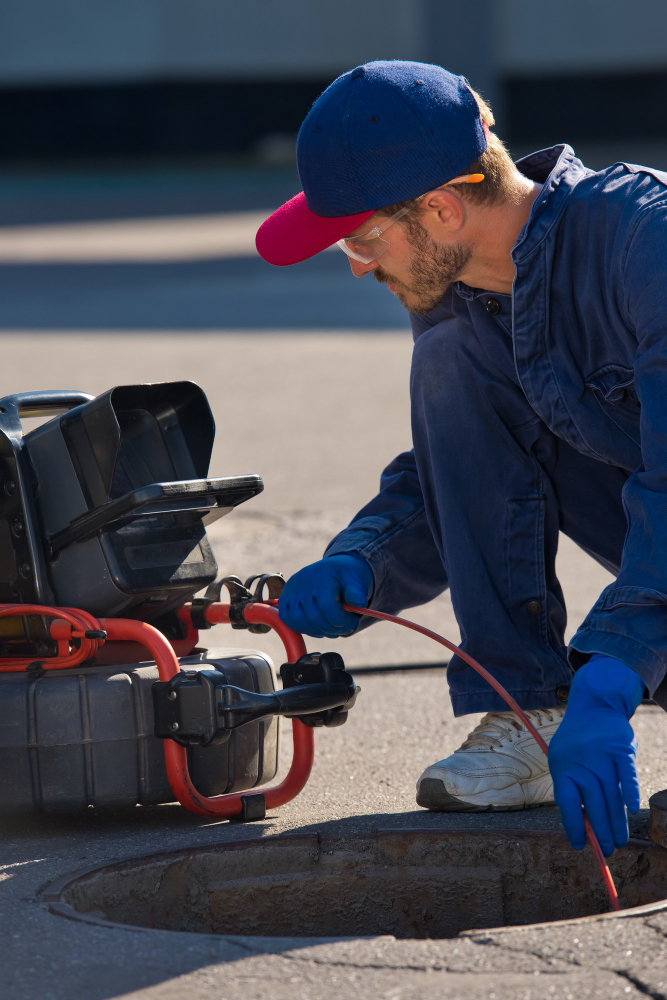
A sewer camera inspection is straightforward, noninvasive, and typically takes about an hour for a residential property.
Getting into the pipe
The technician accesses the sewer line through a cleanout, which is a capped access point usually located near the house or in the yard. If no cleanout exists, the camera can sometimes be fed through a drain or toilet opening. In some cases, the technician may recommend installing a sewer cleanout to provide better access for the current inspection and for future maintenance.
What you see on the monitor
A high-definition, waterproof camera mounted on a flexible cable is fed into the pipe and advanced through the full length of the line, from the house to the connection at the city main. The camera transmits a live video feed to a monitor that both the technician and the homeowner can view in real time. The technician notes the location, type, and severity of each finding as the camera moves through the pipe.
The report you walk away with
At the end of the inspection, you receive a recorded video of the full camera run along with a written report summarizing the findings. The report documents each defect, its location, and its severity. This documentation serves multiple purposes:
- It supports repair decisions by showing exactly what needs to be addressed and where
- It provides leverage in real estate negotiations if you are buying or selling
- It establishes a baseline that future inspections can be compared against
- It gives you a record to share with contractors if you seek repair estimates
Matching the findings to the right next step
The camera findings determine the next step. Not every inspection leads to a repair, and not every repair is urgent.
A clean bill of health
If the camera shows a clean, structurally sound pipe with no significant defects, you have confirmation that your sewer line is in good shape. This is a valuable outcome because it eliminates uncertainty and gives you a documented baseline. File the report and plan to re-scope in a few years to monitor for any changes.
Early-stage issues worth watching
Minor root intrusion at one or two joints, light grease buildup, or a small crack that is not yet affecting flow are common findings in older pipes. These conditions may not require immediate repair, but they do require monitoring. The technician may recommend a maintenance schedule that includes periodic jetting to keep roots and buildup in check, with follow-up inspections to track whether the condition is stable or progressing.
Damage that needs repair now
If the camera reveals widespread root intrusion, multiple cracks or fractures, a collapsed section, severe corrosion, or a significant sag, the pipe needs repair or replacement. The inspection footage and report give you and your contractor the information needed to choose the right approach, whether that is a spot repair for isolated damage, trenchless lining for a pipe that is failing across its length, or a full sewer line replacement when the damage is beyond what lining can address.
Setting the right inspection schedule going forward
A single inspection gives you a snapshot. Periodic inspections give you a trend, and that trend is what helps you make smart, well-timed decisions about your sewer line.
A baseline schedule for most homes
For most Everett homeowners, a camera inspection every two to three years is a reasonable maintenance interval. That cadence catches developing issues like new root growth, progressing cracks, or early-stage buildup before they reach the point of causing backups or requiring emergency service.
When annual inspections make sense
Some homes warrant a shorter cycle. Annual scoping is a worthwhile investment if:
- Your line has a history of root intrusion and has been jetted or snaked before
- The pipe is made from Orangeburg, which can deteriorate rapidly once it starts to fail
- You live in a neighborhood with mature trees close to the sewer line path
- You share a side sewer with a neighboring property and want to monitor the shared section
- The previous inspection showed early-stage issues that the technician recommended tracking
The cost of one inspection per year is a fraction of what a single emergency repair costs.
Conclusion
A sewer line that has never been inspected is a liability you cannot quantify until something goes wrong. A camera inspection turns that unknown into a documented fact, whether the news is good, manageable, or urgent. For Everett homeowners sitting on mid-century infrastructure that is reaching the end of its design life, that knowledge is not optional. It is the foundation of every smart decision about your home’s sewer system.
If you are buying a home, dealing with recurring drain problems, recovering from a backup, or simply want to know what condition your pipe is in, a single inspection gives you the answer. The process is quick, noninvasive, and far less expensive than any repair it might prevent.
Seattle Select Sewers provides sewer camera inspections and repair services across the greater Seattle area, including Everett and surrounding Snohomish County communities. Their team can scope your line, walk you through the findings on the spot, and recommend next steps based on what the camera actually shows, not assumptions. Reach out to schedule your inspection and take the first step toward knowing exactly where your sewer line stands.